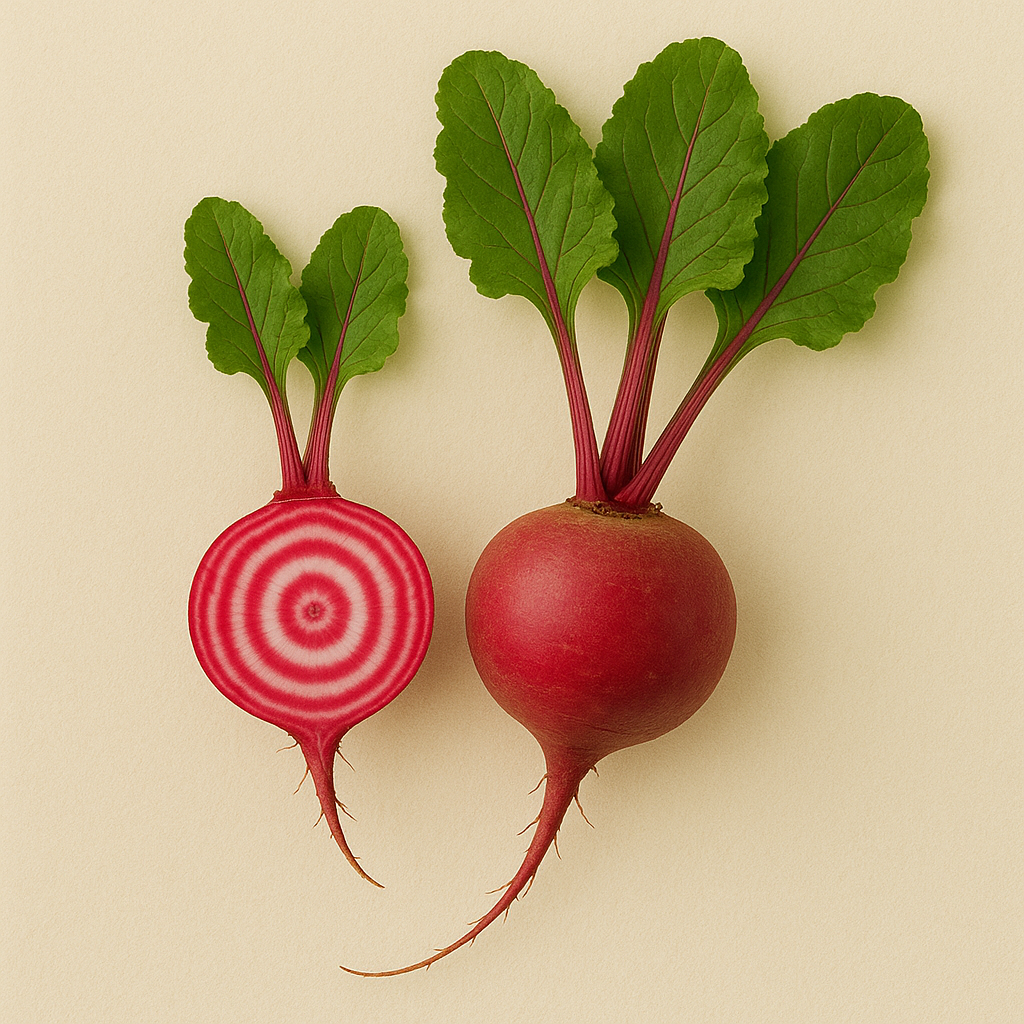
Chioggia Beet
Beta vulgaris
Family: Amaranthaceae
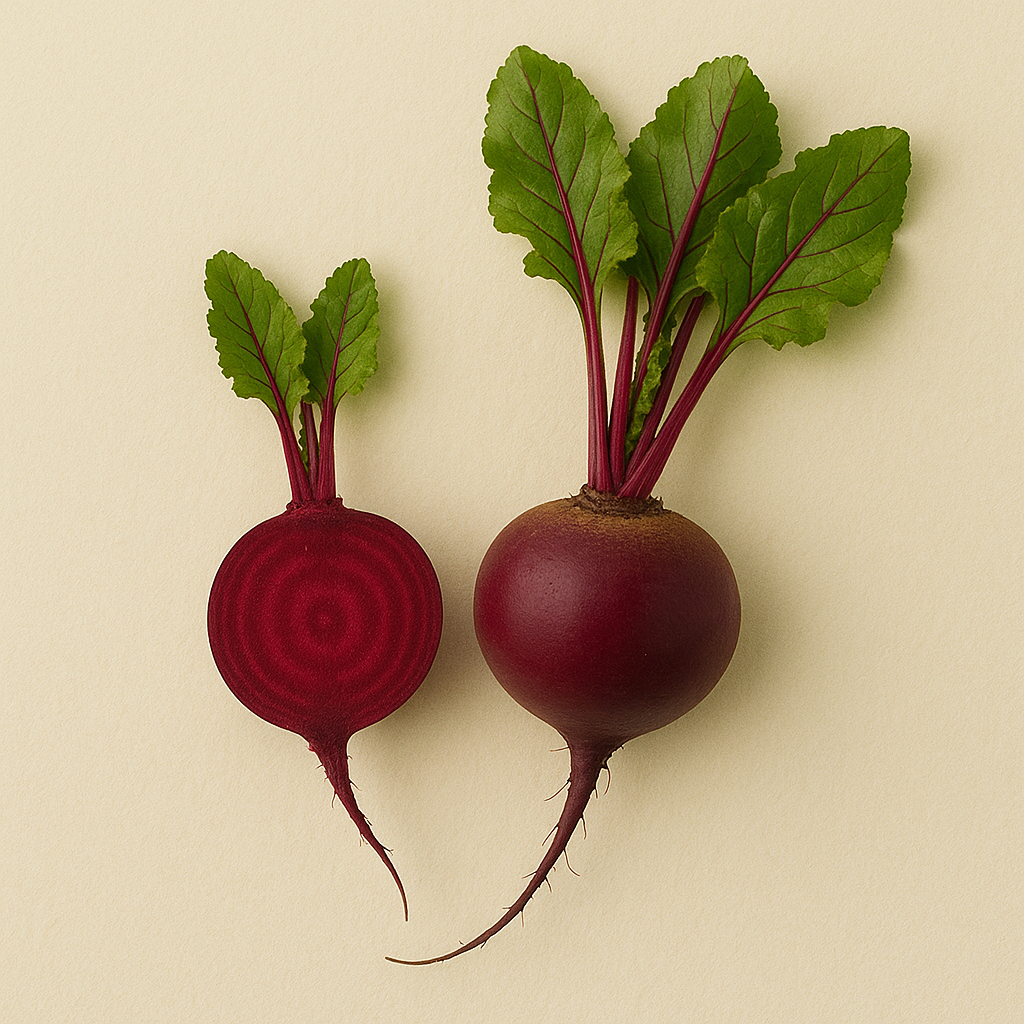
Chioggia beets, also called candy cane or bullseye beets, are a stunning Italian heirloom with concentric red and white rings inside. When sliced, they reveal a beautiful target-like pattern. The flavor is milder and sweeter than red beets, making them perfect for raw preparations.
Days to Harvest
50-60 days
Sun Needs
Full Sun to Partial Shade (4-6 hours)
moderate
Germination Temp
65°F optimal
Start Indoors
4 weeks before last frost
Germination
5-14 days
Seed Depth
1/2 inch
Light to Germinate
No
💡 Tip: Each beet "seed" is actually a cluster of 2-4 seeds—thinning is essential. Soak seeds overnight to speed germination.
Soil Type
Loose, well-draining soil with good organic matter
pH Range
6 - 7.5
Spacing
3-4 inches between plants, 12-18 inches between rows
⚠️ Avoid planting near:
History
The Chioggia beet takes its name from the ancient fishing town of Chioggia, a picturesque settlement built on small islands at the southern entrance to the Venetian Lagoon, often called "Little Venice" for its canals and bridges. This Italian heirloom was first documented in seed catalogs in the early 1840s, though local cultivation in the Veneto region likely predates these records significantly. The beet's dramatic candy-striped interior—concentric rings of deep magenta and creamy white—made it a sensation in Victorian-era kitchens, where elaborate food presentation was highly prized. The pattern earned it numerous nicknames: candy cane beet, bullseye beet, and bassano beet (after another town in the Veneto region). While the striking rings fade to a uniform pink when cooked, this "flaw" was actually embraced by Italian cooks who appreciated the milder, sweeter flavor that develops when the beet is roasted. The variety became particularly popular with American market gardeners in the late 19th century, appearing in catalogs like Burpee's as early as 1865. Interest waned during the mid-20th century as commercial agriculture favored uniformly red beets, but the heirloom revival of the 1990s brought Chioggia back to prominence. Today, it appears on restaurant menus across fine dining establishments, where chefs showcase its raw beauty in carpaccio preparations, thinly shaved salads, and artful garnishes. The Chioggia represents the intersection of agricultural heritage and modern gastronomy—a living link to the vegetable gardens that surrounded medieval Venice, now gracing contemporary plates with its timeless beauty.
Nutritional Benefits
- ✓High in folate
- ✓Contains nitrates for blood pressure
- ✓Good source of manganese
Optimal Growing Temp
50°F - 70°F
Chioggia beets grow best in cool weather between 50-70°F. Heat can cause bolting and pale stripes.
Survival Range
25°F - 85°F
Can survive these temperatures
Frost Note: Tolerates light frost to 28°F. Light frost sweetens the roots.
Best USDA Zones
Humidity
50-70%
Moderate humidity is ideal.
Height
12-18 inches
Spread
4-6 inches
Growth Habit
rosette
Germination
5-10 days
Beet "seeds" are actually clusters containing 2-4 seeds. Multiple seedlings emerge per cluster—thin to strongest.
Seedling Stage
Duration: 3-4 weeks
True leaves: First true leaves are reddish-green
Transplant ready: Can transplant when 2-3 inches tall, but direct sowing is easier.
Vegetative Growth
Duration: 6-10 weeks
Beets produce edible greens while roots swell underground. Both are edible.
Harvest Maturity
Timing: 55-65 days from seed
- Root shoulders visible at soil line (2-3 inches diameter)
- Roots feel firm when gently pressed
- Best harvested at 2-3 inches for clearest stripes
- Larger roots may have faded stripes
Per Plant
1 root (3-8 oz) plus edible greens
Per Square Foot
9-16 beets per square foot
Harvest Frequency
Harvest as needed once roots reach usable size
Factors Affecting Yield
- •Harvest size—smaller roots have best stripe definition
- •Cool temperatures produce best color
- •Consistent moisture for tender texture
Seedling Stage
Keep consistently moist for germination
Established Plants
About 1 inch per week
During Fruiting
Maintain consistent moisture—irregular watering causes woody rings
Preferred Method
Drip irrigation or soaker hoses preferred.
⚠️ Critical Watering Periods
- • Root development phase
Pro Tips
- Consistent moisture is critical for tender texture
- Mulch to maintain even soil moisture
Feeding Schedule
Soil preparation
Compost
Once before planting
Growing
Side-dress with compost if needed
Once at 4 weeks
Organic Options
Work compost into soil before planting. Avoid excess nitrogen.
Minimum Size
8 inches deep, 12-inch diameter
Recommended Size
10-12 inches deep
Depth Required
At least 8 inches
Best Varieties for Containers
Container Tips
- Well-draining potting mix
- Space 3-4 inches apart
- Keep consistently moist
- Harvest when small for best stripes
Plant Every
Every 2-3 weeks
Sowings/Season
4-6 plantings
Duration
Spring through fall
Tips
- Plant in spring and late summer
- Skip hot midsummer—heat causes poor stripe development