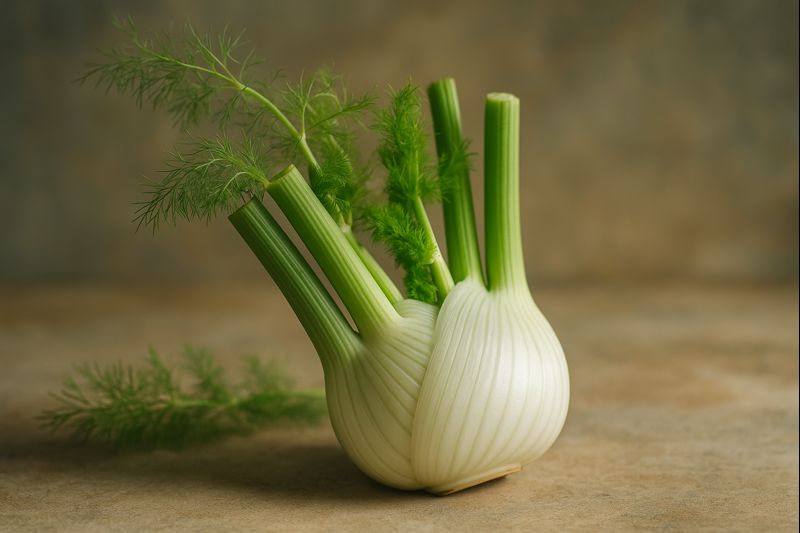
Fennel Bulb (Florence Fennel)
Foeniculum vulgare var. azoricum
Family: Apiaceae
Florence fennel, also called finocchio or bulb fennel, is grown for its swollen, crisp white bulb that forms at the base of overlapping leaf stalks. While technically not a root vegetable (it's a swollen stem base), it's grown and treated similarly. The entire plant is edible—bulb, stalks, fronds, and seeds all offer a distinctive anise-licorice flavor that sweetens when cooked. Fennel is a cool-season crop that bolts quickly in hot weather, making timing crucial for bulb development.
Days to Harvest
65-90 days
Sun Needs
Full Sun (6+ hours)
moderate-high
Germination Temp
70°F optimal
Start Indoors
4 weeks before last frost
Germination
7-14 days
Seed Depth
1/4 inch
Light to Germinate
No
💡 Tip: Can direct sow or transplant carefully. Fennel dislikes transplanting and root disturbance can trigger bolting. If starting indoors, use deep pots and transplant when small (4-6 weeks). Direct seeding is often more successful. Soak seeds overnight to improve germination.
Soil Type
Rich, well-drained soil high in organic matter. Prefers loose, fertile loam.
pH Range
6 - 7
Spacing
12 inches between plants, 18-24 inches between rows
⚠️ Avoid planting near:
History
Fennel's cultivation stretches back over 3,000 years to the ancient Mediterranean, where it was valued as food, medicine, and magical protection. The ancient Greeks called it "marathon" after the famous battlefield where fennel grew abundantly—the Greek messenger Pheidippides ran through fennel fields to bring news of victory over the Persians in 490 BCE. Greek mythology credits Prometheus with bringing fire to humanity in a hollow fennel stalk, establishing fennel's association with knowledge and survival. The Romans consumed fennel extensively, believing it improved eyesight and gave strength—gladiators ate fennel before battles. Pliny the Elder recorded 22 remedies using fennel, and Roman soldiers carried fennel seeds on long marches to suppress hunger pangs. Emperor Charlemagne declared fennel essential in every imperial garden in 812 CE, spreading its cultivation throughout medieval Europe. Medieval Christians hung fennel over doorways on Midsummer's Eve to ward off evil spirits and witches. The Puritans brought fennel to America, calling the seeds "meeting seeds" because children chewed them during long church services to suppress hunger and stay quiet. The bulbing variety we know today—Florence fennel or var. azoricum—was developed in Italy during the 17th century and became a cornerstone of Italian cuisine. Nineteenth-century Italian immigrants brought Florence fennel to America, where it remained primarily within Italian communities until the late 20th century. The ancient herb fennel (var. vulgare) grows tall and ferny without forming a bulb, cultivated for seeds and fronds, while Florence fennel was bred specifically for the swollen bulb. California's Italian immigrants established fennel in gardens throughout the state, where escaped plants now grow wild along roadsides, perfuming the air with anise fragrance. The modern farm-to-table movement and renewed interest in Mediterranean cooking brought fennel into mainstream American cuisine starting in the 1980s. Today, fennel is celebrated by chefs for its versatility—raw in salads for crunch and freshness, braised until meltingly tender, roasted until caramelized, or grilled for smoky sweetness. In Italy, where per capita consumption remains highest, fennel is as common as lettuce, appearing in everything from salads to pasta sauces to the famous porchetta (roast pork stuffed with wild fennel). The saying "to give fennel" in medieval times meant to give false praise, possibly because fennel's strong flavor could mask the taste of spoiled food or cheap wine, though fennel's reputation has long since recovered from this dubious association.
Nutritional Benefits
- ✓Excellent source of Vitamin C
- ✓High in fiber
- ✓Good source of potassium