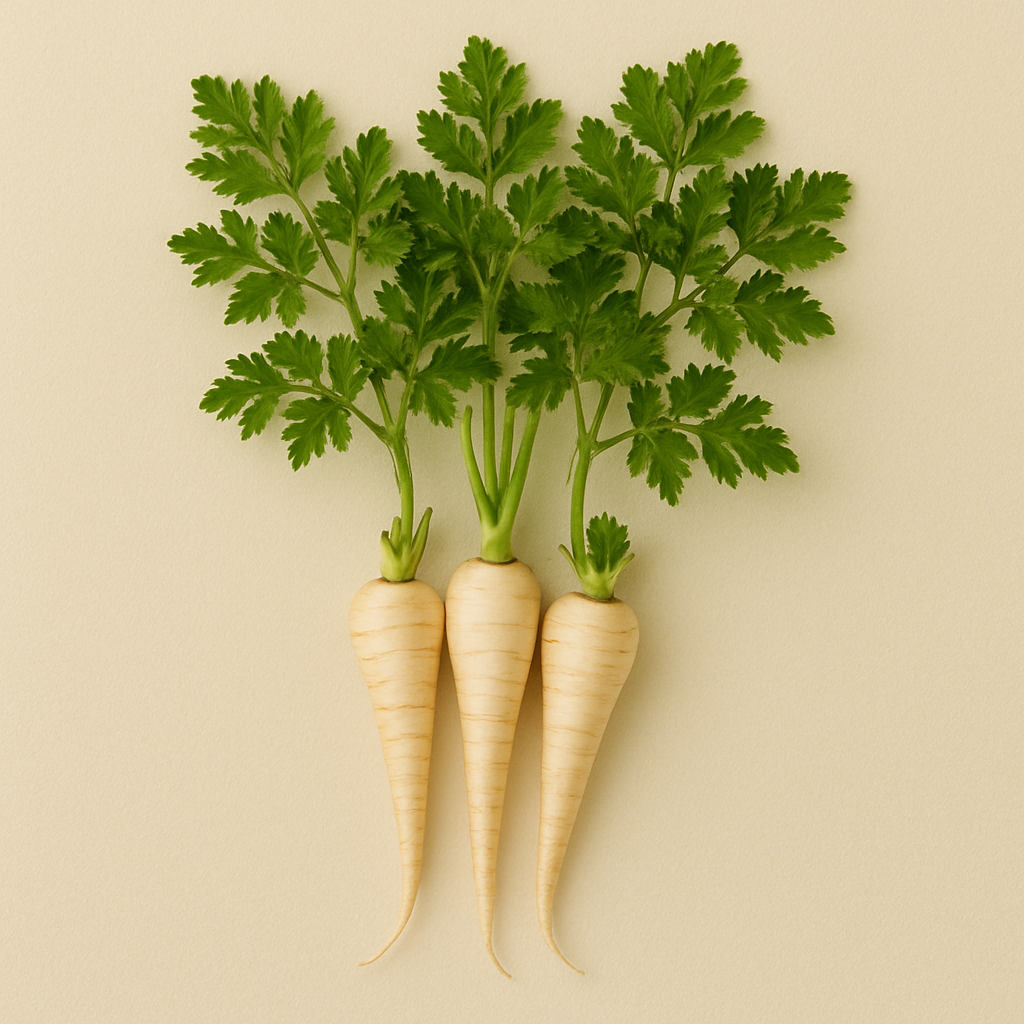
Parsnips
Pastinaca sativa
Family: Apiaceae
Parsnips are sweet, nutty root vegetables that require patience but reward with exceptional flavor. Related to carrots, they develop their best sweetness after frost. These long-season roots are perfect for fall and winter harvest.
Days to Harvest
100-130 days
Sun Needs
Full Sun (6+ hours)
moderate
Germination Temp
55°F optimal
Start Indoors
0 weeks before last frost
Germination
14-28 days
Seed Depth
1/2 inch
Light to Germinate
No
💡 Tip: Use only fresh seed—parsnip seeds lose viability quickly. Germination is very slow (up to 4 weeks). Keep soil moist throughout. Sow densely and thin.
Soil Type
Deep, loose, sandy loam free of rocks
pH Range
6 - 7
Spacing
3-4 inches between plants, 18-24 inches between rows
⚠️ Avoid planting near:
History
Parsnips occupied the culinary niche that potatoes would later claim, serving as Europe's primary starchy root vegetable for nearly two millennia before the New World tuber arrived. Wild parsnips are native to Eurasia, and cultivation likely began in the Mediterranean region around 2,000 years ago, though the historical record is confused by ancient writers using the same word "pastinaca" for both parsnips and carrots. The Roman Emperor Tiberius, ruling from 14-37 CE, was so fond of parsnips that he demanded shipments from the Germanic frontier along the Rhine, where the cold winters produced the sweetest roots—ancient Romans understood what gardeners know today about frost converting starches to sugars. Medieval Europeans prized parsnips as a sweetener before sugar became affordable; parsnip wine was a common beverage, and parsnip puddings graced feast tables. The vegetable's importance extended to folk medicine and superstition: parsnips were thought to cure snakebites, ease childbirth, and increase male vigor. Wild parsnip spread to North America with European colonists and now grows invasively along roadsides, presenting a modern hazard—its sap causes severe burns when exposed to sunlight, a condition called phytophotodermatitis. The cultivated garden parsnip poses no such danger but requires patience: with 100-130 days to maturity, parsnips are among the longest-season vegetables, rewarding gardeners who can wait. The tradition of leaving parsnips in the ground through winter, harvesting after hard frosts, produces an almost honeyed sweetness as starches convert to sugars. British cuisine particularly embraced parsnips—roasted alongside the Sunday joint, mashed with butter, or made into crisps. Today's food revival has chefs rediscovering parsnip's unique sweet, nutty flavor, featuring it in soups, gratins, and even desserts like parsnip cake.
Nutritional Benefits
- ✓High in fiber
- ✓Good source of Vitamin C
- ✓Contains folate
Optimal Growing Temp
50°F - 70°F
Parsnips grow best in cool weather between 50-70°F. Frost dramatically improves sweetness by converting starches to sugars.
Survival Range
20°F - 80°F
Can survive these temperatures
Frost Note: Extremely frost tolerant—can survive winters in ground with mulch down to 0°F. Frost is essential for best flavor.
Best USDA Zones
Humidity
50-70%
Moderate humidity is fine. Parsnips are quite adaptable.
Height
12-18 inches
Spread
4-6 inches
Growth Habit
rosette
Germination
14-28 days
Parsnip seeds are notoriously slow and erratic. Use fresh seed and keep soil moist. First leaves emerge 2-4 weeks after sowing.
Seedling Stage
Duration: 4-6 weeks
True leaves: Compound, celery-like leaves develop
Transplant ready: Direct sow only—parsnips do not transplant due to deep taproot.
Vegetative Growth
Duration: 14-18 weeks
Long growing season. Parsnips develop slowly, producing foliage while the sweet root grows underground.
Harvest Maturity
Timing: 100-130 days from seed (but best after frost)
- Foliage dies back after frost
- Roots are 1-3 inches diameter at shoulder
- Best harvested after hard frost for sweetest flavor
- Can overwinter in ground for spring harvest
Per Plant
1 root per plant (8-16 oz)
Per Square Foot
9 parsnips per square foot with 4-inch spacing
Harvest Frequency
Harvest as needed from fall through spring
Factors Affecting Yield
- •Soil quality—loose, deep soil for straight roots
- •Frost exposure—essential for sweetness
- •Growing season length—needs 100+ days
- •Fresh seed—parsnip seed viability drops sharply after one year
Seedling Stage
Keep consistently moist during slow germination (2-4 weeks)
Established Plants
About 1 inch per week for even root development
During Fruiting
Maintain consistent moisture—drought causes woody cores
Preferred Method
Drip irrigation or soaker hoses. Consistent moisture is key.
⚠️ Critical Watering Periods
- • Germination (2-4 weeks)
- • Root development
Pro Tips
- Never let soil dry out during germination
- Consistent moisture produces tender, sweet roots
- Mulch heavily to maintain even soil moisture
Feeding Schedule
Soil preparation
Well-aged compost
Once before planting
Growing
None typically needed
N/A
Organic Options
Work aged compost into soil before planting. Avoid fresh manure—causes forked, hairy roots.
Minimum Size
Not recommended—roots too long
Recommended Size
Not suitable for containers
Depth Required
Would need 18+ inches for proper root development
Container Tips
- Parsnips have very long taproots not suited to containers
- Raised beds at least 18 inches deep are better alternative
- Short-rooted varieties like Harris Model might work in very deep containers