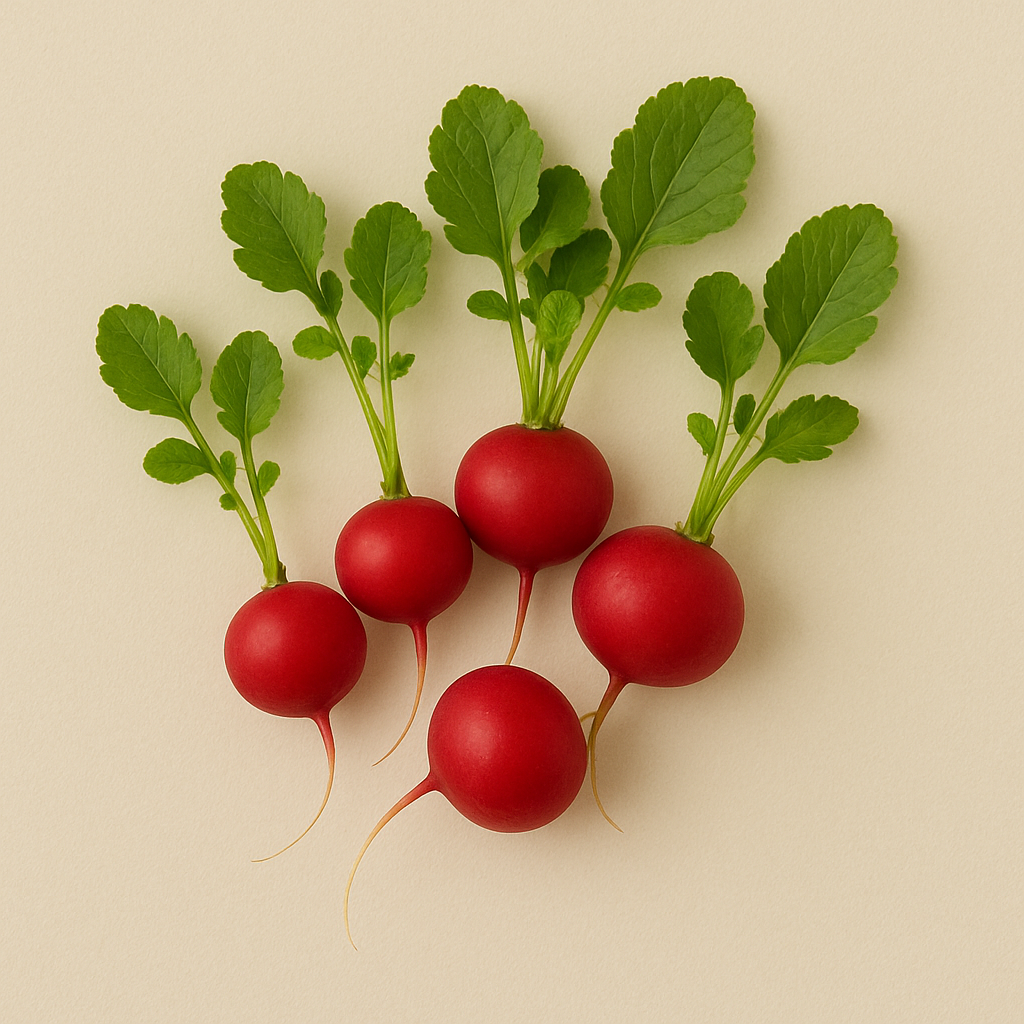
Radishes
Raphanus sativus
Family: Brassicaceae
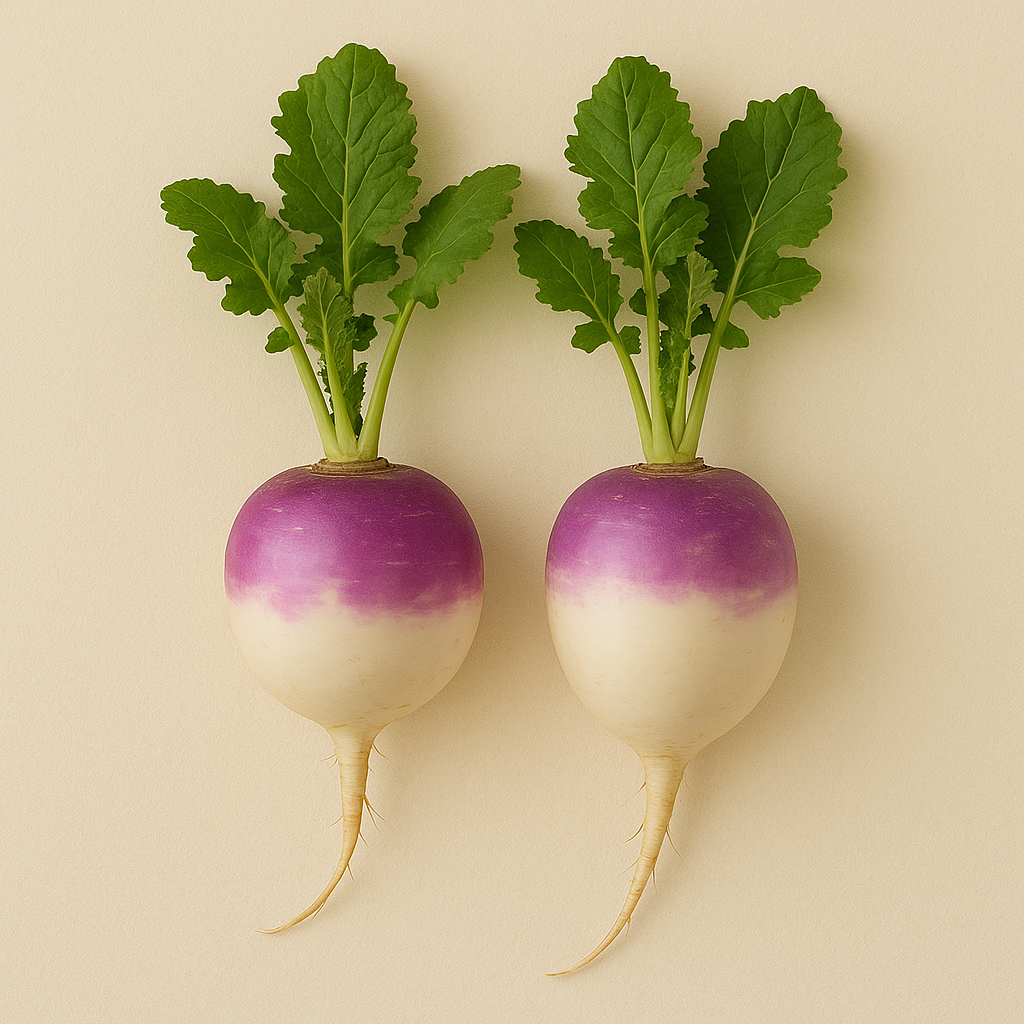
Radishes are the perfect beginner vegetable—fast-growing, easy to grow, and ready to harvest in as little as 25 days. These peppery roots add crunch and zing to salads. Beyond spring radishes, winter varieties offer larger roots that store for months.
Days to Harvest
22-70 days
Sun Needs
Full Sun to Partial Shade (4-6 hours)
moderate
Germination Temp
65°F optimal
Start Indoors
0 weeks before last frost
Germination
3-7 days
Seed Depth
1/2 inch
Light to Germinate
No
💡 Tip: Always direct sow—radishes do not transplant well. Sow as soon as soil can be worked in spring.
Soil Type
Loose, well-draining soil
pH Range
6 - 7
Spacing
1-2 inches between plants, 6-12 inches between rows
⚠️ Avoid planting near:
History
Radishes hold the distinction of being one of the earliest domesticated crops and among the first vegetables planted in space, a testament to their rapid growth and reliability that has made them garden favorites for over 4,000 years. Wild radishes likely originated in Southeast Asia, possibly China, and spread westward along ancient trade routes. By 2700 BCE, radishes were an established crop in ancient Egypt, where workers building the pyramids were reportedly paid in radishes, onions, and garlic. Herodotus, the Greek historian, described an inscription on the Great Pyramid of Giza listing the cost of these vegetable rations. The Greeks were so enamored with radishes that they made gold replicas to offer at the temple of Apollo at Delphi, while offering only silver beets and lead turnips. Roman agriculturalist Pliny the Elder catalogued numerous varieties including round, long, and mild types, noting that radishes from Germany could grow to forty pounds. The name "radish" derives from the Latin "radix" meaning root, which also gives us words like "radical" and "eradicate." Different cultures developed distinct varieties suited to their climates: the Japanese cultivated massive daikon radishes used fresh, pickled (takuan), and dried; Koreans made kkakdugi, cubed radish kimchi; and Europeans bred small, quick-maturing spring radishes. Black Spanish radishes, mentioned in European texts since the 16th century, became traditional winter storage vegetables. In Mexico, the Night of the Radishes (Noche de Rábanos) on December 23rd in Oaxaca features intricate carved radish sculptures, a tradition dating to 1897. Radishes were among the first crops grown in the American colonies at Plymouth and later became one of the first vegetables cultivated in the International Space Station's Veggie plant growth system, continuing their role as the ultimate beginner's crop—now extended to space agriculture.
Nutritional Benefits
- ✓Good source of Vitamin C
- ✓Contains fiber
- ✓Low in calories
Optimal Growing Temp
50°F - 65°F
Spring radishes thrive in cool weather between 50-65°F. They bolt quickly in heat above 75°F. Winter radishes tolerate warmer conditions better but still prefer cool weather for best quality.
Survival Range
40°F - 75°F
Can survive these temperatures
Frost Note: Spring radishes tolerate light frosts down to 28°F when young. Winter radishes are extremely cold-hardy and can tolerate hard frosts. Some winter varieties improve in flavor after frost.
Best USDA Zones
Humidity
50-70%
Radishes tolerate a wide range of humidity. In very humid conditions, watch for leaf diseases. Consistent soil moisture is more important than air humidity.
Height
6-12 inches
Spread
4-6 inches
Growth Habit
upright
Germination
3-7 days
Radish seeds are among the fastest to germinate. Seedlings emerge in 3-7 days, often in just 3-4 days in warm soil. They push through soil with distinctive lobed seed leaves.
Seedling Stage
Duration: 1 week
True leaves: First true leaves appear within 7-10 days of germination
Transplant ready: Radishes do not transplant well - always direct sow. Thin seedlings when 1 inch tall to proper spacing.
Vegetative Growth
Duration: 2-4 weeks for spring types, 6-8 weeks for winter types
Radishes develop foliage while simultaneously growing the root. The root swells rapidly - spring radishes can be ready in just 25 days total. Consistent cool weather and moisture are critical.
Harvest Maturity
Timing: 22-30 days for spring radishes, 50-70 days for winter radishes
- Root shoulders visible at soil line
- Spring radishes ready at 1 inch diameter
- Winter radishes ready at variety-specific size (often 2-6 inches)
- Leaves are full and healthy green
Per Plant
1 radish per plant (spring radishes 0.5-2 oz, winter radishes 8-16 oz)
Per Square Foot
16 spring radishes or 4-9 winter radishes per square foot depending on variety
Harvest Frequency
One-time harvest for spring radishes. Harvest promptly when ready to prevent pithy, woody texture.
Factors Affecting Yield
- •Timing - radishes must mature in cool weather or they become pithy and bitter
- •Moisture - consistent watering prevents cracking and strong, harsh flavor
- •Spacing - crowding produces small, malformed roots
- •Soil quality - loose soil allows proper root development
- •Variety - some are more heat-tolerant and slower to bolt
- •Harvest timing - overripe radishes become pithy and woody
Seedling Stage
Keep soil consistently moist until germination - critical for rapid growth
Established Plants
0.5-1 inch per week, more in hot weather. Never let soil dry out.
Preferred Method
Drip irrigation or hand watering works well. Overhead watering is fine for radishes. Keep soil evenly moist from seed to harvest.
⚠️ Critical Watering Periods
- • Entire growth period - radishes grow so fast that every day matters
Pro Tips
- Consistent moisture is the key to crisp, mild radishes
- Mulch lightly to maintain even moisture
- Never let soil dry out completely
- Water more frequently in hot weather to prevent stress
Feeding Schedule
Soil Preparation
Compost worked into soil
Once before planting
During Growth
None needed for spring radishes
N/A
Winter Radishes
Light side-dress at 3-4 weeks
Once
Organic Options
Work compost into soil before planting. Spring radishes grow so fast they need little additional fertilizer. Winter radishes benefit from light feeding mid-season.
Minimum Size
6 inches deep for spring radishes
Recommended Size
8-12 inches deep and 12+ inches wide for best results, 16 inches deep for winter radishes
Depth Required
Spring radishes need 6-8 inches, winter types like daikon need 12-16 inches
Best Varieties for Containers
Container Tips
- Radishes are perfect for containers - fast and easy
- Use any size container for spring radishes - even window boxes work
- Thin to 1-2 inches apart for spring types
- Keep soil consistently moist for crisp, mild roots
- Great for teaching kids about gardening due to quick results
- Succession plant every 7-10 days for continuous harvest
Plant Every
Every 7-10 days for spring types
Sowings/Season
8-12 small plantings of spring radishes for continuous harvest
Duration
Early spring until temperatures warm, then resume in late summer for fall
Tips
- Sow small amounts frequently rather than large amounts at once
- Mark calendar for next sowing every week
- Skip mid-summer in hot climates - radishes bolt in heat
- Plant winter radishes in mid-summer for fall harvest
- Interplant with slower crops as row markers