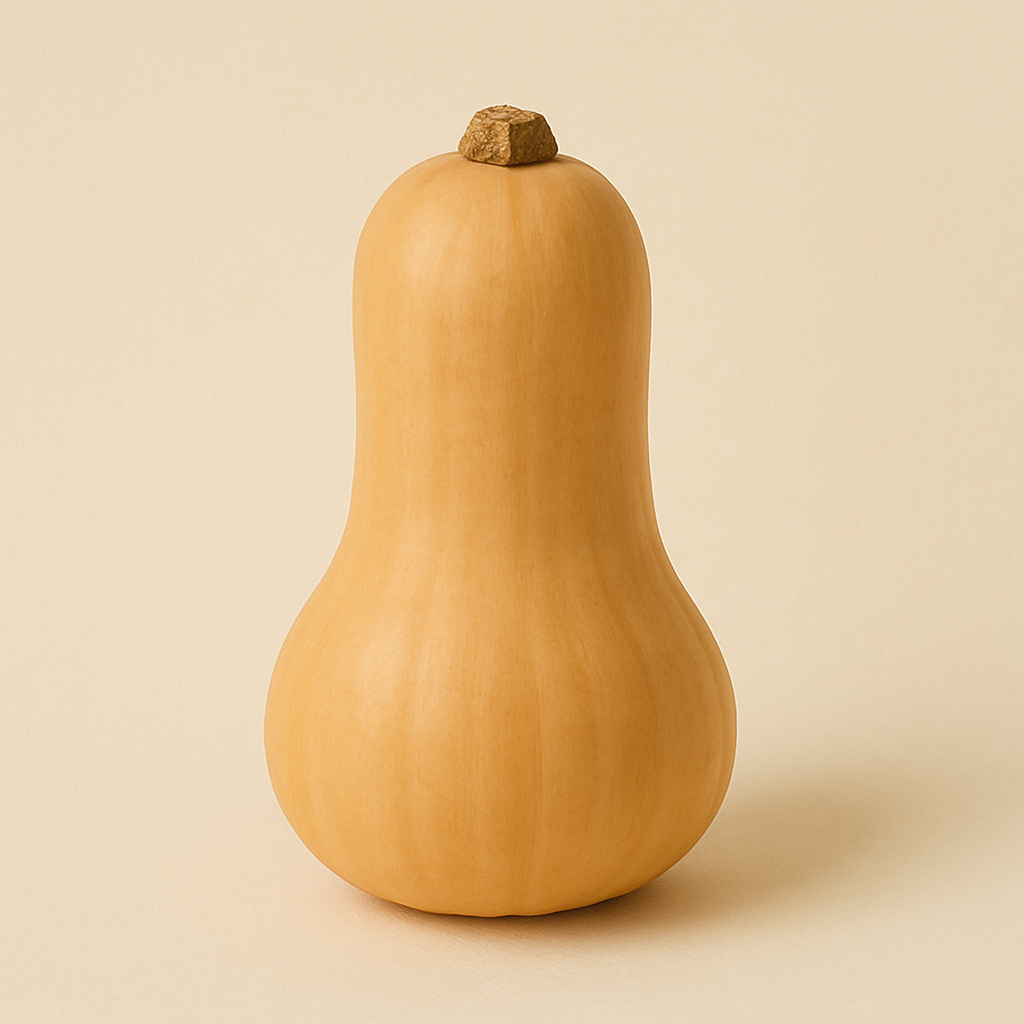
Butternut Squash
Cucurbita moschata
Family: Cucurbitaceae
Butternut squash is a beloved winter squash with sweet, nutty orange flesh and excellent storage ability. The tan-skinned fruits can be stored for months, providing garden-fresh flavor through winter. Heat-loving plants need a long, warm growing season.
Days to Harvest
75-120 days
Sun Needs
Full Sun (8+ hours)
moderate
Germination Temp
85°F optimal
Start Indoors
3 weeks before last frost
Germination
5-10 days
Seed Depth
1 inch
Light to Germinate
No
💡 Tip: Requires warm soil (65°F+). In short-season areas, start indoors. Use black plastic mulch to warm soil.
Soil Type
Rich, well-draining soil with plenty of organic matter
pH Range
6 - 6.8
Spacing
48-72 inches between plants (vining types), 36 inches for bush types
⚠️ Avoid planting near:
History
Butternut squash is a genuinely American invention, created in 1944 by Charles Leggett at the Waltham Field Station in Massachusetts—a modern cultivar developed through scientific plant breeding rather than centuries of farmer selection. Leggett crossed gooseneck squash (also called Canada Crookneck) with other Cucurbita moschata varieties to create a squash with a small seed cavity, thick neck of solid flesh, and smooth skin that was easier to peel than other winter squash. The Waltham Butternut, released in 1970, refined these traits and remains the standard by which all butternut squash is judged. The species Cucurbita moschata itself originated in Central America or northern South America at least 5,000 years ago, with archaeological evidence from Peru, Mexico, and Guatemala. This species tends to be more resistant to squash vine borers than C. pepo varieties, giving butternut a significant advantage in many gardens. The name "butternut" perfectly describes the squash's smooth, sweet flesh that tastes almost buttery when roasted. Butternut's rising popularity coincided with the American culinary renaissance of the 1980s and 1990s, when chefs began featuring it in sophisticated soups, risottos, and ravioli fillings. The squash's excellent storage capability—lasting 2-3 months in proper conditions—made it a farmers' market favorite through late fall. Today, butternut has become the gateway winter squash for many Americans, its mild sweetness and creamy texture making converts of those who find other winter squash too strong or fibrous. The relatively compact vines also make it suitable for smaller gardens where sprawling winter squash would overwhelm the space.
Nutritional Benefits
- ✓Extremely high in Vitamin A (beta-carotene)
- ✓Good source of Vitamin C
- ✓High in fiber
Optimal Growing Temp
70°F - 85°F
Butternut squash thrives in warm temperatures. Best growth between 70-85°F. Growth slows below 60°F. Needs long, warm season (95-120 days).
Survival Range
50°F - 95°F
Can survive these temperatures
Best USDA Zones
Humidity
50-70%
Moderate humidity ideal. Good air circulation reduces powdery mildew. More disease-resistant than other squash.
Height
12-18 inches (sprawling vine)
Spread
8-15 feet
Growth Habit
vine
Germination
5-10 days
Large cotyledons push through soil. Fastest in warm soil (85°F). Keep consistently moist.
Seedling Stage
Duration: 2-3 weeks
True leaves: First true leaves appear 7-10 days after germination with fuzzy texture
Transplant ready: Ready when 2-3 true leaves develop. Handle carefully—squash dislikes root disturbance.
Vegetative Growth
Duration: 4-6 weeks after transplant
Vigorous vine growth. Long runners develop rapidly. Vines can grow 6 inches per day in ideal conditions.
Flowering
Timing: 6-8 weeks after planting
Duration: Continuous for 3-4 weeks
Male flowers appear first, female flowers (with tiny squash at base) follow. Requires bee pollination.
Fruit Development
Begins: 8-10 weeks after planting
Duration: 8-12 weeks until harvest
Fruits develop slowly over 2-3 months. Tan skin color indicates approaching maturity.
Harvest Maturity
Timing: 95-120 days from seed
- Tan/beige skin color
- Hard rind that resists fingernail
- Dry, corky stem
- Hollow sound when tapped
Per Plant
3-6 squash per plant (8-15 lbs)
Per Square Foot
2-4 squash per 10 square feet of vine
Harvest Frequency
Single harvest at end of season
Factors Affecting Yield
- •Long growing season essential for full development
- •Limit fruits to 4-6 per vine for largest size
- •Consistent water and fertilization improves yield
- •Adequate pollination essential—each squash needs multiple bee visits
Seedling Stage
Keep soil consistently moist until established
Established Plants
1-2 inches per week, delivered deeply
During Fruiting
Continue consistent watering; reduce slightly as squash matures
Preferred Method
Drip irrigation or soaker hose at base of plant. Avoid wetting foliage.
⚠️ Critical Watering Periods
- • Flowering
- • Fruit development
Pro Tips
- PRO TIP: Consistent water during fruit development prevents tough, stringy flesh
- Mulch heavily to retain moisture
- Reduce watering as squash approach maturity to concentrate sugars
- Morning watering reduces disease
Feeding Schedule
At Planting
Compost and balanced fertilizer
Once
Vines Begin to Run
Side-dress with compost
Once
First Flowers
Switch to lower nitrogen
Every 3 weeks
Fruit Development
Light feeding to maturity
Monthly
Organic Options
Side-dress with compost when vines run. Foliar spray fish emulsion monthly.
Minimum Size
Not recommended—vines too extensive
Recommended Size
Grow in ground or very large raised beds
Depth Required
N/A
Container Tips
- Butternut squash is not suitable for container growing
- Vines spread 8-15 feet and need ground to run
- If attempting, use 25+ gallon container and trellis vertically
- Better to grow bush varieties in containers
Support Type
Strong A-frame, cattle panel, or sturdy fence
Height Needed
6-8 feet
When to Install
Install at planting if trellising
Method
Heavy squash need slings (pantyhose, mesh bags) to support fruit weight on vertical supports.
Tips
- Trellising saves space but requires fruit support
- Create slings from old t-shirts or mesh bags
- Ground growing is traditional and lower maintenance
- Vertical growing improves air circulation
Why Prune
When
After fruits are set
Technique
Can prune vine tips after 4-6 fruits set to focus energy. Remove secondary vines if desired.
Remove
- ✗ Vine tips after adequate fruit set
- ✗ Secondary vines if managing size
- ✗ Diseased or yellowing leaves
Keep
- ✓ Main vine
- ✓ Developing fruits
- ✓ Leaves shading fruit from sunscald