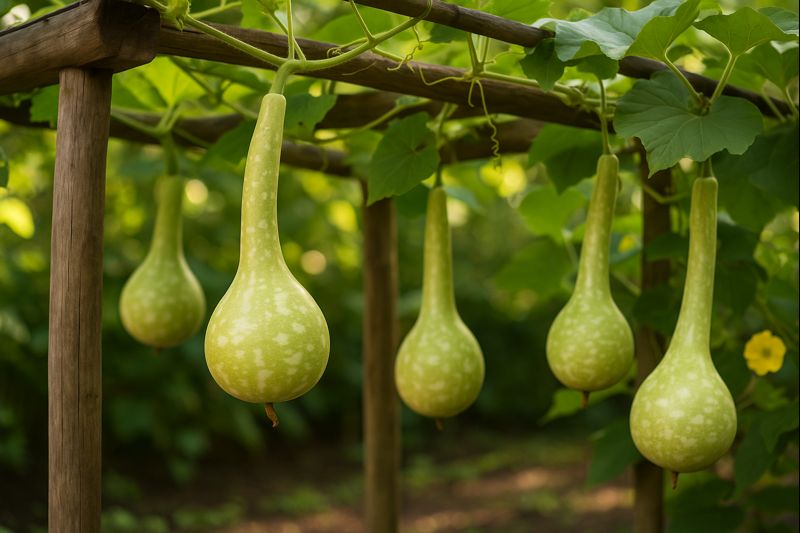
Dipper Gourd
Lagenaria siceraria
Family: Cucurbitaceae
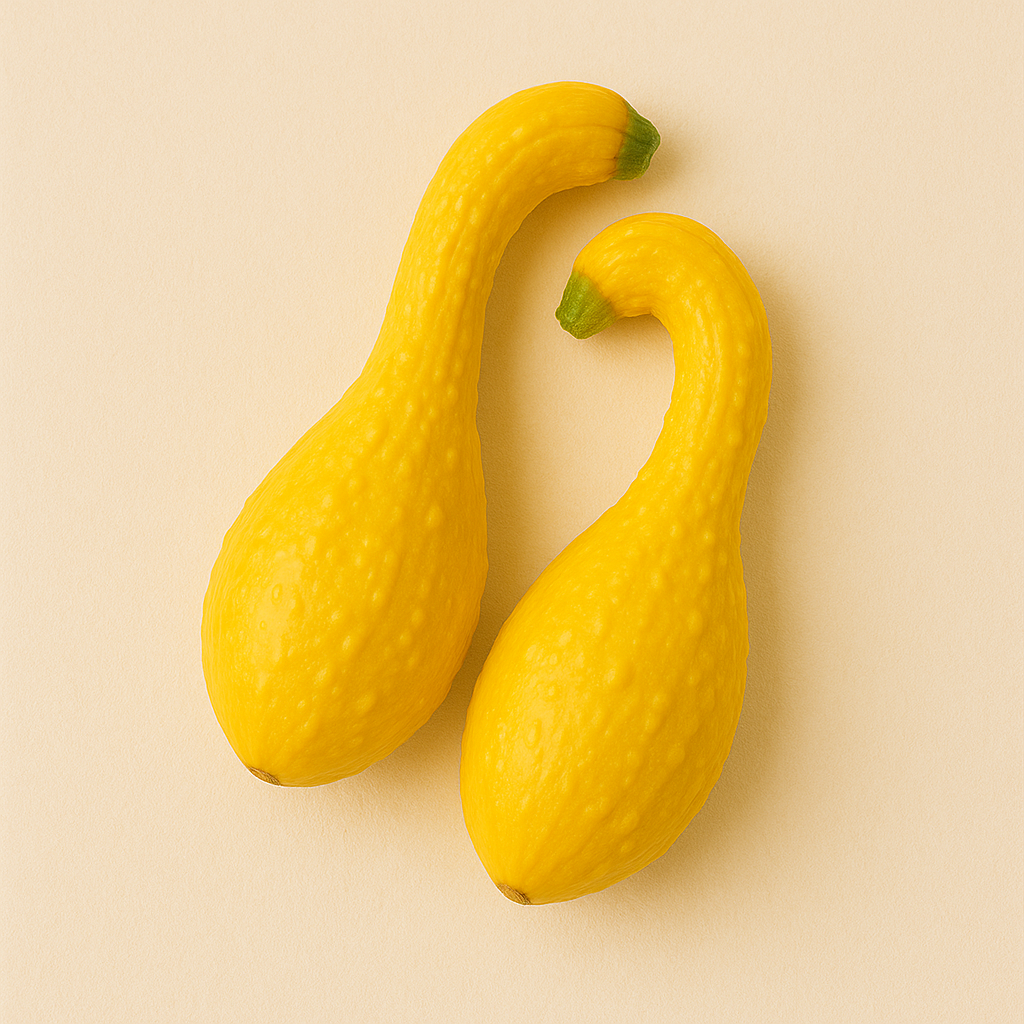
Dipper gourd is a long-handled variety of bottle gourd traditionally grown for making ladles, dippers, and utensils. The distinctive long neck and bulbous bowl create a natural handle and cup shape perfect for scooping water or serving food. Young fruits are edible like bottle gourd. These vigorous vines require a long growing season and strong support.
Days to Harvest
115-130 days
Sun Needs
Full Sun (8+ hours)
high
Germination Temp
85°F optimal
Start Indoors
4 weeks before last frost
Germination
7-14 days
Seed Depth
1 inch
Light to Germinate
No
💡 Tip: Soak seeds overnight in warm water before planting. File or nick hard seed coat to improve germination. Long growing season required—start early indoors in short-season areas.
Soil Type
Rich, well-draining soil with abundant organic matter
pH Range
6 - 7.5
Spacing
6-8 feet between plants. Vigorous vining plants. Grow vertically on trellis for straight handles, or horizontally for curved handles.
⚠️ Avoid planting near:
History
Dipper gourds represent functional design at its finest—nature providing a ready-made utensil requiring only drying and hollowing. As a variety of Lagenaria siceraria, dipper gourds share the ancient lineage of bottle gourds, but their distinctive elongated neck and rounded bowl shape were specifically selected by generations of gardeners across Africa, Asia, and the Americas. Archaeological evidence suggests humans have been crafting dippers from these gourds for thousands of years, predating metal and ceramic utensils in many cultures. The name "dipper gourd" perfectly describes its traditional function: scooping water from wells, barrels, and streams. Before the advent of mass-produced containers, a properly cured dipper gourd served as drinking cup, serving ladle, and water carrier all in one. Different cultures developed regional varieties with varying neck lengths and bowl sizes to suit specific uses—long-necked types for deep wells, short-handled versions for table service, and large-bowled varieties for transferring bulk quantities. In the American South, dipper gourds hung near every well and cistern, while enslaved Africans brought knowledge of gourd cultivation and use from their homelands. Native Americans grew dipper gourds for centuries, using them to serve hominy, stews, and ceremonial drinks. Appalachian communities maintained dipper gourd traditions well into the 20th century, with gourds hanging in kitchens and by water pumps. The hard shell, when properly cured, becomes waterproof and resistant to both hot and cold liquids, though acidic foods can eventually degrade the interior. Modern homesteaders and historical reenactors have revived dipper gourd growing, appreciating both the functional utility and connection to traditional foodways. A single vine can produce 6-10 dippers in a season, and properly dried gourds last decades with proper care. The same gourds that served water to ancient peoples now appeal to those seeking sustainable, plastic-free alternatives and connections to heritage crafts.
Nutritional Benefits
- ✓Very low in calories (young fruits)
- ✓High water content for hydration
- ✓Good source of Vitamin C
Optimal Growing Temp
70°F - 95°F
Dipper gourds thrive in hot temperatures between 70-95°F. They require warm nights above 60°F and a very long growing season (120-150 days). Maximum heat produces the best hard shells for crafting.
Survival Range
60°F - 100°F
Can survive these temperatures
Frost Note: Killed by any frost. Plant only after all frost danger has passed and nights are consistently warm (above 60°F).
Best USDA Zones
Humidity
50-80%
Appreciates warmth and humidity. Good air circulation on trellised vines prevents disease.
Height
15-30 feet
Spread
20+ feet
Growth Habit
vine
Germination
10-21 days
Seed coat splits, cotyledons emerge and straighten. Can be slow—soaking/scarifying speeds germination.
Seedling Stage
Duration: 3-4 weeks
True leaves: First true leaves are heart-shaped and fuzzy, appearing after cotyledons
Transplant ready: Ready to transplant when 3-4 true leaves developed and nights are warm (above 60°F).
Vegetative Growth
Duration: 6-8 weeks
Vigorous vines extend rapidly when warm. Large fuzzy leaves develop. Tendrils seek support.
Flowering
Timing: 8-12 weeks after planting
Duration: 6-8 weeks
Night-blooming white flowers pollinated by moths. Male flowers appear first. Hand-pollinate if moth activity is low.
Fruit Development
Begins: 1-2 weeks after successful pollination
Duration: 10-14 weeks to full maturity
Fruit develops distinctive long handle and bulbous bowl. Shell hardens over months on vine.
Harvest Maturity
Timing: 120-150 days from seed
- Stem dries and browns
- Shell becomes rock-hard
- Gourd feels light for size
- Skin color fades to tan
- Seeds rattle inside when shaken
Per Plant
6-10 dipper gourds depending on variety
Per Square Foot
N/A—grown for shape not weight
Harvest Frequency
Single harvest after full maturity in fall
Factors Affecting Yield
- •Night pollinator availability
- •Growing season length
- •Heat availability
- •Trellis support for straight handles
Seedling Stage
Keep consistently moist, water daily if needed
Established Plants
1-2 inches per week through deep watering
During Fruiting
Consistent moisture until gourds begin to mature
Preferred Method
Drip irrigation or soaker hose at soil level. Avoid overhead watering.
⚠️ Critical Watering Periods
- • Flowering and fruit set
- • Shell development phase
Pro Tips
- Water at base of plant to avoid wet foliage
- Consistent water during fruit development is crucial
- Reduce watering as gourds mature to encourage shell hardening
- Don't let vines wilt—stresses developing gourds
Feeding Schedule
Pre-planting
Compost and balanced organic fertilizer
Once at soil preparation
Vine development
Balanced fertilizer (10-10-10)
Every 2-3 weeks
Flowering/Fruiting
Low-nitrogen, high-phosphorus fertilizer
Every 2-3 weeks
Organic Options
Side-dress with compost when vines begin to flower. Reduce feeding as gourds begin to mature.
Minimum Size
Not recommended
Recommended Size
Not suitable for containers
Depth Required
N/A
Container Tips
- Dipper gourds are too vigorous for containers
- Vines reach 20-30 feet with heavy fruit
- Would require enormous container and support
- Better grown in ground with strong trellis
Support Type
Very sturdy arbor, pergola, or heavy-duty overhead trellis
Height Needed
10-15+ feet
When to Install
Install before planting—must support 50+ lbs of vine and fruit
Method
Build sturdy overhead structure. Gourds hanging vertically produce straight handles. Allow fruit to hang freely for best dipper shape.
Tips
- Produces straight handles—ground-grown curve
- Prevents ground rot
- Better air circulation
- Creates classic dipper shape
Why Prune
When
After fruit set when gourds are established
How Often
Once or twice during growing season
Technique
Can limit to 4-6 gourds per vine for larger, better-shaped craft specimens. Remove misshapen gourds early.
Remove
- ✗ Excess developing gourds beyond 4-6 per vine
- ✗ Secondary vines if desired
- ✗ Damaged or diseased foliage
- ✗ Misshapen gourds
Keep
- ✓ Main vine and selected secondaries
- ✓ Best-shaped gourds with good handles
- ✓ Healthy foliage for photosynthesis