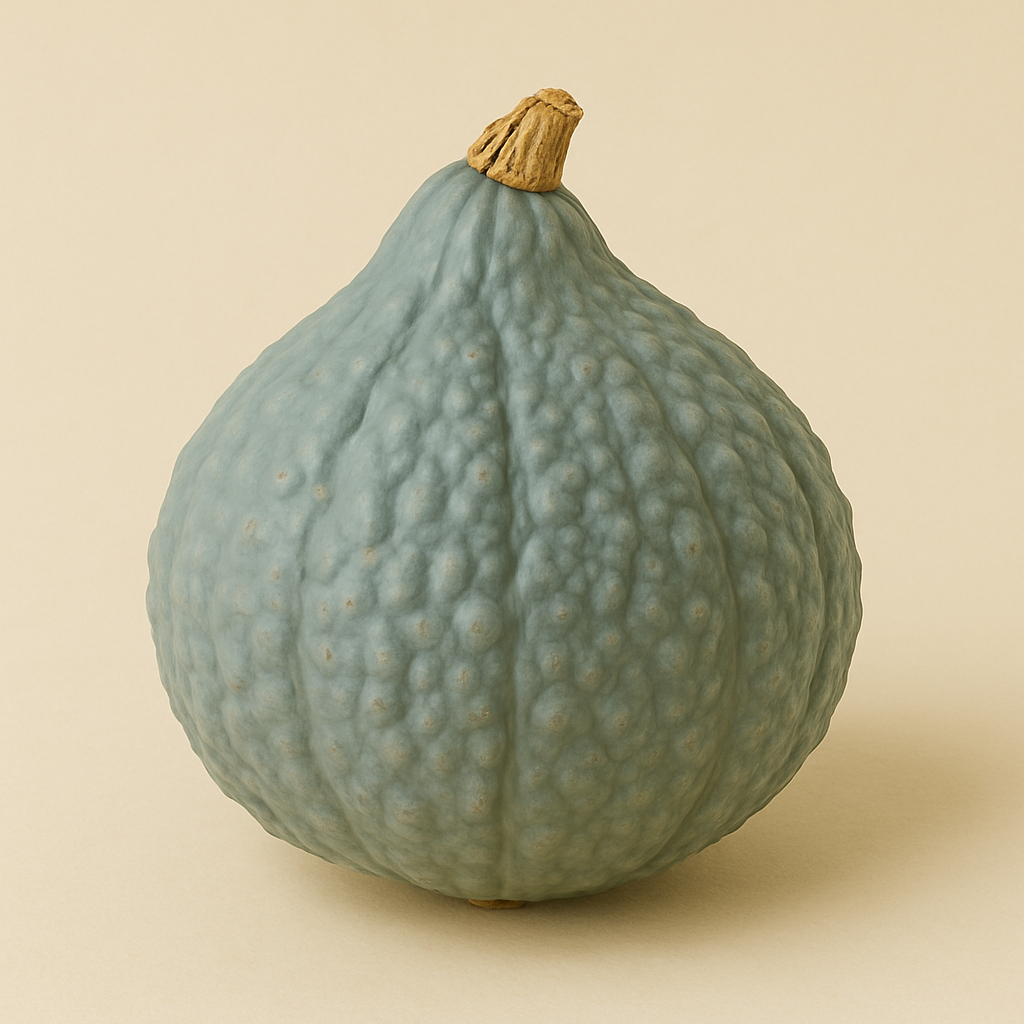
Hubbard Squash
Cucurbita maxima
Family: Cucurbitaceae
Hubbard squash is a large, teardrop-shaped winter squash with bumpy skin and exceptional storage ability. Known for its sweet, fine-grained golden flesh, it was once the most popular winter squash in America. Perfect for feeding a crowd.
Days to Harvest
100-120 days
Sun Needs
Full Sun (8+ hours)
moderate
Germination Temp
85°F optimal
Start Indoors
3 weeks before last frost
Germination
5-10 days
Seed Depth
1 inch
Light to Germinate
No
💡 Tip: Needs long season. Start early in short-season areas.
Soil Type
Rich, well-draining soil
pH Range
6 - 6.8
Spacing
6-8 feet between plants—large vines
⚠️ Avoid planting near:
History
Hubbard squash carries a name steeped in New England legend and botanical mystery. The traditional story credits a Mrs. Elizabeth Hubbard of Marblehead, Massachusetts, who supposedly received seeds from a sea captain and shared them with seed merchant James J.H. Gregory around 1842. Gregory introduced the variety commercially in 1856 and marketed it aggressively, turning the Hubbard into the dominant winter squash of the late 19th and early 20th century. However, the squash's true origin remains uncertain—it may have been a Native American variety, a Caribbean import, or a South American heirloom. Regardless of its origins, the Hubbard's combination of exceptional storage ability (6-7 months in proper conditions), sweet fine-grained golden flesh, and enormous size (10-40 pounds) made it the squash of choice for families needing to feed large households through New England winters. Before refrigeration, Hubbards in root cellars provided nutrition from October through April. The squash's hard, bumpy shell made it nearly indestructible in storage but famously difficult to cut—many gardeners used hacksaws or dropped the squash onto concrete to crack it open. Blue, green, golden, and warted varieties developed, each with slightly different characteristics. Commercial production waned as refrigeration reduced dependence on storage crops and smaller families preferred smaller squash, but Hubbard remains beloved by traditional New England cooks and bakers who prize its superior flavor for pies and soups. The variety's extreme hardiness also made it valuable as rootstock for grafting other squash varieties in commercial production.
Nutritional Benefits
- ✓Very high in Vitamin A
- ✓Good source of Vitamin C
- ✓High in fiber
Optimal Growing Temp
65°F - 85°F
Hubbard thrives in warm temperatures between 65-85°F. Full sun is essential for developing sweet, large fruit. Requires long warm season.
Survival Range
50°F - 95°F
Can survive these temperatures
Frost Note: Killed by any frost. Plant only after all frost danger has passed and soil has warmed to at least 60°F. Harvest before hard frost.
Best USDA Zones
Humidity
50-70%
Moderate humidity is ideal. Good air circulation is essential for disease prevention on these large, spreading plants.
Height
18-24 inches
Spread
15-20 feet
Growth Habit
vine
Germination
7-14 days
Seed coat splits, cotyledons emerge and unfold, hypocotyl straightens. Faster in warm soil (85°F optimal).
Seedling Stage
Duration: 2-3 weeks
True leaves: First true leaves are large and rounded with scalloped edges
Transplant ready: Ready to transplant when 2-3 true leaves developed and roots fill cell. Handle carefully.
Vegetative Growth
Duration: 6-8 weeks
Very vigorous vines extend rapidly with large leaves. Extensive root system establishes.
Flowering
Timing: 7-9 weeks after planting
Duration: 4-6 weeks
Requires bee pollination. Male flowers appear first, female flowers have small teardrop fruit at base.
Fruit Development
Begins: 2-3 weeks after successful pollination
Duration: 10-12 weeks to maturity
Fruit develops distinctive teardrop shape with bumpy skin. Grows to impressive 10-40 lbs.
Harvest Maturity
Timing: 100-120 days from seed
- Rock-hard, bumpy rind
- Deep blue-gray, green, or gold color
- Dry, corky stem
- Cannot dent with fingernail
- Sounds hollow when tapped
Per Plant
2-4 squash (10-40 lbs each)
Per Square Foot
2-4 lbs averaged over growing area
Harvest Frequency
Single harvest when all fruit matures in fall
Factors Affecting Yield
- •Pollination success
- •Consistent watering
- •Heavy fertilizing
- •Long growing season
- •Limiting fruit count
Seedling Stage
Keep consistently moist, water daily if needed
Established Plants
2+ inches per week through deep watering
During Fruiting
Heavy water demands during fruit development; reduce as fruit matures
Preferred Method
Drip irrigation or soaker hose at soil level. Avoid overhead watering.
⚠️ Critical Watering Periods
- • Flowering and fruit set
- • Fruit development phase
Pro Tips
- Water at base of plant to avoid wet foliage
- Hubbard requires more water than smaller squash varieties
- Mulch heavily to retain moisture
- Consistent watering crucial for large fruit development
- Reduce watering 2-3 weeks before harvest to harden rind
Feeding Schedule
Pre-planting
Heavy compost and balanced organic fertilizer
Once at soil preparation
Vine development
Balanced fertilizer (10-10-10)
Every 2 weeks
Flowering/Fruiting
Low-nitrogen, high-phosphorus fertilizer
Every 2 weeks
Organic Options
Work 4-6 inches of compost into planting area—Hubbard is a heavy feeder. Side-dress multiple times during season.
Minimum Size
Not recommended
Recommended Size
Not suitable for containers
Depth Required
N/A
Container Tips
- Hubbard squash is too large and vigorous for container growing
- Vines spread 15-20 feet and fruits can weigh 40 lbs
- Would require enormous container and constant watering
- Choose smaller squash varieties for containers instead
Support Type
Not recommended due to fruit weight
Height Needed
N/A
When to Install
N/A
Method
Hubbard is not typically trellised due to enormous fruit weight (10-40 lbs). Better to let vines sprawl on ground.
Tips
- Ground growing is strongly recommended
- Industrial-strength support would be needed if attempted
- Lay cardboard or straw under developing fruit
- Rotate fruit occasionally for even coloring
Why Prune
When
After fruit set, when 1-2 squash are developing
How Often
Once or twice during growing season
Technique
Limit to 1-2 fruits per vine for maximum size. Remove excess fruit when baseball-sized.
Remove
- ✗ Excess developing fruit beyond 1-2 per vine
- ✗ Secondary vines if space limited
- ✗ Vine tips after adequate fruit set
- ✗ Damaged or diseased leaves
Keep
- ✓ Main vine and primary branches
- ✓ Selected fruits (1-2 per vine)
- ✓ Plenty of foliage for photosynthesis