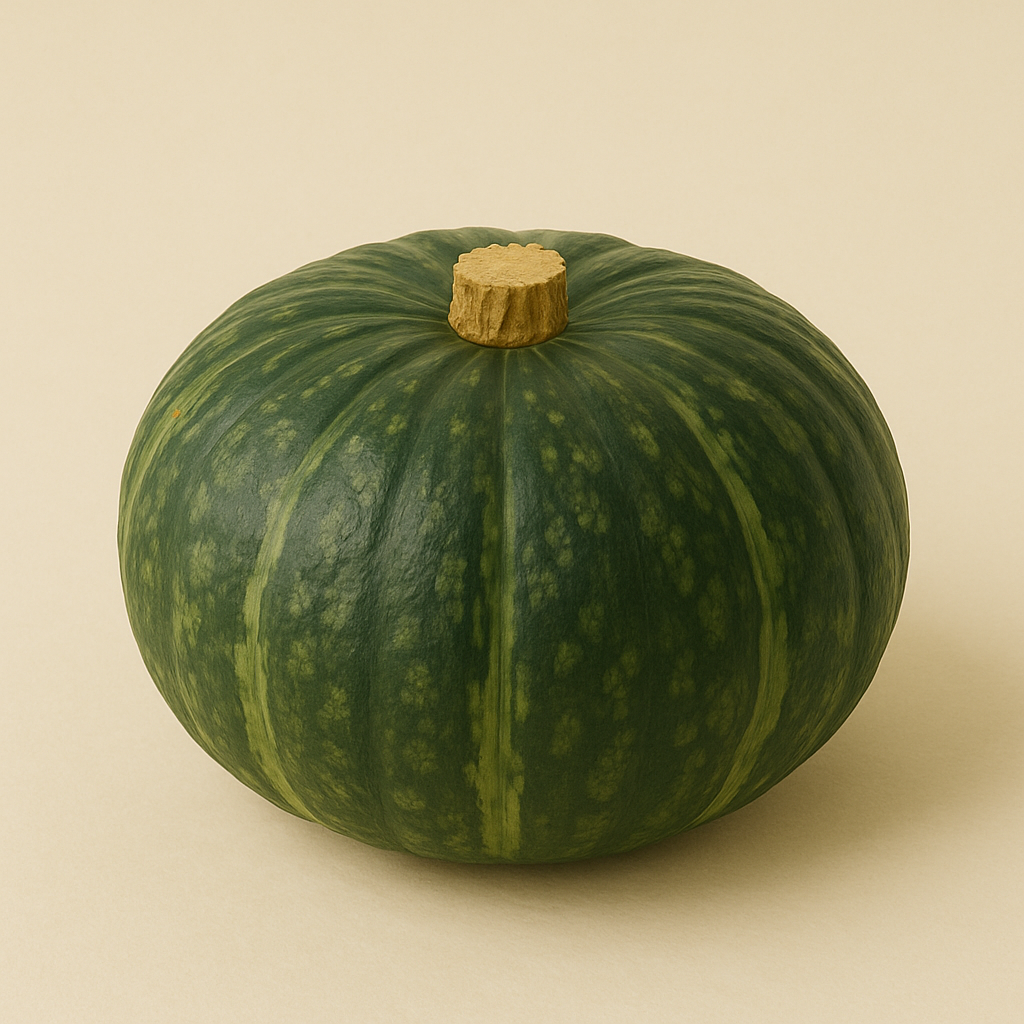
Kabocha Squash
Cucurbita maxima
Family: Cucurbitaceae
Kabocha is a Japanese winter squash with exceptionally sweet, dry flesh that tastes like a cross between sweet potato and pumpkin. The squat green pumpkin shape and dense texture make it perfect for soups, tempura, and Asian cuisine.
Days to Harvest
90-105 days
Sun Needs
Full Sun (8+ hours)
moderate
Germination Temp
85°F optimal
Start Indoors
3 weeks before last frost
Germination
5-10 days
Seed Depth
1 inch
Light to Germinate
No
💡 Tip: Needs warm soil and long season.
Soil Type
Rich, well-draining soil
pH Range
6 - 6.8
Spacing
5-8 feet between plants
⚠️ Avoid planting near:
History
Kabocha's journey to Japan represents one of the great botanical exchange stories of the Age of Exploration. Portuguese traders brought Cucurbita maxima squash from Central America to Cambodia in the 16th century, from where the squash traveled to Japan. The Japanese name "kabocha" is actually a corruption of "Cambodia," and the squash has been cultivated in Japan for over 400 years, becoming deeply woven into Japanese culinary tradition. In Japan, kabocha is one of the traditional foods eaten during the winter solstice celebration (Toji), believed to bring good fortune and ward off colds. The Japanese spent centuries selecting kabocha for specific traits: incredibly sweet, dry flesh with a fluffy texture almost like chestnut, thin edible skin, and a small seed cavity that maximizes usable flesh. This contrasts sharply with watery American pumpkins bred for jack-o-lanterns. Kabocha is a Cucurbita maxima variety, the same species as Hubbard and Buttercup squash, which partly explains its superior sweetness and storage ability compared to C. pepo varieties. The squash became popular in American health food circles in the 1990s as knowledge of Japanese cuisine spread, and today it's a regular feature in natural food stores and Asian markets. Its low glycemic index makes it particularly valuable for diabetics and those watching blood sugar. The dry, starchy flesh makes kabocha uniquely suited to Japanese preparations like tempura and nimono (simmered dishes), where waterier squash would fail. Red-skinned varieties like "Red Kuri" and "Sunshine" have expanded kabocha's visual appeal in Western markets.
Nutritional Benefits
- ✓Very high in Vitamin A
- ✓Good source of Vitamin C
- ✓High in fiber
Optimal Growing Temp
70°F - 85°F
Kabocha thrives in warm temperatures between 70-85°F. Growth slows below 60°F. Full sun is essential for developing the characteristic sweet, dry flesh.
Survival Range
55°F - 95°F
Can survive these temperatures
Frost Note: Killed by any frost. Plant only after all frost danger has passed and soil has warmed to at least 65°F. Harvest before hard frost.
Best USDA Zones
Humidity
50-70%
Moderate humidity is ideal. Good air circulation prevents powdery mildew and other fungal diseases.
Height
12-18 inches
Spread
10-15 feet
Growth Habit
vine
Germination
7-14 days
Seed coat splits, cotyledons emerge and unfold, hypocotyl straightens. Faster in warm soil (85°F optimal).
Seedling Stage
Duration: 2-3 weeks
True leaves: First true leaves are large and rounded with scalloped edges
Transplant ready: Ready to transplant when 2-3 true leaves developed and roots fill cell. Handle carefully.
Vegetative Growth
Duration: 4-6 weeks
Vigorous vines extend rapidly with large leaves. Deep root system establishes.
Flowering
Timing: 6-8 weeks after planting
Duration: 4-6 weeks
Requires bee pollination. Male flowers appear first, female flowers have small squat fruit at base.
Fruit Development
Begins: 1-2 weeks after successful pollination
Duration: 8-10 weeks to maturity
Fruit develops distinctive squat shape. Skin hardens and develops characteristic dull finish.
Harvest Maturity
Timing: 95-120 days from seed
- Dull, hard rind
- Deep green or red-orange color depending on variety
- Dry, corky stem
- Cannot dent with fingernail
- Sweet, dry flesh when cut
Per Plant
3-5 squash (3-5 lbs each)
Per Square Foot
1-2 lbs averaged over growing area
Harvest Frequency
Single harvest when all fruit matures in fall
Factors Affecting Yield
- •Pollination success
- •Consistent watering
- •Soil fertility
- •Long growing season
- •Limiting fruit count for quality
Seedling Stage
Keep consistently moist, water daily if needed
Established Plants
1-2 inches per week through deep watering
During Fruiting
Maintain consistent moisture; reduce slightly as fruit matures
Preferred Method
Drip irrigation or soaker hose at soil level. Avoid overhead watering.
⚠️ Critical Watering Periods
- • Flowering and fruit set
- • Fruit development
Pro Tips
- Water at base of plant to avoid wet foliage
- Morning watering allows leaves to dry before evening
- Mulch heavily to retain moisture
- Consistent watering is crucial for kabocha's dry, sweet flesh
- Reduce watering 2 weeks before harvest to concentrate sugars
Feeding Schedule
Pre-planting
Compost and balanced organic fertilizer
Once at soil preparation
Vine development
Balanced fertilizer (10-10-10)
Every 2-3 weeks
Flowering/Fruiting
Low-nitrogen, high-phosphorus/potassium
Every 2-3 weeks
Organic Options
Side-dress with compost when vines begin to run. Potassium enhances sweetness—add wood ash if soil is potassium-deficient.
Minimum Size
20 gallon minimum
Recommended Size
25+ gallons for best results
Depth Required
At least 14 inches deep
Best Varieties for Containers
Container Tips
- Kabocha requires large containers due to vigorous growth
- Allow vines to trail extensively or grow up sturdy trellis
- Water very frequently—containers dry quickly
- Use support slings for developing fruit if vertical
- Expect reduced yields compared to in-ground growing
Support Type
Very sturdy A-frame or reinforced vertical trellis
Height Needed
8-10 feet
When to Install
Install at planting time before vines develop
Method
Train main vine up trellis with sturdy ties. Use fabric slings to support 3-5 lb fruit. Ensure trellis can support 15+ lbs total weight.
Tips
- Saves significant garden space
- Improves air circulation and reduces disease
- Makes pest inspection easier
- Produces cleaner fruit
- Use sturdy fabric or nylon slings for heavy fruit
Why Prune
When
After fruit set, when 2-3 squash are developing
How Often
Once or twice during growing season
Technique
Limit to 2-3 fruits per vine for best size and sweetness. Remove excess fruit when golf-ball sized.
Remove
- ✗ Excess developing fruit beyond 2-3 per vine
- ✗ Secondary vines if space limited
- ✗ Vine tips after adequate fruit set
- ✗ Damaged or diseased leaves
Keep
- ✓ Main vine and primary branches
- ✓ Selected fruits (2-3 per vine)
- ✓ Plenty of foliage for photosynthesis