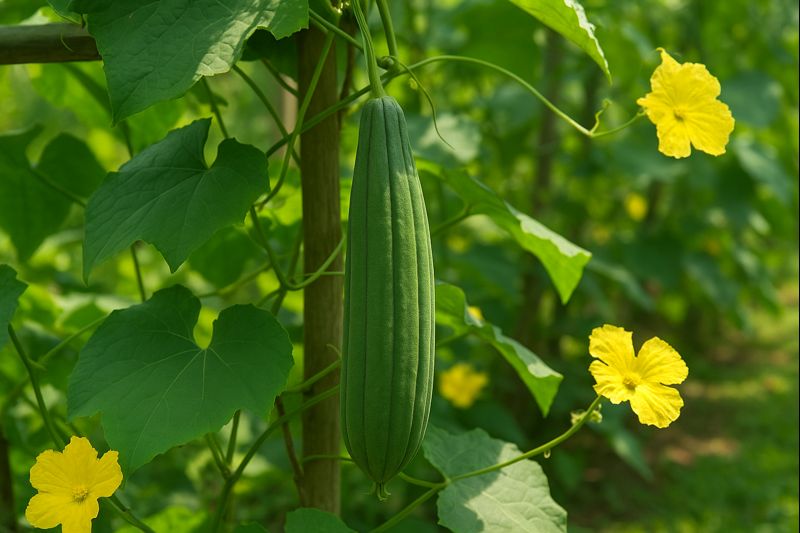
Luffa Sponge Gourd
Luffa aegyptiaca
Family: Cucurbitaceae
Luffa gourd is a fascinating dual-purpose plant grown both for edible young fruits and natural bath sponges from mature fruits. The young tender gourds are a popular vegetable in Asian cuisines, while mature fruits develop a fibrous interior perfect for exfoliating sponges. These vigorous tropical vines require a very long, hot growing season.
Days to Harvest
145-180 days
Sun Needs
Full Sun (8+ hours)
high
Germination Temp
85°F optimal
Start Indoors
6 weeks before last frost
Germination
7-14 days
Seed Depth
1 inch
Light to Germinate
No
💡 Tip: Essential: Soak seeds 24 hours before planting. File or nick hard seed coat for better germination. Start indoors in short-season climates—luffa needs 150+ frost-free days. Transplant only after soil is thoroughly warm (70°F+).
Soil Type
Rich, well-draining soil with abundant organic matter. Prefers sandy loam.
pH Range
6 - 7
Spacing
6-8 feet between plants. Vigorous vining plants requiring strong trellis or support. Vertical growing produces straighter sponges.
⚠️ Avoid planting near:
History
The luffa's journey from Asian vegetable to American bathroom staple represents one of horticulture's most unexpected transformations. Despite the common name "Egyptian luffa," botanical evidence points to tropical Asia—likely India or Southeast Asia—as the plant's origin, with cultivation spreading to China, Japan, and eventually the Middle East and Africa centuries ago. The edible young fruits have been consumed in Asia for millennia, featured prominently in Chinese, Indian, Vietnamese, and Filipino cuisines under names like "Chinese okra," "sing gua," or "patola." Arab traders likely brought luffa to Egypt and the Mediterranean, where it thrived in hot climates. The transformation of mature luffa into natural sponges probably arose from necessity when someone discovered the fibrous network inside dried fruits. By the late 1800s, luffa sponges were being commercially produced in Japan and exported worldwide, becoming essential tools for bathing, cleaning, and even industrial applications. During World War II, the U.S. military used luffa sponges as filters in steam engines and as padding in soldiers' helmets. American soldiers returning from Asia brought back enthusiasm for growing luffa, though the long growing season (150+ days) limits cultivation to southern regions or requires season extension elsewhere. The sponge quality depends on growing conditions—full sun, abundant water, and consistent heat produce the best fibrous networks. Modern spa culture has rediscovered luffa as a natural, sustainable alternative to synthetic bath sponges, while Asian-American communities maintain traditions of harvesting young luffa for stir-fries and soups. Interestingly, two species are commonly grown: Luffa aegyptiaca (ridged/angled luffa) with angular ridges running lengthwise, and Luffa acutangula (smooth luffa), with the ridged variety producing superior sponges. A single mature luffa fruit yields one complete sponge that can last months with proper care, making it both economical and environmentally friendly.
Nutritional Benefits
- ✓Very low in calories (young fruits)
- ✓Good source of Vitamin C
- ✓Contains dietary fiber
Optimal Growing Temp
75°F - 95°F
Luffa is a tropical plant thriving in hot temperatures between 75-95°F. Requires warm nights above 65°F and a very long growing season (150-180 days for sponges). Maximum heat produces best fiber development.
Survival Range
65°F - 100°F
Can survive these temperatures
Frost Note: Killed by any frost. Plant only after all frost danger has passed and nights are consistently warm (above 65°F).
Best USDA Zones
Humidity
60-80%
Tropical origin appreciates warmth and humidity. Good air circulation on trellised vines prevents disease.
Height
15-30 feet
Spread
20+ feet
Growth Habit
vine
Germination
10-21 days
Seed coat splits after soaking/scarifying, cotyledons emerge. Notoriously slow—soaking and scarifying seeds is recommended.
Seedling Stage
Duration: 3-4 weeks
True leaves: First true leaves are lobed and slightly fuzzy, appearing after cotyledons
Transplant ready: Ready to transplant when 3-4 true leaves developed and weather is consistently warm (above 65°F nights).
Vegetative Growth
Duration: 6-8 weeks
Very vigorous vines once warm weather arrives. Tendrils actively seek support.
Flowering
Timing: 8-12 weeks after planting
Duration: Continuous for 6+ weeks
Yellow flowers pollinated by bees. Male flowers appear first, female flowers have small luffa behind.
Fruit Development
Begins: 3-5 days after pollination (edible stage) or 8-10 weeks (sponge stage)
Duration: 10-14 weeks for full sponge maturity
Fruit grows rapidly. For sponges, must mature fully on vine until fibrous interior develops.
Harvest Maturity
Timing: 150-180 days from seed (60-80 for edible)
- Skin yellows and dries
- Fruit becomes very light
- Skin feels papery
- Seeds rattle inside
- Fibrous interior visible if skin cracked
Per Plant
6-12 luffa per vine
Per Square Foot
N/A—grown for individual fruit
Harvest Frequency
Single harvest after full maturity or continuous for edible
Factors Affecting Yield
- •Growing season length (150+ days for sponges)
- •Heat availability
- •Pollination success
- •Trellis support for straight sponges
Seedling Stage
Keep consistently moist, water daily if needed
Established Plants
1-2 inches per week through deep watering
During Fruiting
Consistent moisture needed until fruits mature
Preferred Method
Drip irrigation or soaker hose at soil level. Avoid overhead watering.
⚠️ Critical Watering Periods
- • Flowering and fruit set
- • Sponge fiber development
Pro Tips
- Water at base of plant to avoid wet foliage
- Consistent water during fruit development is crucial
- Luffa is moderately drought-tolerant once established
- Reduce watering as fruit matures to help drying process
Feeding Schedule
Pre-planting
Compost and balanced organic fertilizer
Once at soil preparation
Vine development
Balanced fertilizer (10-10-10)
Every 2-3 weeks
Flowering/Fruiting
Low-nitrogen, high-phosphorus fertilizer
Every 2-3 weeks
Organic Options
Side-dress with compost when flowering begins. Phosphorus promotes sponge fiber development.
Minimum Size
Not recommended
Recommended Size
Not suitable for containers
Depth Required
N/A
Container Tips
- Luffa is too vigorous and heat-demanding for containers
- Requires very long warm season (150+ days)
- Vines reach 20-30 feet
- Better grown in ground with strong trellis in warm climates
Support Type
Very sturdy arbor, cattle panel, or heavy fence
Height Needed
10-15+ feet
When to Install
Install before planting—critical for straight sponges
Method
Build sturdy overhead structure for hanging fruit. Vertical hanging produces straighter sponges. Allow fruit to hang freely.
Tips
- Produces straight sponges—ground-grown curve
- Prevents ground rot
- Better air circulation
- Easier harvest of mature fruit
Why Prune
When
After fruit set when luffa are established
How Often
Once or twice during growing season
Technique
Can limit to 6-8 luffa per vine for better quality sponges. Remove late-season flowers that won't mature.
Remove
- ✗ Excess developing fruit beyond 6-8 per vine
- ✗ Late-season flowers (won't mature before frost)
- ✗ Damaged or diseased foliage
Keep
- ✓ Main vine and healthy secondaries
- ✓ Selected fruit with good form
- ✓ Adequate foliage for photosynthesis