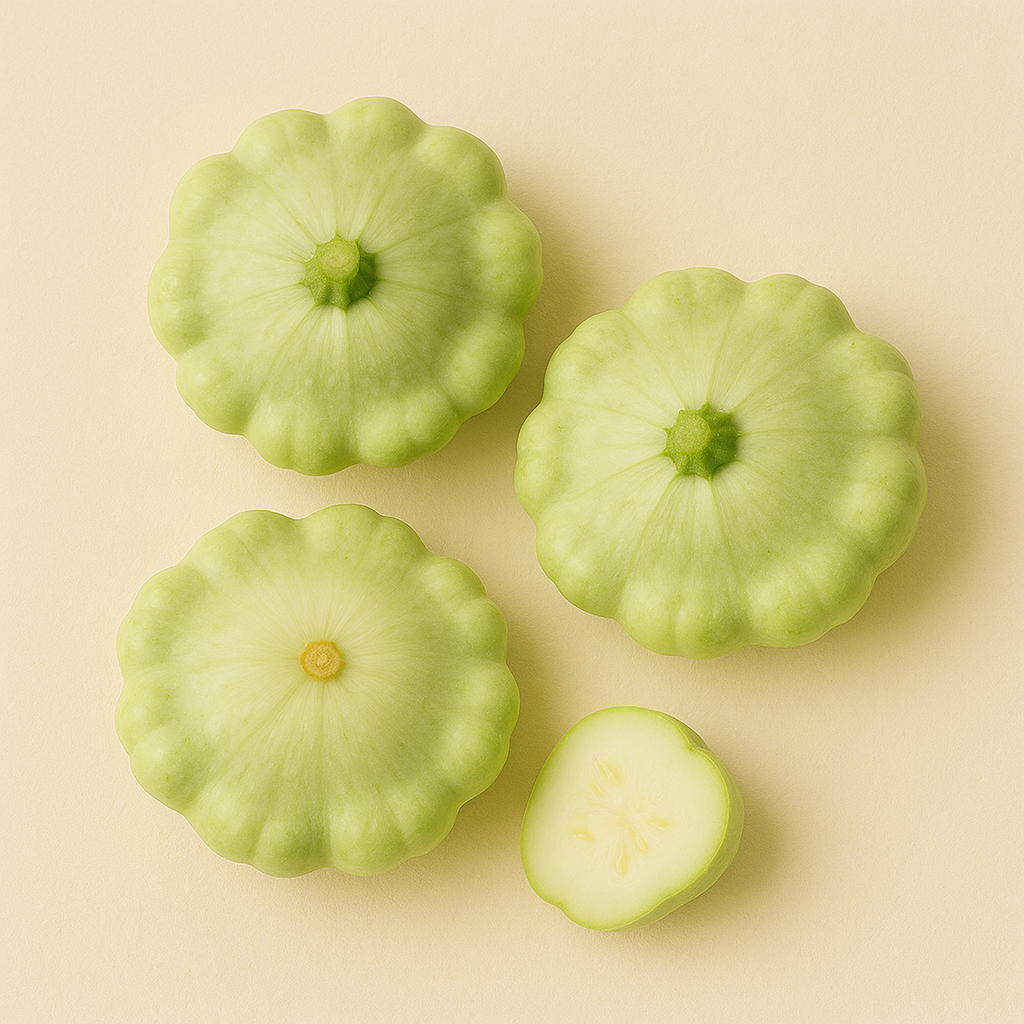
Pattypan Squash
Cucurbita pepo
Family: Cucurbitaceae
Pattypan squash, also called scallop squash, is a charming summer squash with a distinctive flying saucer shape. Best harvested young when tender, it has a mild, buttery flavor. Available in white, yellow, and green varieties.
Days to Harvest
45-55 days
Sun Needs
Full Sun (6-8+ hours)
high
Germination Temp
85°F optimal
Start Indoors
3 weeks before last frost
Germination
4-10 days
Seed Depth
1 inch
Light to Germinate
No
💡 Tip: Direct sow preferred.
Soil Type
Rich, well-draining soil
pH Range
6 - 7.5
Spacing
3 feet between plants (bush type)
⚠️ Avoid planting near:
History
Pattypan squash, with its whimsical flying-saucer shape and scalloped edges, represents one of the oldest and most distinctive cultivated squash forms, documented in European herbals as early as the 16th century after seeds arrived from the Americas. Native Americans cultivated similar scallop-edged squash for centuries before European contact, and the variety quickly became popular in colonial American gardens. Thomas Jefferson famously grew "cymlings" (an old name for pattypan) at Monticello and considered them among his favorite vegetables. The name "pattypan" derives from a type of small pan used for baking pastries and pies in colonial kitchens—the squash's fluted edges resembled the crimped edges of pie pans. Alternative names include scallop squash, cymling, custard marrow, and sunburst squash (specifically for yellow varieties). The French call it "pâtisson" and prize the baby specimens, while Italians know it as "zucchina centenaria." Pattypan's unique shape is not just decorative—it creates a perfect vessel for stuffing and allows the squash to cook evenly when grilled or roasted whole. Baby pattypans, harvested at 2-3 inches across, are tender enough to eat raw, while larger ones require cooking. The variety had somewhat fallen out of fashion by the late 20th century, overshadowed by zucchini's ubiquity, but farmers' markets and restaurant interest in heirloom varieties have sparked a revival. Modern breeding has expanded the color palette from the original white to include yellow (Sunburst), green (Peter Pan), and even bicolored varieties, making pattypan as visually appealing as it is delicious.
Nutritional Benefits
- ✓Low in calories
- ✓Good source of Vitamin C
- ✓Contains manganese
Optimal Growing Temp
65°F - 85°F
Pattypan thrives in warm temperatures between 65-85°F. Growth slows below 60°F. Compact bush habit makes it ideal for containers and small spaces.
Survival Range
50°F - 95°F
Can survive these temperatures
Frost Note: Killed by any frost. Plant only after all frost danger has passed and soil has warmed to at least 60°F.
Best USDA Zones
Humidity
50-70%
Moderate humidity is ideal. Good air circulation prevents powdery mildew and other diseases.
Height
18-24 inches
Spread
3-4 feet
Growth Habit
bush
Germination
5-10 days
Seed coat splits, cotyledons emerge and unfold, hypocotyl straightens. Faster in warm soil (85°F optimal).
Seedling Stage
Duration: 2-3 weeks
True leaves: First true leaves are rounded with scalloped edges, appearing after cotyledons
Transplant ready: Ready to transplant when 2-3 true leaves developed and roots fill cell.
Vegetative Growth
Duration: 3-4 weeks
Compact bush develops with large lobed leaves. Root system establishes.
Flowering
Timing: 4-6 weeks after planting
Duration: Continuous once started
Requires bee pollination. Male flowers appear first, female flowers have tiny scalloped fruit at base.
Fruit Development
Begins: 2-4 days after successful pollination
Duration: Continuous throughout summer
Fruit develops distinctive flying saucer shape with scalloped edges very quickly.
Harvest Maturity
Timing: 45-60 days from seed
- Glossy skin
- Firm texture
- Best harvested young (2-4 inches)
- Scalloped edges defined but tender
- Can press fingernail into skin
Per Plant
10-20+ squash per plant
Per Square Foot
3-5 lbs over season
Harvest Frequency
Every 1-2 days during peak production
Factors Affecting Yield
- •Pollination success
- •Harvest frequency—picking encourages more production
- •Growing season length
- •Consistent watering
Seedling Stage
Keep consistently moist, water daily if needed
Established Plants
1-2 inches per week through deep watering
During Fruiting
Maintain consistent moisture for continuous production
Preferred Method
Drip irrigation or soaker hose at soil level. Avoid overhead watering.
⚠️ Critical Watering Periods
- • Flowering and fruit set
- • Continuous harvest period
Pro Tips
- Water at base of plant to avoid wet foliage
- Morning watering allows leaves to dry before evening
- Mulch to retain moisture and reduce disease
- Consistent watering prevents bitter fruit
- Pattypan is less drought-tolerant than winter squash
Feeding Schedule
Pre-planting
Compost and balanced organic fertilizer
Once at soil preparation
Early growth
Balanced fertilizer (10-10-10)
Every 2-3 weeks
Flowering/Fruiting
Balanced to low-nitrogen fertilizer
Every 2-3 weeks
Organic Options
Side-dress with compost monthly. Continuous production requires continued feeding.
Minimum Size
10 gallon minimum
Recommended Size
15 gallons for best results
Depth Required
At least 10 inches deep
Best Varieties for Containers
Container Tips
- Bush habit makes pattypan excellent for containers
- Choose the most compact varieties
- Water daily in hot weather
- Expect slightly reduced yields
- Single plant per container is usually best
Support Type
Not needed—compact bush habit
Height Needed
N/A
When to Install
N/A
Method
Pattypan does not require trellising due to compact bush habit. May need support if heavily loaded with fruit.
Tips
- Trellising is not recommended or needed
- Bush habit naturally stays compact
- Support heavy-laden branches with stakes if needed
Why Prune
When
Throughout growing season as needed
How Often
As needed throughout season
Technique
Remove lower leaves that touch soil and any diseased foliage. Pick fruit frequently.
Remove
- ✗ Dead or yellowing leaves
- ✗ Foliage touching soil
- ✗ Diseased leaves
- ✗ Spent flowers
Keep
- ✓ Healthy foliage
- ✓ Developing flowers and fruit
- ✓ Main plant structure
Plant Every
2-3 weeks
Sowings/Season
2-3 plantings
Duration
Extends harvest from early summer through fall
Tips
- Make 2-3 successive plantings for extended harvest
- First plants often decline by late summer
- New plantings provide fresh production into fall
- Later plantings often avoid early-season vine borers