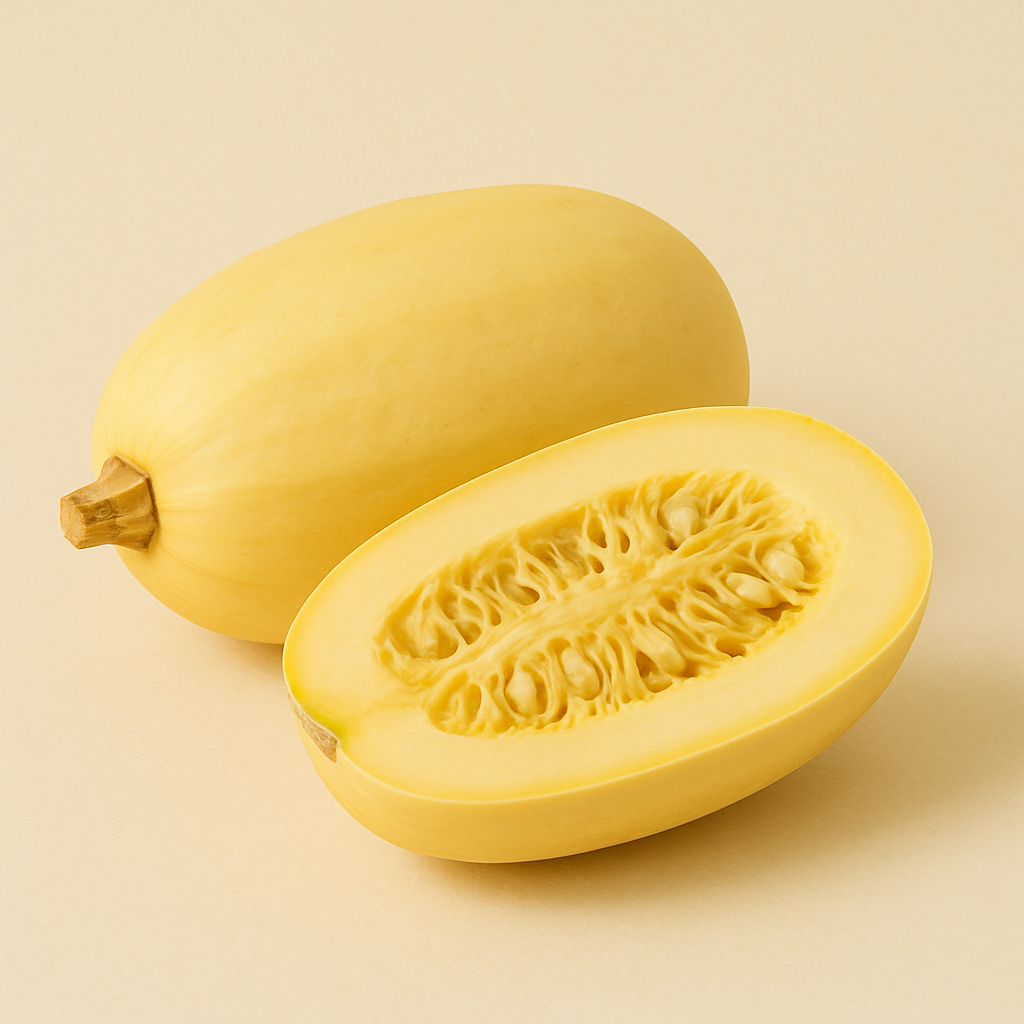
Spaghetti Squash
Cucurbita pepo
Family: Cucurbitaceae
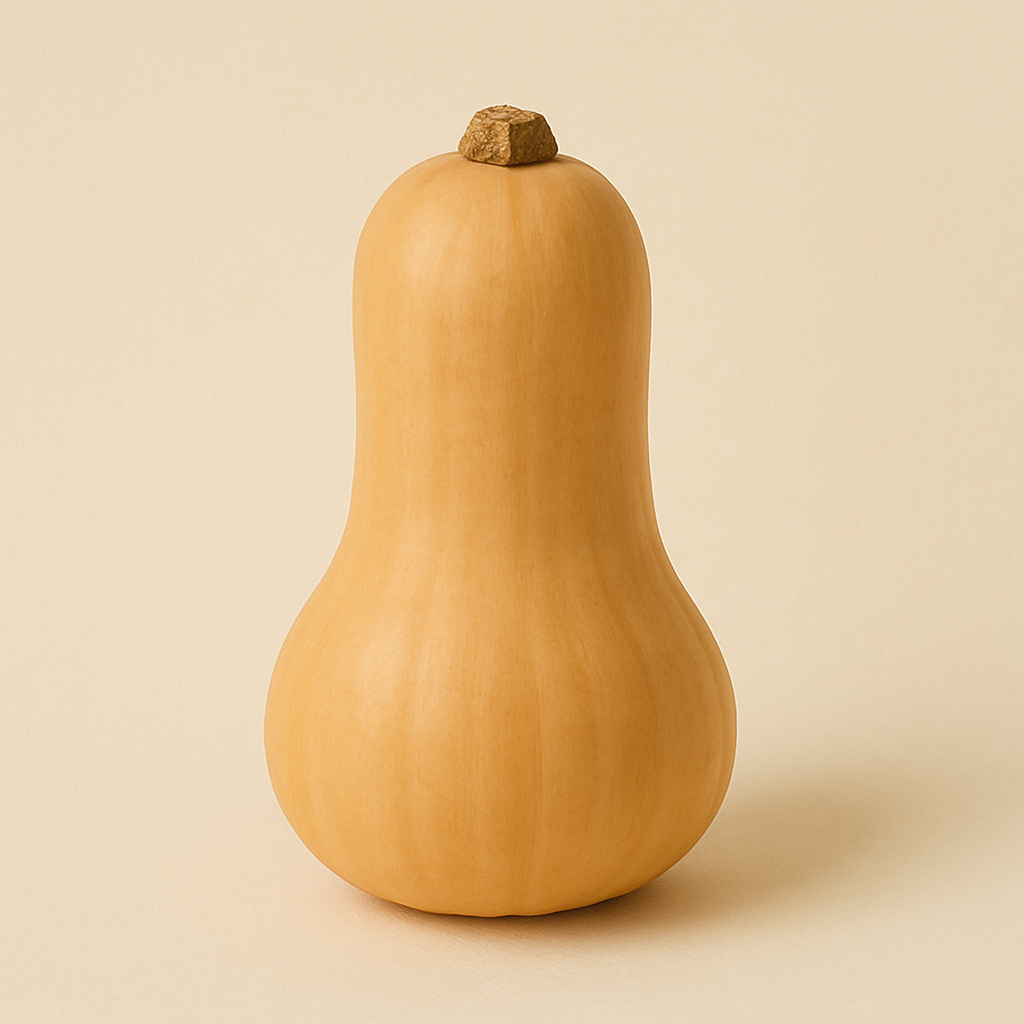
Spaghetti squash is a unique winter squash whose flesh separates into noodle-like strands when cooked. A low-carb alternative to pasta, the oblong yellow fruits store well and provide healthy meals through winter. Easy to grow with good disease resistance.
Days to Harvest
80-100 days
Sun Needs
Full Sun (8+ hours)
moderate
Germination Temp
85°F optimal
Start Indoors
3 weeks before last frost
Germination
5-10 days
Seed Depth
1 inch
Light to Germinate
No
💡 Tip: Direct sow when soil is warm (65°F+). Use row covers in cool climates to accelerate growth.
Soil Type
Rich, well-draining soil
pH Range
6 - 6.8
Spacing
4-6 feet between plants for vining types, 3 feet for bush types
⚠️ Avoid planting near:
History
Spaghetti squash's origin story reads like a botanical mystery novel, with early 20th-century claims placing its origins in Manchuria, China, or Japan, though definitive documentation remains elusive. The squash first appeared in Western seed catalogs in the 1930s and 1940s under names like "vegetable spaghetti" and "squaghetti," marketed primarily to Japanese-American communities. However, botanically, spaghetti squash is a Cucurbita pepo variety—a species native to Central America—suggesting it may have been developed in Asia from American squash seeds brought by traders or developed independently through parallel selection for stringy flesh. The unique flesh that separates into noodle-like strands after cooking is caused by the arrangement of the squash's cellular structure, creating naturally occurring "pasta." Spaghetti squash languished in obscurity until the 1970s health food movement and the Pritikin diet championed low-calorie vegetables, suddenly making this peculiar squash a supermarket staple. The low-carb diet trends of the 2000s brought spaghetti squash back into the spotlight as a pasta substitute, and today it's a fixture in health-conscious cooking. A single cup of cooked spaghetti squash contains only about 42 calories and 10 grams of carbohydrates, compared to 220 calories and 43 grams of carbs in regular pasta. The squash's relatively neutral flavor allows it to absorb sauces and seasonings readily, though its texture differs noticeably from wheat pasta. Modern breeding has produced orange-fleshed varieties like Orangetti with higher beta-carotene content and smaller "angel hair" varieties with finer strands.
Nutritional Benefits
- ✓Very low in calories
- ✓Good source of fiber
- ✓Contains Vitamin C
Optimal Growing Temp
65°F - 85°F
Spaghetti squash thrives in warm temperatures between 65-85°F. Growth slows below 60°F. Needs 80-100 days.
Survival Range
50°F - 95°F
Can survive these temperatures
Frost Note: Killed by any frost. Plant after all danger of frost has passed and soil reaches 65°F.
Best USDA Zones
Humidity
50-70%
Moderate humidity ideal. Good air circulation reduces powdery mildew.
Height
12-18 inches (sprawling vine)
Spread
8-12 feet
Growth Habit
vine
Germination
5-10 days
Seed coat splits, cotyledons emerge. Fastest in warm soil (85°F).
Seedling Stage
Duration: 2-3 weeks
True leaves: First true leaves are rounded with scalloped edges, appearing after cotyledons
Transplant ready: Ready when 2-3 true leaves developed and roots fill cell
Vegetative Growth
Duration: 4-6 weeks
Vines extend rapidly, large leaves develop, plant establishes strong root system
Flowering
Timing: 6-8 weeks after planting
Duration: 4-6 weeks
Requires bee pollination; male flowers appear first, female flowers have small oblong fruit at base
Fruit Development
Begins: 8-10 weeks after planting
Duration: 6-8 weeks to maturity
Fruit elongates, skin hardens, color changes from green to golden yellow
Harvest Maturity
Timing: 80-100 days from seed
- Deep golden yellow color
- Very hard rind
- Dry, corky stem
- Cannot dent with thumbnail
Per Plant
3-6 squash (3-5 lbs each)
Per Square Foot
3-5 squash per 12 square feet of vine
Harvest Frequency
Single harvest in fall
Factors Affecting Yield
- •Pollination success
- •Water consistency
- •Growing season length
- •Variety selection
Seedling Stage
Keep consistently moist, water daily if needed
Established Plants
1-2 inches per week, deep watering preferred
During Fruiting
Maintain consistent moisture; reduce slightly as fruit matures
Preferred Method
Drip irrigation or soaker hose at soil level
⚠️ Critical Watering Periods
- • Flowering
- • Fruit development
Pro Tips
- Water at base of plant to avoid wet foliage
- Morning watering allows leaves to dry before evening
- Mulch heavily to conserve moisture
- Inconsistent watering leads to poor strand development
- Reduce watering 1-2 weeks before harvest
Feeding Schedule
Pre-planting
Compost and balanced organic fertilizer
Once at soil preparation
Vine development
Balanced fertilizer (10-10-10)
Every 2-3 weeks
Flowering/Fruiting
Low-nitrogen, high-phosphorus fertilizer
Every 2-3 weeks
Organic Options
Side-dress with compost when vines begin to run. Reduce nitrogen once flowering begins.
Minimum Size
15 gallon minimum
Recommended Size
20+ gallons for best results
Depth Required
At least 12 inches deep
Best Varieties for Containers
Container Tips
- Choose bush varieties like "Hasta La Pasta" for containers
- Allow vines to trail over edges or up trellis
- Water more frequently than in-ground plants
- Expect smaller yields than in-ground growing
Support Type
Sturdy A-frame or vertical trellis, 6-8 feet tall
Height Needed
6-8 feet
When to Install
Install at planting time before vines develop
Method
Train main vine up trellis with soft ties. Use fabric slings to support developing squash (4-5 lbs each).
Tips
- Saves significant ground space
- Better air circulation reduces disease
- Use fabric slings to support developing squash
- Ensure trellis can support 15-20 lbs total fruit weight
Why Prune
When
After fruit set, when 3-4 squash are developing
Technique
Pinch off vine tips beyond developing fruit. Allow 4-5 squash per vine for good size.
Remove
- ✗ Excess developing fruit
- ✗ Vine tips after adequate fruit set
- ✗ Damaged or diseased leaves
Keep
- ✓ Main vine
- ✓ Selected fruits
- ✓ Healthy foliage for photosynthesis