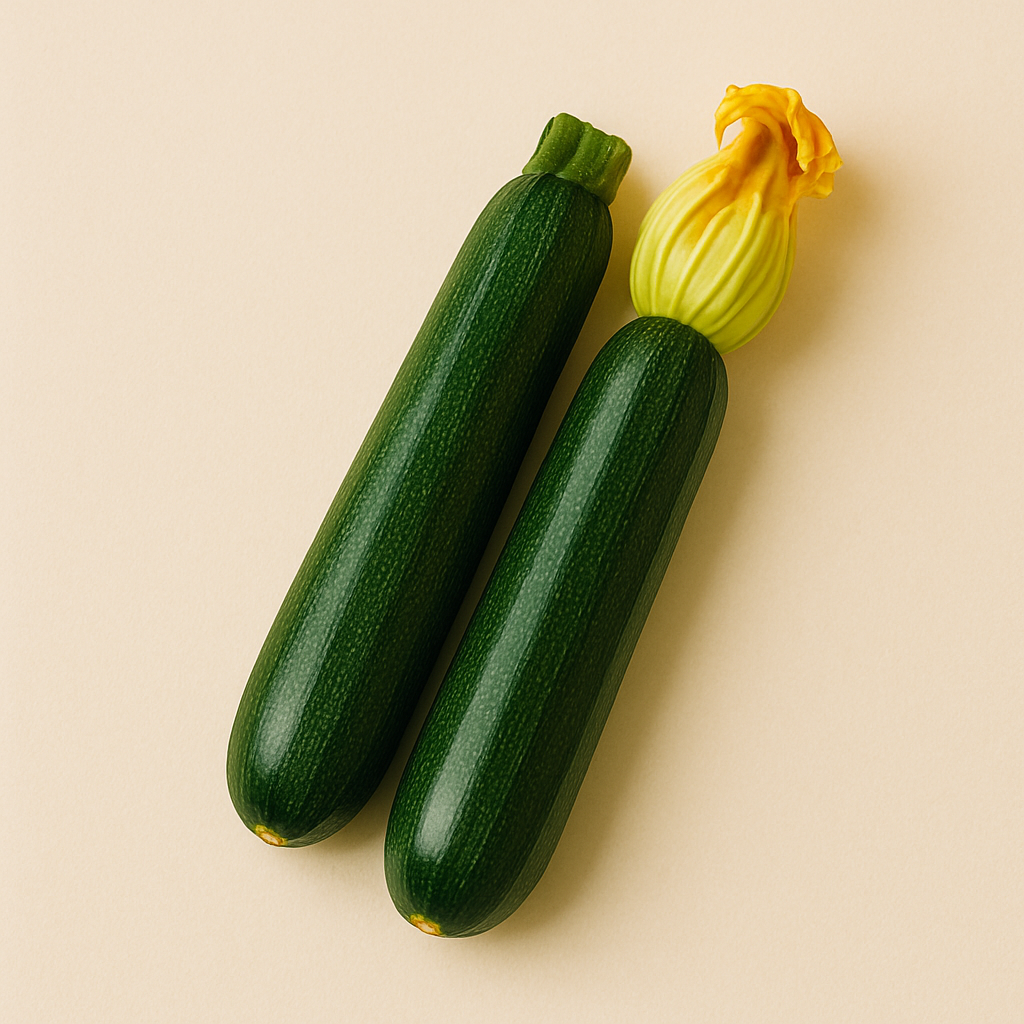
Zucchini
Cucurbita pepo
Family: Cucurbitaceae
Zucchini is one of the most productive summer squash varieties, known for its prolific harvests. Just 2-3 plants can feed a family all summer. The tender, mild-flavored fruits are incredibly versatile and should be harvested young for best quality.
Days to Harvest
45-60 days
Sun Needs
Full Sun (6-8+ hours)
high
Germination Temp
85°F optimal
Start Indoors
3 weeks before last frost
Germination
4-10 days
Seed Depth
1 inch
Light to Germinate
No
💡 Tip: Direct sowing is preferred—squash dislikes transplanting. If starting indoors, use biodegradable pots to minimize root disturbance.
Soil Type
Rich, well-draining soil with plenty of organic matter
pH Range
6 - 7.5
Spacing
36 inches between plants (bush types) or 48-72 inches (vining types)
⚠️ Avoid planting near:
History
Despite its strong Italian identity, zucchini represents a remarkable culinary roundabout—native American squash that returned to the Americas as an Italian vegetable centuries after Columbus. Wild Cucurbita pepo squash was domesticated in Mexico around 7,000-10,000 years ago, making it one of humanity's oldest cultivated crops. Spanish and Portuguese explorers brought squash seeds to Europe in the 16th century, where Italian gardeners in the regions of Milan, Genoa, and Florence began selecting for smaller, tender fruits eaten immature rather than the large, hard-shelled winter squash. By the late 19th century, Italians had developed the cylindrical green summer squash they called "zucchina" (little squash) or "zucchino." The plural "zucchini" was adopted in American English, while the British use the French term "courgette." Italian immigrants brought zucchini seeds to America in the early 20th century, and by the 1920s it was appearing in American seed catalogs. The real breakthrough came during World War II when Victory Gardens popularized home vegetable growing and zucchini's productivity made it ideal for wartime gardening. The vegetable's legendary abundance has inspired countless jokes about neighbors avoiding gardeners in August and zucchini appearing mysteriously on doorsteps. Italian varieties like Costata Romanesco, with their ribbed skin and nutty flavor, represent the vegetable at its finest—far superior to the watery commercial types bred for yield over taste. The zucchini flower (fiori di zucca), stuffed and fried, is a beloved delicacy in Italian cuisine, and the male flowers are abundant since only female flowers produce fruit. Today, zucchini's mild flavor, versatility, and prolific nature make it the gateway vegetable for countless beginning gardeners.
Nutritional Benefits
- ✓Very low in calories
- ✓Good source of Vitamin C
- ✓Contains potassium
Optimal Growing Temp
70°F - 90°F
Zucchini thrives in warm temperatures between 70-90°F. Growth slows below 60°F and fruit set is reduced. Above 95°F, pollination may be affected.
Survival Range
50°F - 100°F
Can survive these temperatures
Frost Note: Zucchini is extremely frost-sensitive and will be killed by any frost. Plant only after all danger of frost has passed and soil has warmed to at least 60°F.
Best USDA Zones
Humidity
50-70%
Moderate humidity is ideal. High humidity increases risk of powdery mildew and other fungal diseases. Good air circulation is essential in humid climates.
Height
24-36 inches
Spread
3-4 feet
Growth Habit
bush
Germination
4-10 days
Large cotyledon (seed leaves) emerge pushing through soil. Germination is faster in warm soil (7-8 days at 85°F vs 10+ days at 70°F).
Seedling Stage
Duration: 2-3 weeks
True leaves: First true leaves appear 7-10 days after germination
Transplant ready: If starting indoors, ready to transplant when 2-3 true leaves have developed and plants are 3-4 inches tall. Handle carefully—squash dislikes root disturbance.
Vegetative Growth
Duration: 3-4 weeks after transplanting or emergence
Rapid leaf and vine growth. Large, prickly leaves develop quickly. Plants establish extensive root systems and prepare for flowering.
Flowering
Timing: 4-6 weeks after planting
Duration: Continuous throughout growing season
Male flowers appear first (on thin stems), followed by female flowers (with tiny fruit at base). Requires bee pollination. Hand-pollinate in early morning if bee activity is low.
Fruit Development
Begins: Begins 1-2 weeks after female flowers appear
Duration: Continuous production for 6-8 weeks
Fruits develop rapidly, reaching harvest size in 4-7 days from pollination. Check plants daily during peak production.
Harvest Maturity
Timing: 45-60 days from seed
- Fruit is 6-8 inches long for standard varieties
- Skin is glossy and tender
- Easily pierced with fingernail
- Flowers still attached or recently fallen
Per Plant
6-10 lbs per plant over the season
Per Square Foot
8-12 lbs per square foot with proper spacing
Harvest Frequency
Every 1-2 days during peak production
Factors Affecting Yield
- •Variety—some are more prolific than others
- •Consistent harvesting—picking young fruits encourages more production
- •Adequate water—especially during fruiting
- •Pollination success—more bees mean more fruit
- •Temperature—optimal temps increase yield
- •Soil fertility—heavy feeders need regular fertilization
Seedling Stage
Keep soil consistently moist but not waterlogged until established
Established Plants
1-2 inches per week through deep watering
During Fruiting
Increase to 2 inches per week during heavy fruiting—consistent moisture is critical
Preferred Method
Drip irrigation or soaker hoses are ideal. Water at the base of plants to keep foliage dry and prevent powdery mildew. Avoid overhead watering.
⚠️ Critical Watering Periods
- • Flowering and fruit set
- • Rapid fruit development
Pro Tips
- Water deeply and less frequently rather than shallow daily watering
- Mulch heavily to retain moisture and regulate soil temperature
- Water in early morning to reduce disease pressure
- Stick your finger 2-3 inches into soil—water when dry at that depth
Feeding Schedule
At Planting
Compost and balanced 10-10-10
Once, mixed into soil
When Vines Begin to Run
Side-dress with compost or balanced fertilizer
Once
First Flowers Appear
Switch to lower nitrogen 5-10-10
Every 2-3 weeks
Peak Production
Continue 5-10-10 or liquid fertilizer
Every 2 weeks
Organic Options
Side-dress with compost every 3-4 weeks. Apply fish emulsion or liquid fertilizer every 2 weeks during fruiting. Scratch kelp meal into soil surface monthly.
Minimum Size
5 gallon minimum
Recommended Size
10-15 gallon for best results
Depth Required
At least 12 inches deep
Best Varieties for Containers
Container Tips
- Choose compact bush varieties for containers
- Use high-quality potting mix with good drainage
- Water daily in hot weather—containers dry out quickly
- Fertilize every 2 weeks with balanced liquid fertilizer
- Position in full sun (6-8 hours minimum)
- One plant per container for adequate space
Why Prune
When
Mid to late season as needed
How Often
As needed, typically every 2-3 weeks
Technique
Remove older, yellowing leaves at the base of the plant and any leaves touching the ground. Cut leaves cleanly with pruners rather than tearing.
Remove
- ✗ Oldest leaves at base of plant
- ✗ Any diseased or damaged leaves
- ✗ Leaves touching the soil
- ✗ Dead or dying foliage
Keep
- ✓ Healthy green leaves
- ✓ Young, productive growth
- ✓ Leaves shading developing fruits
Plant Every
3-4 weeks
Sowings/Season
2-3 plantings in most climates
Duration
From last frost until 8-10 weeks before first fall frost
Tips
- Second planting provides backup if first succumbs to pests or disease
- Stagger plantings to avoid overwhelming harvest all at once
- Later plantings often avoid early-season pests like squash vine borers
- In long-season areas, a late summer planting can produce into fall