Lemon Balm
Melissa officinalis
Family: Lamiaceae
Lemon Balm is a delightfully fragrant perennial herb with bright lemon-scented leaves used for centuries to calm nerves, improve mood, and add refreshing flavor to teas and dishes. This hardy, low-maintenance plant spreads readily and produces abundant harvests of aromatic foliage.
Days to Harvest
70-90 days
Sun Needs
Full Sun to Partial Shade (4-8 hours)
moderate
Germination Temp
70°F optimal
Start Indoors
6 weeks before last frost
Germination
7-14 days
Seed Depth
1/8 inch
Light to Germinate
Yes
💡 Tip: Seeds need light to germinate. Press lightly into soil surface without covering deeply. Keep consistently moist but not waterlogged. Germination can be slow and erratic.
Soil Type
Average, well-draining soil. Tolerates poor soil.
pH Range
6 - 7.5
Spacing
18-24 inches between plants (spreads readily)
⚠️ Avoid planting near:
History
Melissa officinalis, known as lemon balm, has been cultivated for over 2,000 years, with its name "Melissa" deriving from the Greek word for "honeybee," reflecting the plant's remarkable ability to attract pollinators. Ancient Greeks and Romans revered lemon balm for its medicinal properties, with the physician Dioscorides prescribing it for scorpion stings and venomous bites around 50 CE, while Pliny the Elder recommended it for stopping bleeding. The plant gained particular fame in medieval Europe, where it became a cornerstone of monastic medicine gardens. Paracelsus, the influential 16th-century Swiss physician, called lemon balm the "elixir of life," believing it could completely revive the human spirit and even promote longevity. Carmelite nuns in France created "Carmelite Water" (Eau de Mélisse) in the 14th century, a lemon balm-based tonic mixed with lemon peel, nutmeg, coriander, and angelica root, which became wildly popular as a remedy for headaches, nervous disorders, and neuralgia—the formula is still produced today. During the Middle Ages, lemon balm was used to lift spirits during times of melancholy, with the 17th-century herbalist John Evelyn writing that lemon balm "sovereign for the brain, strengthening the memory and powerfully chasing away melancholy." The herb was so valued that colonists brought it to North America, where it naturalized widely. Modern research has validated many traditional uses, with studies confirming lemon balm's ability to reduce anxiety, improve cognitive function, support sleep, and combat the herpes simplex virus. The essential oil, rich in citronellal and citral, is now used in aromatherapy worldwide, while lemon balm tea remains one of the most popular herbal infusions for relaxation and mental clarity.
Nutritional Benefits
- ✓Rich in rosmarinic acid, a powerful antioxidant
- ✓Contains caffeic acid and other polyphenols
- ✓Good source of eugenol with antimicrobial properties
Optimal Growing Temp
60°F - 75°F
Lemon balm grows well in moderate temperatures. Tolerates heat and cold once established.
Survival Range
30°F - 85°F
Can survive these temperatures
Frost Note: Hardy to zone 4-5. Dies back in winter but regrows reliably from roots. Very easy to grow.
Best USDA Zones
Humidity
40-60%
Tolerates a wide range. Good air circulation prevents disease.
Height
18-24 inches
Spread
18-24 inches
Growth Habit
clumping
Germination
10-14 days
Easy germination. Seeds need light—do not cover.
Seedling Stage
Duration: 4-6 weeks
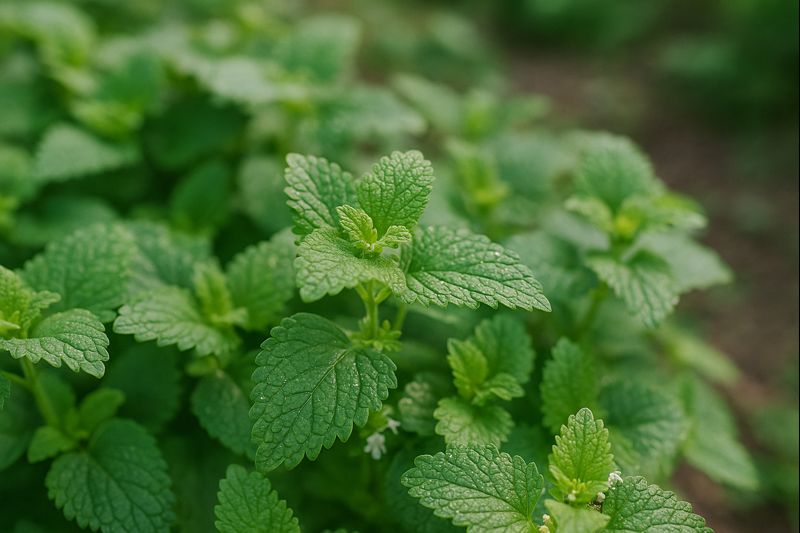
True leaves: Heart-shaped, crinkled leaves with strong lemon scent.
Transplant ready: When 4-5 inches tall (8-10 weeks from seed).
Vegetative Growth
Duration: Spring through fall
Vigorous, bushy growth. Harvest leaves anytime. Pinch flowers to prolong leaf production.
Flowering
Timing: Mid-summer
Duration: 3-4 weeks
Small white flowers attractive to bees. Self-sows prolifically if allowed to set seed.
Harvest Maturity
Timing: 70-85 days from seed
- Bushy, full growth
- Strong lemon aroma
- Ready to flower
Per Plant
2-4 cups fresh leaves per plant over the season.
Per Square Foot
1-2 plants per square foot
Harvest Frequency
Harvest sprigs continuously. Cut up to half the plant at once.
Factors Affecting Yield
- •Regular harvest
- •Cool weather for best flavor
- •Removing flowers extends leaf production
Seedling Stage
Keep consistently moist.
Established Plants
Water when top inch dry. Every 3-5 days.
During Fruiting
Moderate water during flowering.
Preferred Method
Water at soil level. Tolerates more moisture than Mediterranean herbs.
Pro Tips
- Prefers consistent moisture
- More forgiving than Mediterranean herbs
Feeding Schedule
Spring
Compost
Once
Growing
Liquid fertilizer
Monthly
Organic Options
Regular light feeding supports continuous harvest.
Minimum Size
10 inch pot
Recommended Size
12-14 inch pot
Depth Required
At least 10-12 inches
Best Varieties for Containers
Container Tips
- Grows well in containers
- Contain spreading habit
- Keep moist but well-drained
- Bring indoors for winter harvest