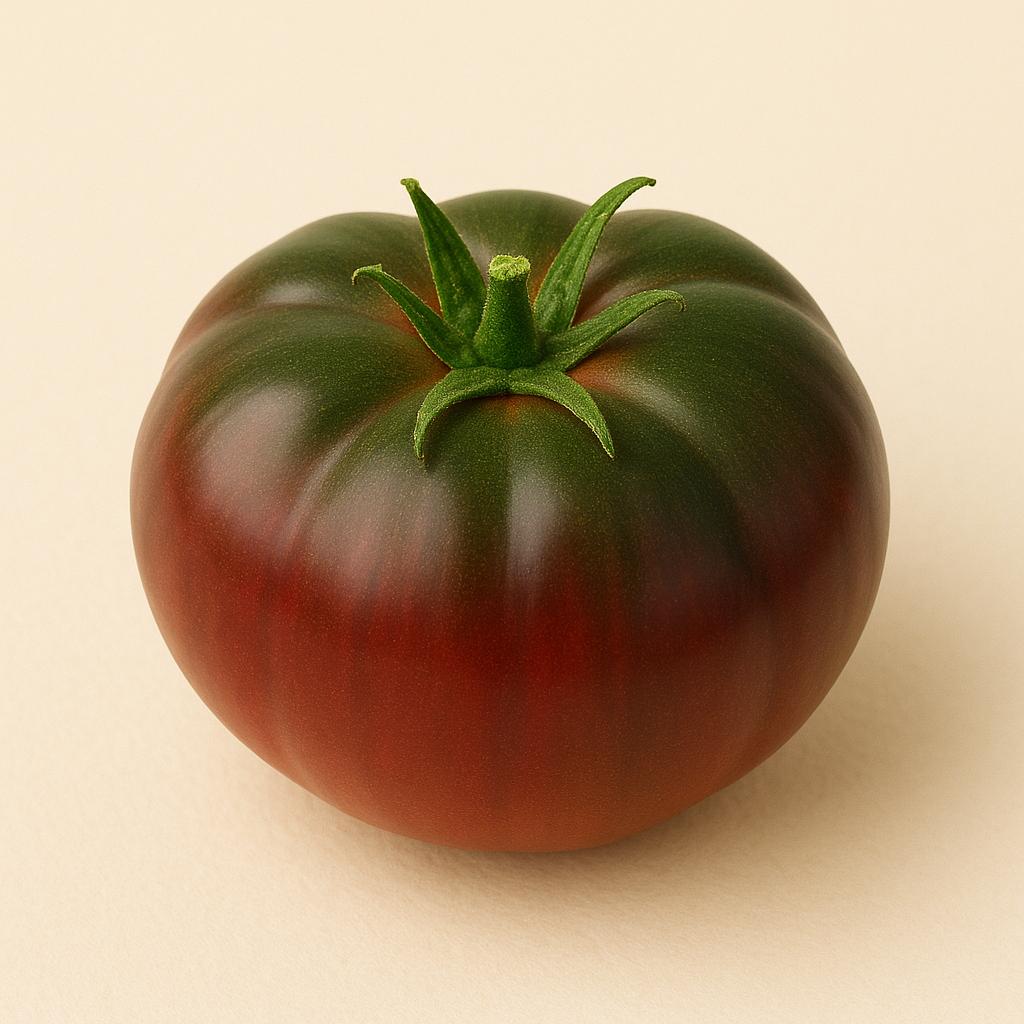
Cherokee Purple Tomato
Solanum lycopersicum
Family: Solanaceae
Cherokee Purple is a stunning heirloom with deep purple-brown skin and rich, complex, smoky-sweet flavor. One of the best-tasting tomatoes you can grow.
Days to Harvest
80-90 days
Sun Needs
Full Sun (6-8+ hours)
moderate
Germination Temp
75°F optimal
Start Indoors
8 weeks before last frost
Germination
7-14 days
Seed Depth
1/4 inch
Light to Germinate
No
Soil Type
Rich, well-draining soil
pH Range
6 - 6.8
Spacing
30 inches between plants
⚠️ Avoid planting near:
History
Cherokee Purple carries one of the most compelling origin stories in the heirloom tomato world. According to the most widely accepted account, seeds of this variety were passed down through the Cherokee Nation for over a century before Craig LeHoullier, a chemist and passionate seed saver from Raleigh, North Carolina, received them in 1990 from J.D. Green of Sevierville, Tennessee. Green claimed the seeds had been in his family since at least the late 1800s and originated with the Cherokee people—though some historians note that the Cherokee were forcibly removed from Tennessee during the Trail of Tears in the 1830s, making the exact timeline difficult to verify. What is certain is that Cherokee Purple represented something remarkable when LeHoullier began growing it: a "black" tomato with extraordinary flavor that would help spark the 1990s heirloom tomato renaissance. LeHoullier gave the variety its evocative name and began distributing seeds through the Seed Savers Exchange, where it quickly became one of the most requested varieties. The tomato's unique purple-brown coloring comes from high concentrations of anthocyanins in the skin, the same antioxidant compounds found in blueberries and red wine. Today, Cherokee Purple regularly wins taste tests and has been featured in publications from the New York Times to Southern Living as one of the finest-tasting tomatoes in existence.
Nutritional Benefits
- ✓High in anthocyanins
- ✓Rich in lycopene
- ✓Excellent Vitamin C
Optimal Growing Temp
70°F - 85°F
Cherokee Purple thrives at 70-85°F. More heat-tolerant than some heirlooms but fruit set declines above 90°F. The dark color intensifies with warm days and cooler nights.
Survival Range
55°F - 95°F
Can survive these temperatures
Frost Note: Frost-sensitive like all tomatoes. Dark color is not cold-related—it's genetic. Protect plants when temperatures drop below 50°F.
Best USDA Zones
Humidity
40-65%
Moderate humidity acceptable. Cherokee Purple has average disease resistance—good air circulation important in humid climates.
Height
5-7 feet
Spread
2-3 feet
Growth Habit
indeterminate
Germination
7-14 days
Seeds germinate at 75-85°F. Cherokee Purple has good germination rates for an heirloom variety.
Seedling Stage
Duration: 4-5 weeks
True leaves: First true leaves appear 10-14 days after sprouting—standard tomato foliage (not potato-leaf)
Transplant ready: Ready when 5-7 inches tall with 4-6 true leaves and sturdy stem.
Vegetative Growth
Duration: 5-6 weeks after transplant
Vigorous indeterminate growth. Plants develop standard tomato foliage. Establish support system during this phase.
Flowering
Timing: 6-8 weeks after transplant
Duration: Continuous throughout season
Self-pollinating. Yellow flowers appear in clusters. Gentle shaking can improve fruit set in humid or very hot conditions.
Fruit Development
Begins: 3-4 weeks after flowering
Duration: Continuous until frost
Fruits develop unique purple-brown coloring as they ripen. The "dark shoulders" around the stem are characteristic and indicate ripeness.
Harvest Maturity
Timing: 80-90 days from transplant
- Deep purple-brown color, especially on shoulders
- Dusky rose color on lower portions
- Slight softness when gently pressed
- Strong, sweet, smoky aroma
- Green shoulders have faded to purple-brown
Per Plant
10-18 lbs per plant
Per Square Foot
4-7 lbs per square foot
Harvest Frequency
Every 3-5 days during peak production
Factors Affecting Yield
- •Good productivity for an heirloom variety
- •Consistent watering prevents cracking
- •Heat stress reduces fruit set but Cherokee Purple handles heat better than Brandywine
- •Disease management important for sustained production
- •Proper pruning directs energy to fruit
Seedling Stage
Keep consistently moist
Established Plants
1-2 inches per week, consistent watering essential
During Fruiting
Consistent moisture prevents cracking and blossom end rot
Preferred Method
Drip irrigation or soaker hoses preferred. Water at base of plants. Morning watering allows foliage to dry.
⚠️ Critical Watering Periods
- • Flowering
- • Fruit development
- • Color development
Pro Tips
- Consistent watering is key to preventing cracking in Cherokee Purple
- Mulch heavily to maintain soil moisture
- Slightly reduce watering as fruits ripen for more concentrated flavor
- The complex flavor develops best with consistent moisture
Feeding Schedule
At Planting
Compost + balanced fertilizer
Once
First Flowers
Side-dress with compost or 5-10-10
Once
Fruit Development
Tomato fertilizer low in nitrogen
Every 2-3 weeks
Organic Options
Side-dress with compost monthly. Fish emulsion every 2 weeks during active growth. Bone meal at planting for phosphorus.
Minimum Size
10 gallon minimum
Recommended Size
15-20 gallon for best results
Depth Required
At least 18 inches deep
Best Varieties for Containers
Container Tips
- Cherokee Purple grows well in large containers
- Sturdy support essential for indeterminate growth
- Consistent watering critical in containers
- Feed regularly as nutrients wash out with watering
- The dramatic coloring makes it a conversation piece on patios
Support Type
Heavy-duty cage, sturdy stake, or trellis system
Height Needed
6-7 feet tall
When to Install
Install at transplanting
Method
Can be grown with 2-3 main stems in cage or single-stem up stake. The medium-large fruits (10-16 oz) need support to prevent breakage.
Tips
- Standard tomato cages often sufficient for Cherokee Purple
- Stake and weave works well for row plantings
- Support individual fruit clusters if they become very heavy
- Check ties regularly and loosen as stems thicken
Why Prune
When
Begin when plants are 12-18 inches tall, continue throughout season
How Often
Weekly during active growth
Technique
Remove suckers below first flower cluster. Keep 2-4 main stems for balance of productivity and fruit size.
Remove
- ✗ Suckers below first flower cluster
- ✗ Leaves touching the ground
- ✗ Yellow or diseased foliage
- ✗ Excessive interior growth blocking airflow
Keep
- ✓ Main stem plus 2-4 suckers above first flower cluster
- ✓ Leaves shading fruit from intense afternoon sun