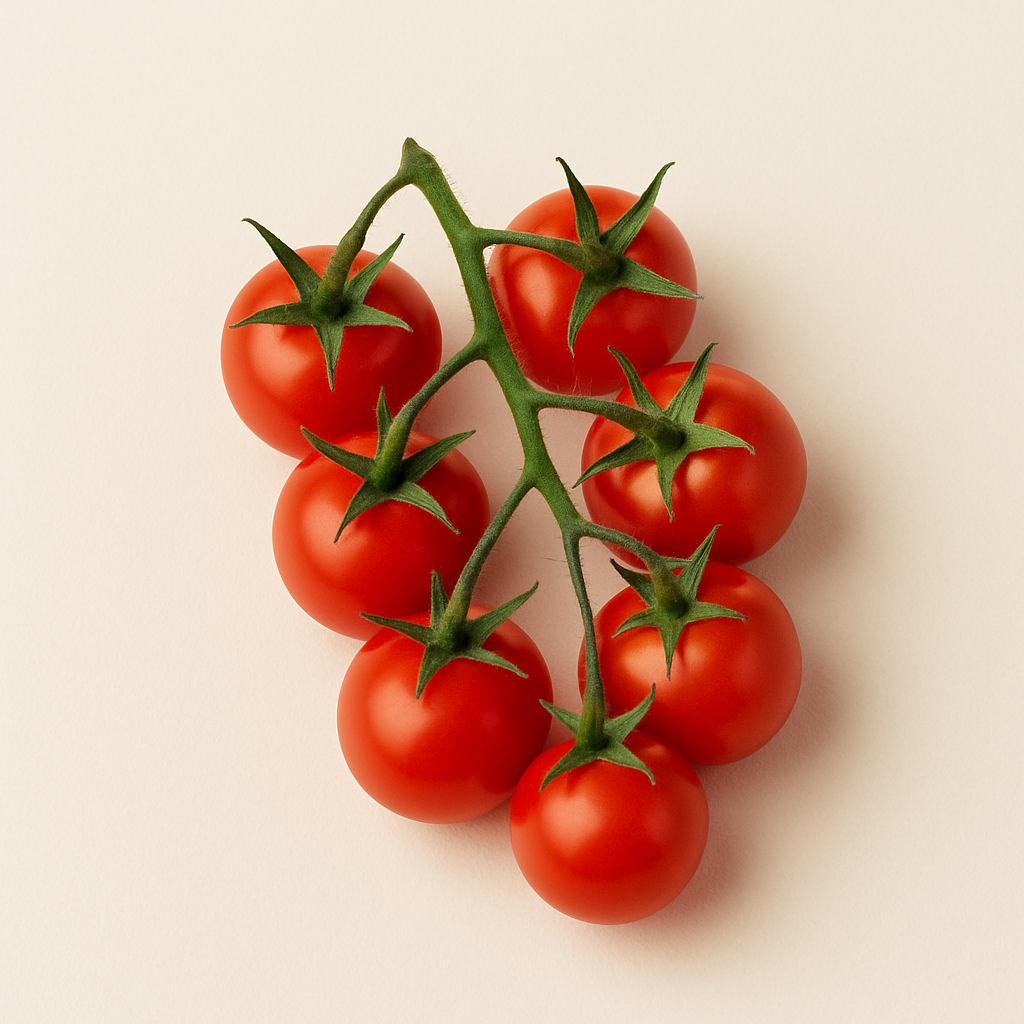
Cherry Tomatoes
Solanum lycopersicum var. cerasiforme
Family: Solanaceae
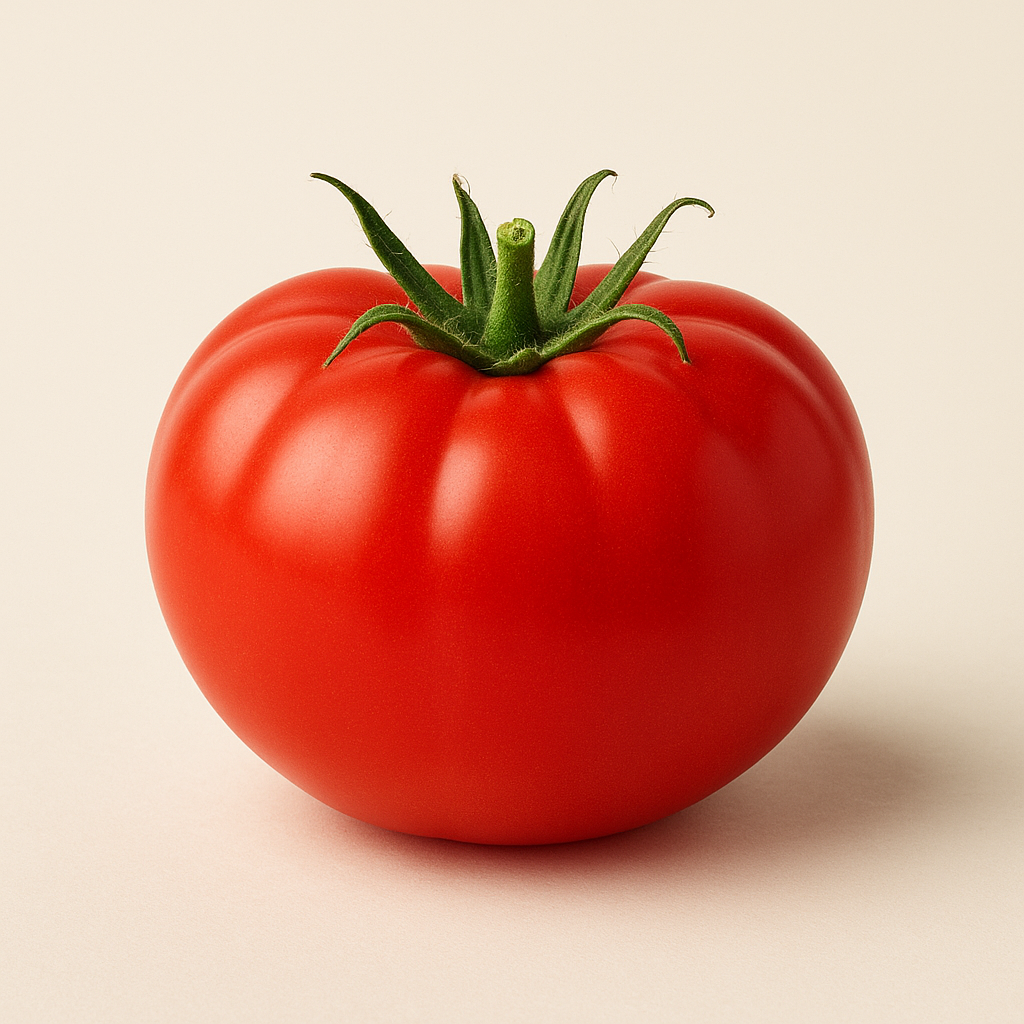
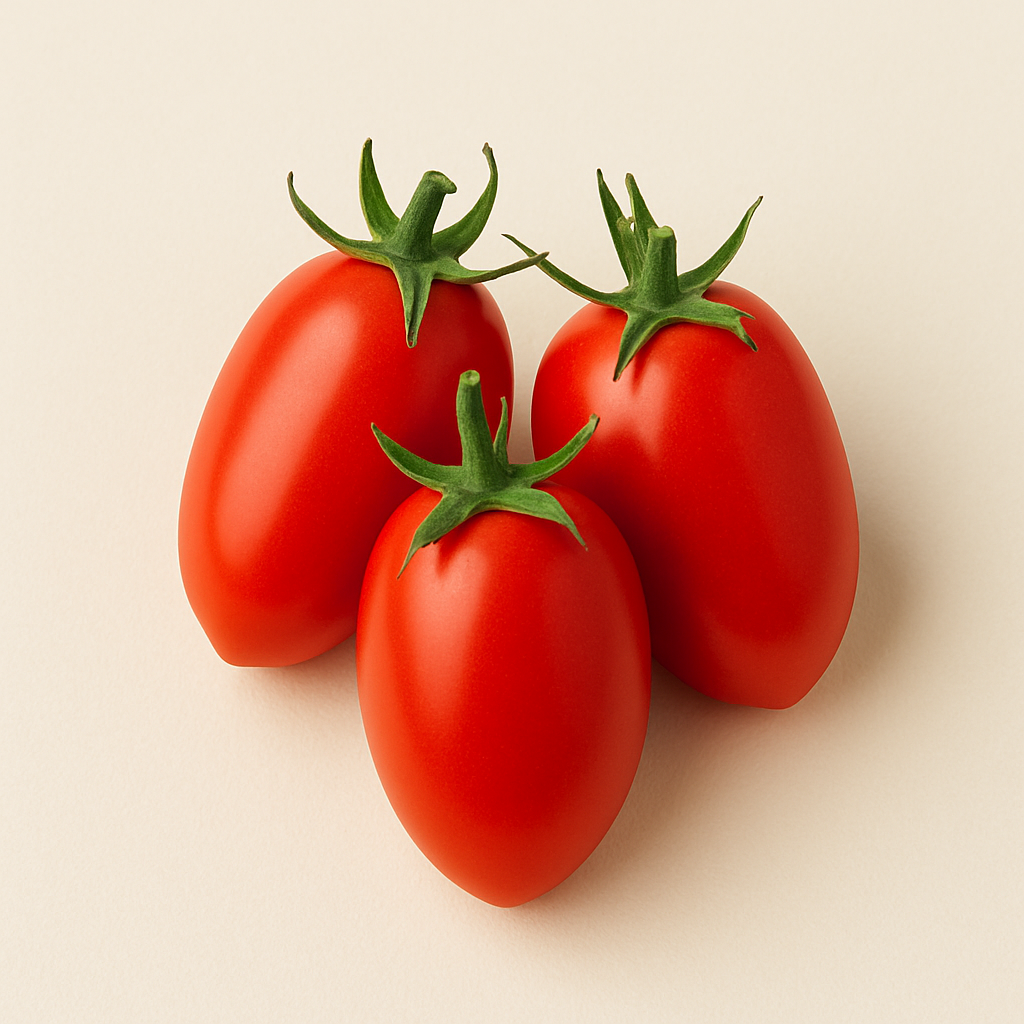
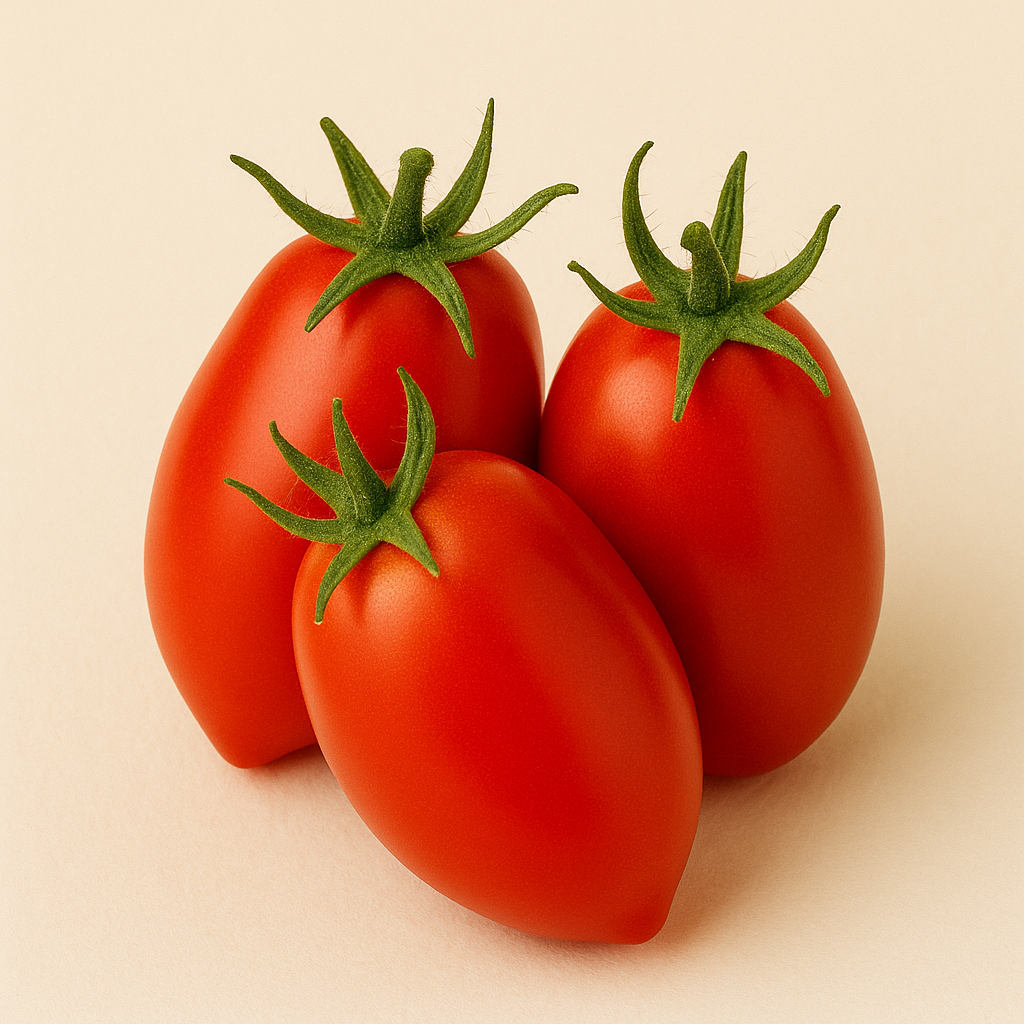
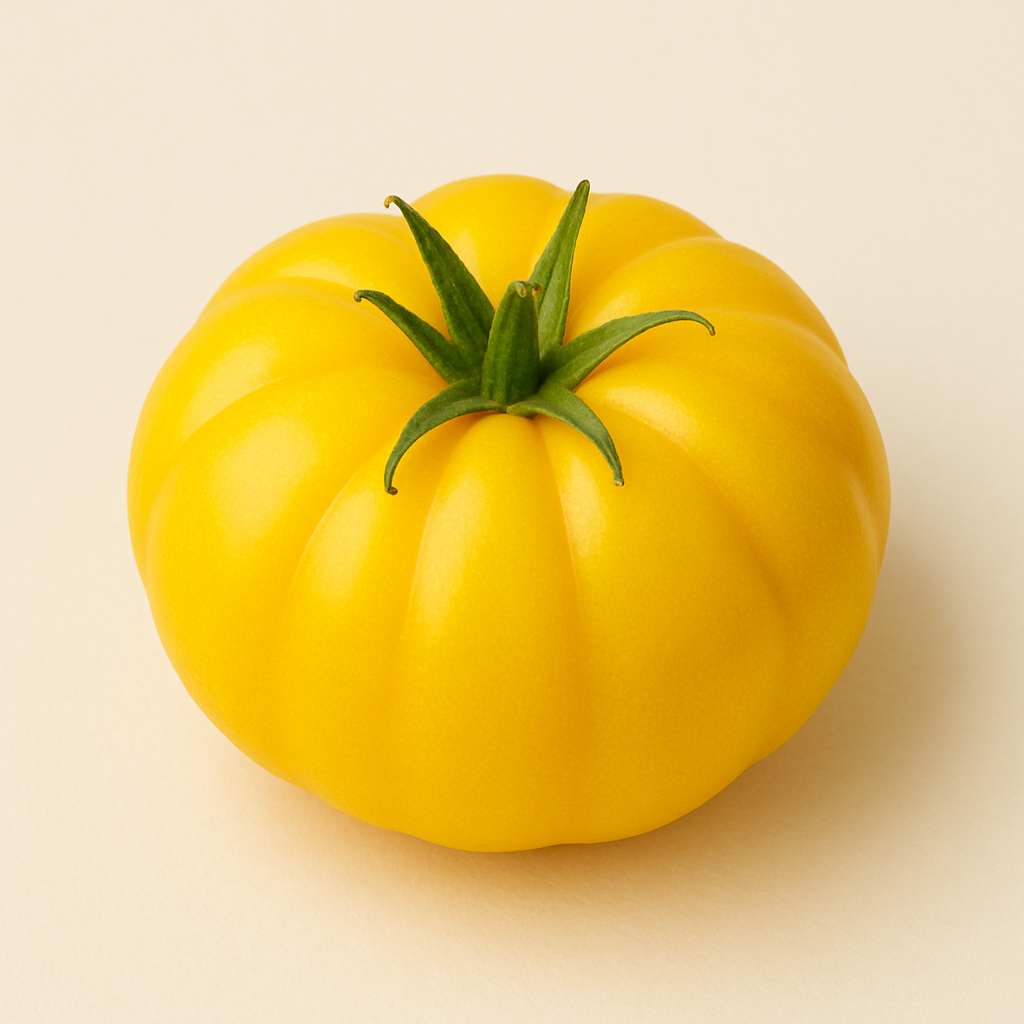
Cherry tomatoes are small, round tomatoes that grow in clusters. They are incredibly prolific, sweet, and perfect for snacking, salads, and roasting. Both determinate and indeterminate varieties are available.
Days to Harvest
60-80 days
Sun Needs
Full Sun (6-8+ hours)
moderate
Germination Temp
75°F optimal
Start Indoors
6 weeks before last frost
Germination
5-10 days
Seed Depth
1/4 inch
Light to Germinate
No
Soil Type
Rich, well-draining soil with organic matter
pH Range
6 - 6.8
Spacing
24-36 inches between plants for indeterminate varieties
⚠️ Avoid planting near:
History
Cherry tomatoes represent the closest living relatives to the wild ancestors of all cultivated tomatoes, offering a glimpse into what the original Solanum species looked like when they first evolved in the western coastal regions of South America millions of years ago. Archaeological evidence suggests that wild cherry-sized tomatoes were being gathered by indigenous peoples in Peru, Ecuador, and northern Chile as early as 7,000 BCE, making them one of humanity's oldest continuously consumed fruits. The Aztecs called these tiny fruits "xitomatl" and incorporated them into salsas and stews, while the Maya developed early cultivation techniques that spread the plants throughout Mesoamerica. When Spanish conquistadors brought tomatoes to Europe in the 1520s, it was primarily cherry-sized varieties they carried, as the larger beefsteak types had not yet been developed. European botanists initially classified them as ornamental curiosities, and Italian gardeners grew them as decorative plants for over a century before culinary adoption began. The modern cherry tomato renaissance began in Israel in the 1970s and 1980s, when agricultural scientists at the Volcani Center developed extended shelf-life varieties for export. Sun Gold, perhaps the most celebrated modern cherry tomato, was developed in Japan in the 1990s and revolutionized expectations for cherry tomato sweetness with its candy-like flavor profile.
Nutritional Benefits
- ✓High concentration of lycopene due to high skin-to-flesh ratio
- ✓Excellent source of Vitamin C
- ✓Contains beta-carotene
Optimal Growing Temp
70°F - 85°F
Cherry tomatoes thrive between 70-85°F. Growth slows below 55°F and fruit set suffers above 90°F. Night temperatures of 60-70°F promote optimal flowering and pollination.
Survival Range
50°F - 95°F
Can survive these temperatures
Frost Note: Extremely frost-sensitive. Protect plants when temperatures drop below 50°F. Even a light frost will kill plants instantly.
Best USDA Zones
Humidity
40-70%
Moderate humidity preferred. Cherry tomatoes are more disease-resistant than larger varieties but still susceptible to fungal issues in high humidity. Good airflow is essential.
Height
5-8 feet
Spread
2-3 feet
Growth Habit
indeterminate
Germination
5-10 days
Seeds germinate quickly at 75-85°F. Cherry tomato seeds are generally vigorous germinators with high success rates.
Seedling Stage
Duration: 3-4 weeks
True leaves: First true leaves appear 7-14 days after sprouting, smaller and more delicate than beefsteak seedlings
Transplant ready: Ready when 4-6 inches tall with 4-6 true leaves and sturdy stem. Cherry tomato seedlings establish quickly after transplanting.
Vegetative Growth
Duration: 3-4 weeks after transplant
Rapid growth phase. Cherry tomatoes grow faster than larger varieties and often begin flowering sooner. Establish support early.
Flowering
Timing: 4-6 weeks after transplant
Duration: Continuous throughout growing season
Self-pollinating with prolific flower production. Yellow flowers appear in clusters of 6-12. Gentle shaking helps pollination but usually not necessary.
Fruit Development
Begins: 2-3 weeks after first flowers
Duration: Continuous until frost
Small fruits develop quickly, maturing in 20-25 days from pollination. Expect continuous harvest once production begins.
Harvest Maturity
Timing: 60-80 days from transplant
- Fruits are fully colored with no green shoulders
- Slight give when gently squeezed
- Easy release from stem with slight twist
- Sweet aroma at the stem end
Per Plant
8-15 lbs per plant (200-300+ individual tomatoes)
Per Square Foot
4-6 lbs per square foot
Harvest Frequency
Every 1-2 days at peak production
Factors Affecting Yield
- •Cherry tomatoes are naturally more prolific than larger varieties
- •Consistent watering prevents blossom drop and increases yield
- •Indeterminate varieties produce more than determinate over the season
- •Regular harvesting encourages continued production
- •Adequate fertilization without excess nitrogen
- •Proper support prevents breakage and disease
Seedling Stage
Keep consistently moist, never waterlogged
Established Plants
1-1.5 inches per week, deep watering preferred
During Fruiting
Consistent moisture important but cherry tomatoes tolerate slight drought better than larger types
Preferred Method
Drip irrigation or soaker hoses ideal. Water at base to keep foliage dry. Morning watering preferred.
⚠️ Critical Watering Periods
- • Flowering
- • Fruit set
- • During heat waves
Pro Tips
- Slightly reducing water as fruits ripen intensifies sweetness and flavor
- Mulch heavily to maintain even soil moisture
- Cherry tomatoes are more forgiving of irregular watering than beefsteaks
- Water early morning to allow foliage to dry before evening
Feeding Schedule
At Transplanting
Balanced slow-release fertilizer + compost
Once
First Flowers
10-10-10 or tomato fertilizer
Once
Fruit Production
5-10-10 or tomato-specific blend
Every 2-3 weeks
Organic Options
Side-dress with compost monthly. Apply fish emulsion every 2 weeks during active growth. Bone meal at planting provides phosphorus for root development and fruiting.
Minimum Size
5 gallon minimum
Recommended Size
7-10 gallon for best production
Depth Required
At least 12 inches deep
Best Varieties for Containers
Container Tips
- Cherry tomatoes are excellent container plants—more forgiving than larger varieties
- Determinate cherry varieties like Tiny Tim or Tumbling Tom are perfect for hanging baskets
- Self-watering containers reduce the risk of inconsistent moisture
- Feed weekly with diluted liquid fertilizer since nutrients wash out quickly
- Provide sturdy support even for "bush" varieties when loaded with fruit
- Position in the sunniest spot available—at least 6-8 hours of direct sun
Support Type
Tomato cage, string trellis, or stake
Height Needed
5-6 feet for most indeterminate varieties
When to Install
Install support at transplanting time
Method
Cherry tomatoes can be grown more loosely than beefsteaks. Cages work well as the lighter fruits don't require as much individual support. For single-stem training, use clips or soft ties to attach main stem to stake or string.
Tips
- Tomato cages work better for cherry tomatoes than for heavy beefsteaks
- The Florida weave works well for row planting
- Let more suckers develop than you would with beefsteaks—more stems = more fruit
- Check weekly and tuck wayward branches back into supports
- Consider letting some to sprawl if you have ground space—they are more forgiving of this
Why Prune
When
Throughout growing season as needed, but less aggressive than with beefsteaks
How Often
Check every 1-2 weeks
Technique
Remove suckers below the first flower cluster and any leaves touching the ground. Above the first cluster, let most suckers grow—more stems mean more fruit for cherry types.
Remove
- ✗ Suckers below first flower cluster
- ✗ Leaves touching the ground
- ✗ Yellow or diseased leaves
- ✗ Excessive interior growth blocking airflow
Keep
- ✓ Main stem plus multiple suckers above first flower cluster
- ✓ Leaves shading fruit from intense afternoon sun
- ✓ Most growth—cherry tomatoes produce best with more foliage than beefsteaks