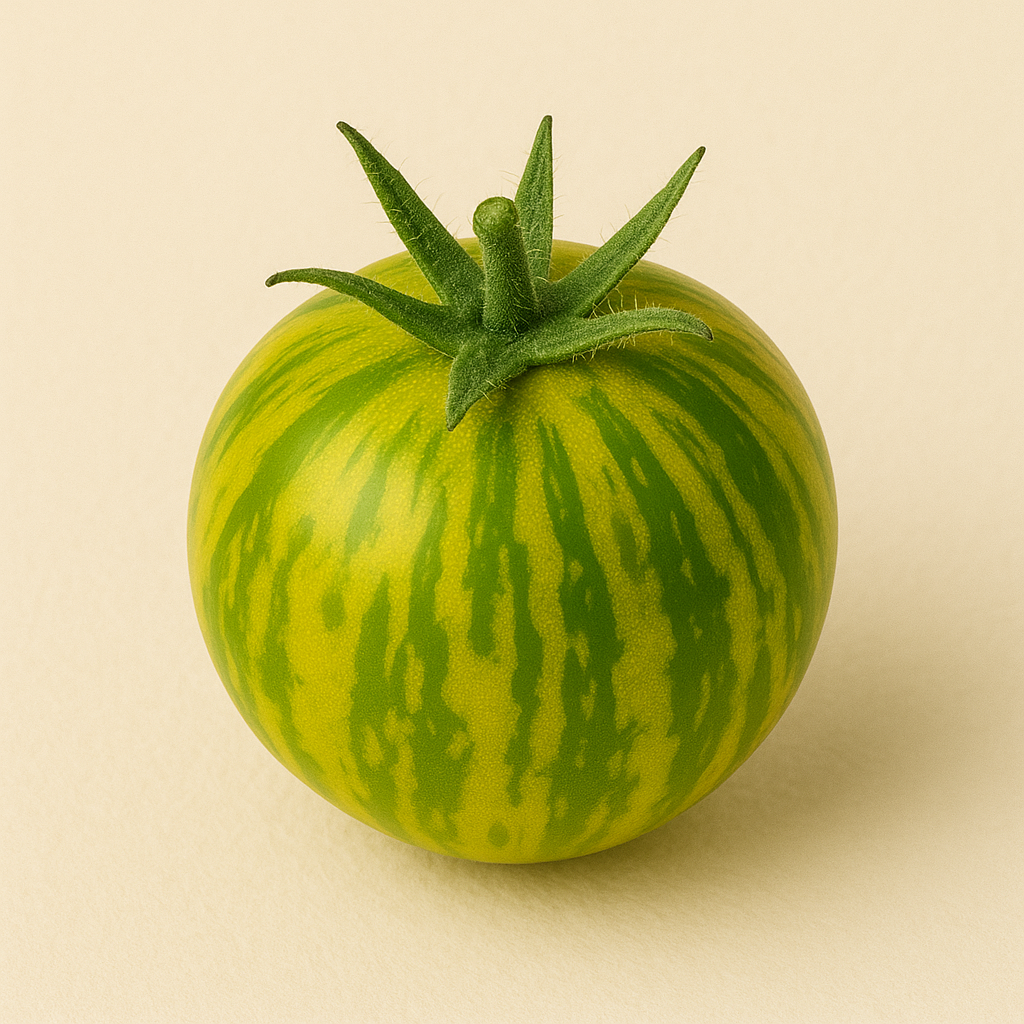
Green Zebra Tomato
Solanum lycopersicum
Family: Solanaceae
Green Zebra is a striking tomato that stays green with yellow stripes when ripe. Known for its zippy, tangy flavor that adds brightness to any dish.
Days to Harvest
70-80 days
Sun Needs
Full Sun (6-8+ hours)
moderate
Germination Temp
75°F optimal
Start Indoors
6 weeks before last frost
Germination
5-10 days
Seed Depth
1/4 inch
Light to Germinate
No
Soil Type
Well-draining soil
pH Range
6 - 6.8
Spacing
24 inches apart
⚠️ Avoid planting near:
History
Green Zebra is one of the few "modern heirlooms"—a variety developed recently enough to have documented origins, yet open-pollinated and passed down through seed saving rather than corporate breeding programs. It was created in 1983 by Tom Wagner, a legendary tomato breeder from Everett, Washington, who spent decades developing unusual varieties at his Tater-Mater Seeds operation. Wagner crossed four different heirloom varieties to create Green Zebra, seeking a tomato that would remain green when ripe while delivering exceptional flavor. The result was revolutionary: a small, striking fruit with emerald green skin overlaid with chartreuse yellow stripes that intensify as the tomato ripens. Contrary to popular belief, Green Zebra was not featured in the 1991 film "Fried Green Tomatoes"—that movie used actual unripe green tomatoes. However, the coincidental timing of the film's release and Green Zebra's growing popularity certainly didn't hurt its fame. The variety gained cult status among chefs in the 1990s and 2000s, appearing on menus at Alice Waters' Chez Panisse and other pioneering farm-to-table restaurants. Today, Green Zebra remains unique in the tomato world: it offers gardeners the only reliable way to grow a green-when-ripe tomato with its distinctively tangy, almost citrus-like flavor profile.
Nutritional Benefits
- ✓High in Vitamin C
- ✓Contains lycopene
- ✓Good source of potassium
Optimal Growing Temp
70°F - 85°F
Green Zebra thrives at 70-85°F. The green-and-yellow striped coloring develops regardless of temperature—it's genetic. Good heat tolerance for continued production through summer.
Survival Range
55°F - 90°F
Can survive these temperatures
Frost Note: Frost-sensitive like all tomatoes. Start indoors and transplant after all frost danger passes.
Best USDA Zones
Humidity
40-65%
Moderate humidity acceptable. Good disease resistance for a modern heirloom (bred 1983).
Height
4-6 feet
Spread
18-24 inches
Growth Habit
indeterminate
Germination
5-10 days
Good germination at 75-85°F.
Seedling Stage
Duration: 4-5 weeks
True leaves: First true leaves 7-14 days after sprouting
Transplant ready: Ready when 5-6 inches tall with sturdy stem.
Vegetative Growth
Duration: 4-5 weeks after transplant
Moderate indeterminate growth. More compact than many heirlooms.
Flowering
Timing: 5-6 weeks after transplant
Duration: Continuous
Self-pollinating.
Fruit Development
Begins: 2-3 weeks after flowering
Duration: Continuous until frost
Fruits develop characteristic green-yellow stripes as they ripen. Color change is subtle—watch for softening.
Harvest Maturity
Timing: 70-80 days from transplant
- Yellow undertones appear in stripes
- Slight amber blush at blossom end
- Slight give when pressed
- Stripes become more pronounced
Per Plant
8-15 lbs per plant
Per Square Foot
4-6 lbs per square foot
Harvest Frequency
Every 2-4 days during production
Factors Affecting Yield
- •Good productivity for size
- •Smaller fruits (3-4 oz) mean more individual tomatoes
- •Consistent watering maintains production
- •The tangy flavor is worth the care
Seedling Stage
Keep moist
Established Plants
1-1.5 inches per week
During Fruiting
Consistent moisture
Preferred Method
Drip irrigation or soaker hoses. Water at base.
⚠️ Critical Watering Periods
- • Flowering
- • Fruit development
Pro Tips
- Consistent watering enhances the tangy, bright flavor
- Mulch to maintain moisture
Feeding Schedule
At Planting
Compost + balanced fertilizer
Once
Fruit Production
Tomato fertilizer
Every 2-3 weeks
Organic Options
Regular compost applications support steady production.
Minimum Size
7 gallon
Recommended Size
10-15 gallon
Depth Required
At least 14 inches
Best Varieties for Containers
Container Tips
- Green Zebra's compact growth works well in containers
- The unique appearance is a patio conversation starter
- Smaller fruits are easy to harvest in limited space
Support Type
Cage or stake
Height Needed
5-6 feet
When to Install
At transplanting
Method
Standard cage or single-stem training. Compact growth makes caging easy.
Tips
- Standard tomato cages adequate for Green Zebra
- Compact habit means less aggressive support needed
Why Prune
When
Begin at 12 inches tall
How Often
Weekly
Technique
Remove suckers below first flower cluster. Allow 2-3 stems.
Remove
- ✗ Lower suckers
- ✗ Ground-touching leaves
Keep
- ✓ 2-3 main stems
- ✓ Upper foliage