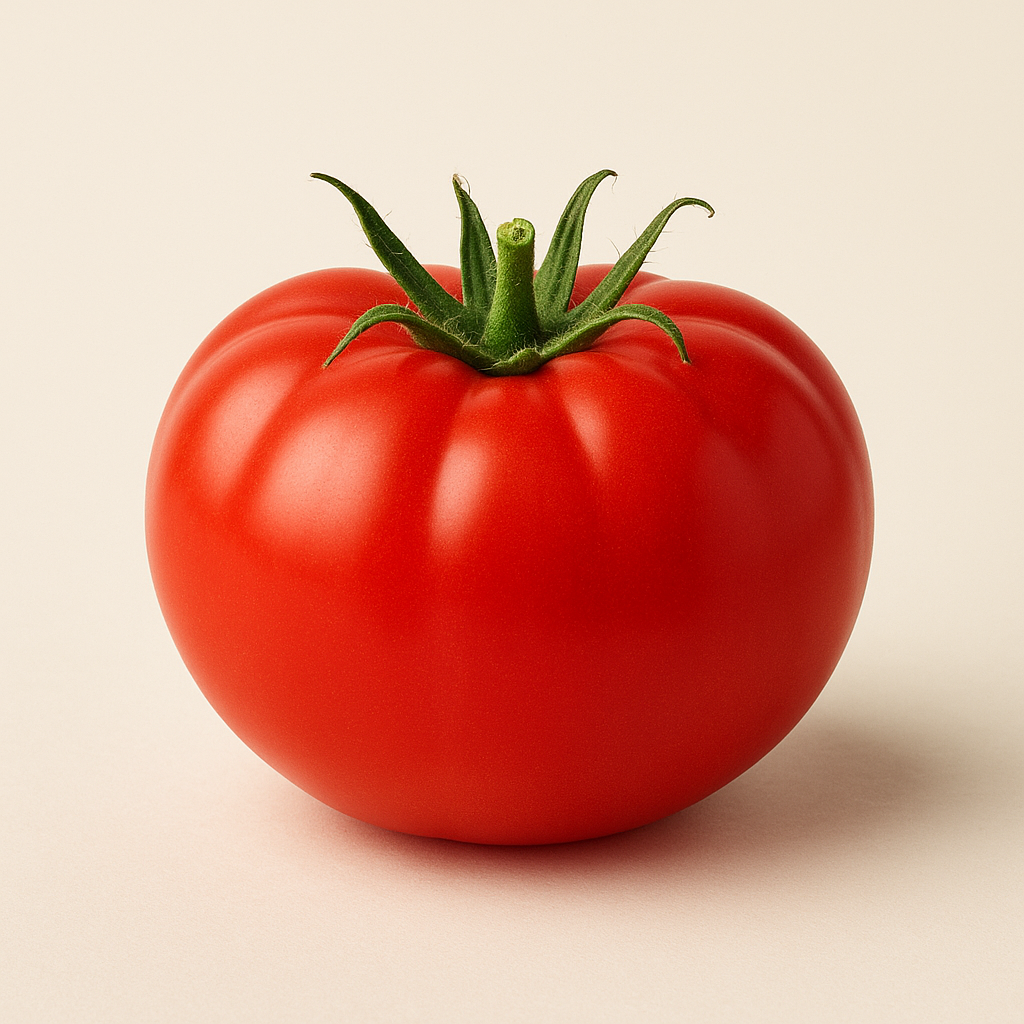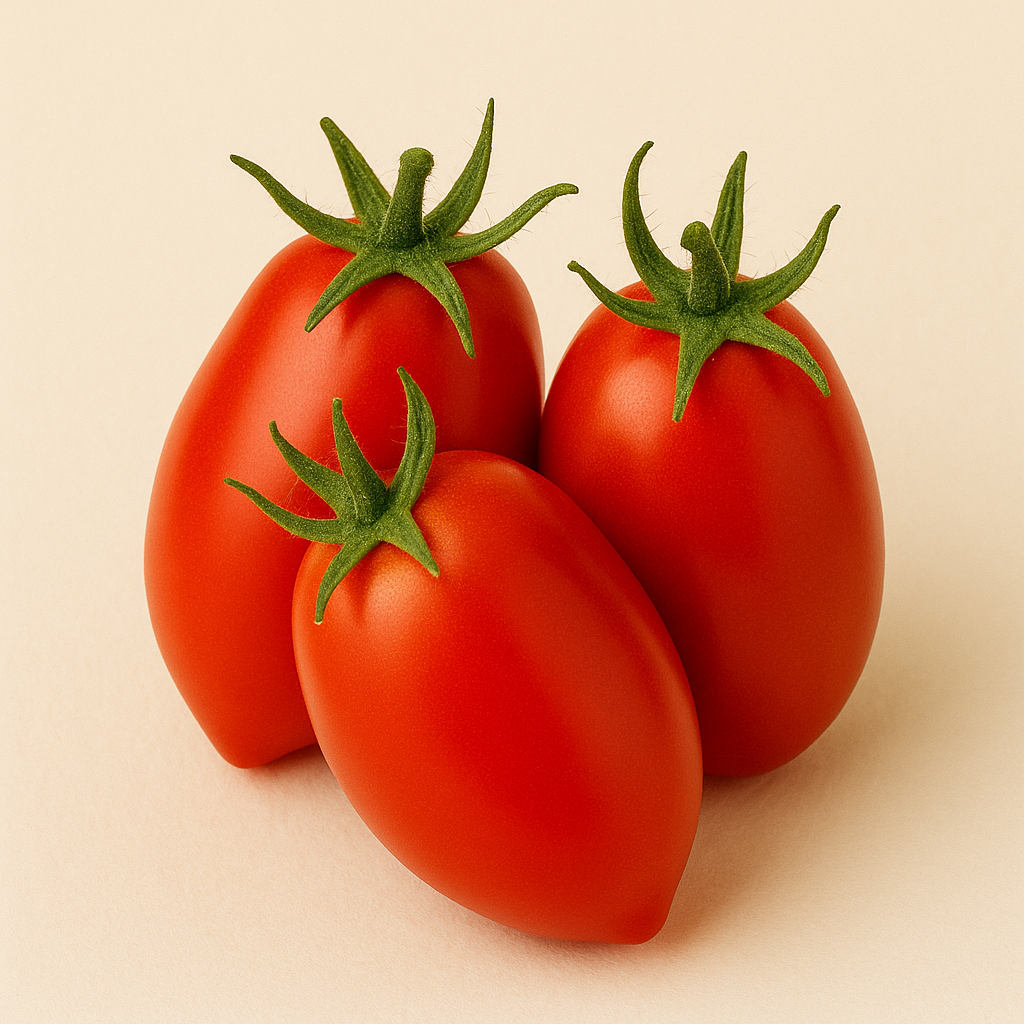
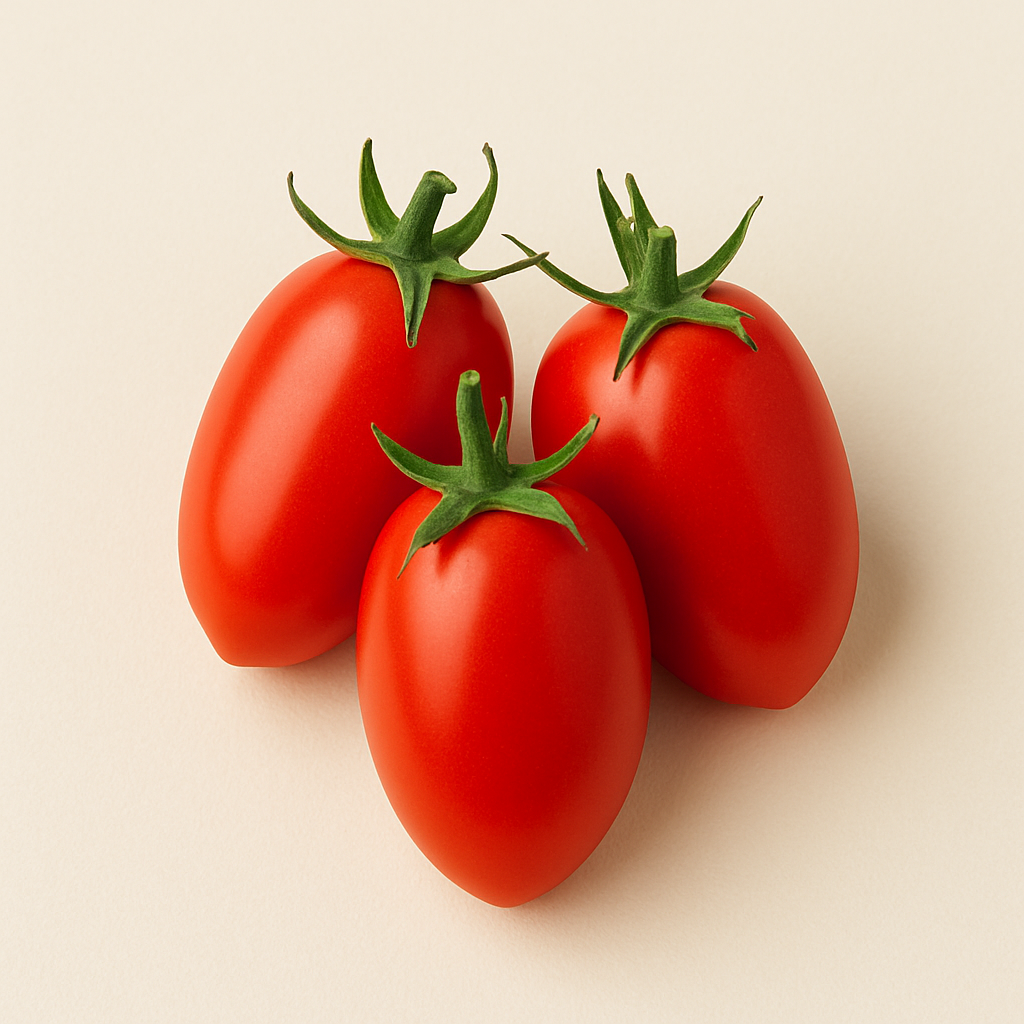
Roma Tomato
Solanum lycopersicum
Family: Solanaceae
Roma tomatoes are the classic paste tomato, known for their meaty flesh, few seeds, and low moisture content. Perfect for sauces, canning, and drying. These determinate plants produce heavy yields in a concentrated period.
Days to Harvest
70-80 days
Sun Needs
Full Sun (6-8+ hours)
moderate
Germination Temp
75°F optimal
Start Indoors
6 weeks before last frost
Germination
5-10 days
Seed Depth
1/4 inch
Light to Germinate
No
Soil Type
Rich, well-draining soil
pH Range
6 - 6.8
Spacing
24 inches between plants
⚠️ Avoid planting near:
History
The Roma tomato was developed by the USDA in the 1950s through a collaborative breeding program with agricultural researchers, specifically engineered to resist Fusarium wilt and Verticillium wilt—two devastating fungal diseases that had plagued commercial tomato production. Its elongated plum shape was intentionally bred to maximize the flesh-to-seed ratio, making it ideal for processing into sauce and paste. The name "Roma" was chosen to evoke the rich tomato culture of Italy, though ironically the variety was entirely American in origin. Prior to Roma's development, American tomato processors relied on varieties prone to disease and inconsistent quality, making canning operations unpredictable. The Roma changed commercial tomato production forever, becoming the backbone of the canned tomato industry by the 1970s. Its determinate growth habit—meaning all fruits ripen within a concentrated 2-3 week window—made it perfect for mechanical harvesting, revolutionizing agricultural efficiency. Today, Roma and its improved descendant Roma VF (Verticillium-Fusarium resistant) dominate backyard gardens and commercial fields alike, accounting for the majority of tomatoes grown specifically for sauce and canning purposes worldwide.
Nutritional Benefits
- ✓High in lycopene
- ✓Excellent source of Vitamin C
- ✓Contains Vitamin A
Optimal Growing Temp
70°F - 85°F
Roma tomatoes thrive at 70-85°F. As determinate plants, they are slightly more tolerant of temperature stress than indeterminate types. Growth slows below 55°F and fruit set is affected above 90°F.
Survival Range
50°F - 95°F
Can survive these temperatures
Frost Note: Frost-sensitive like all tomatoes. Protect from temperatures below 50°F. The determinate habit means faster maturity, making Romas good choices for regions with shorter warm seasons.
Best USDA Zones
Humidity
40-65%
Roma tomatoes are moderately resistant to humidity-related diseases due to their compact growth habit and better air circulation. Still, avoid overhead watering in humid conditions.
Height
3-4 feet
Spread
18-24 inches
Growth Habit
determinate
Germination
5-10 days
Seeds germinate at 75-85°F soil temperature. Roma seeds are reliable germinators with good vigor.
Seedling Stage
Duration: 3-4 weeks
True leaves: First true leaves appear 7-14 days after sprouting
Transplant ready: Ready when 4-6 inches tall with 4-6 true leaves. Roma seedlings are stocky and sturdy compared to indeterminate types.
Vegetative Growth
Duration: 4-5 weeks after transplant
Compact growth phase. Plants develop their full height (3-4 feet) before setting fruit. Determinate plants stop growing taller once flowering begins.
Flowering
Timing: 5-6 weeks after transplant
Duration: 2-3 weeks concentrated flowering
Self-pollinating. Yellow flowers appear in clusters. The concentrated flowering period means most fruits ripen together—ideal for canning.
Fruit Development
Begins: 2-3 weeks after flowering
Duration: 4-6 weeks concentrated harvest
Fruits develop in clusters and ripen within a similar timeframe. Plan your canning schedule around the expected harvest window.
Harvest Maturity
Timing: 70-80 days from transplant
- Deep red color throughout with no yellow or green patches
- Firm flesh with slight give when pressed
- Fruit separates easily from stem
- Interior shows thick walls and few seeds
Per Plant
15-25 lbs per plant
Per Square Foot
6-10 lbs per square foot
Harvest Frequency
Main harvest over 4-6 week period, then production tapers off
Factors Affecting Yield
- •Determinate nature means concentrated harvest—plan for preservation
- •Good soil fertility supports heavy fruit load
- •Consistent watering during fruit development is critical
- •Disease prevention protects concentrated harvest window
- •Planting multiple succession plantings extends overall harvest
Seedling Stage
Keep consistently moist during establishment
Established Plants
1-2 inches per week, consistent moisture preferred
During Fruiting
Consistent moisture critical—Romas are prone to blossom end rot if watering is uneven
Preferred Method
Drip irrigation or soaker hoses recommended. Water at base of plants. Consistent moisture is especially important for paste tomatoes.
⚠️ Critical Watering Periods
- • Flowering
- • Fruit set
- • Fruit development
Pro Tips
- Mulch heavily to maintain even soil moisture—critical for preventing blossom end rot
- Water in the morning to allow foliage to dry
- Reduce watering slightly as fruits approach maturity for better paste quality
- Never let plants wilt—this triggers blossom end rot
Feeding Schedule
At Planting
Balanced fertilizer + calcium source (bone meal or gypsum)
Once
First Flowers
5-10-10 or tomato fertilizer
Once
Fruit Development
Low-nitrogen tomato blend + calcium if needed
Every 2-3 weeks
Organic Options
Incorporate compost at planting. Add bone meal or crusite eggshells for calcium. Side-dress with compost during fruit development.
Minimum Size
5 gallon minimum
Recommended Size
7-10 gallon for best production
Depth Required
At least 12 inches deep
Best Varieties for Containers
Container Tips
- Romas are excellent container plants due to compact determinate habit
- Less staking required than indeterminate varieties
- Concentrated harvest makes timing watering and feeding easier
- Patio Roma and other dwarf varieties work in 3-5 gallon containers
- Multiple containers can be succession planted for extended harvest
Support Type
Simple stake or small cage
Height Needed
3-4 feet is sufficient
When to Install
Install at transplanting if using support
Method
Determinate Romas often need only a single stake or small cage. The concentrated fruit load can make branches heavy, so some support helps prevent breakage.
Tips
- Simple tomato cages work well for Roma tomatoes
- A single stake with ties is often sufficient
- Heavy fruit loads may cause branches to droop—provide light support
- Florida weave works for row plantings
- Many gardeners grow Romas with no support successfully
Why Prune
When
Minimal pruning needed for determinate Romas
How Often
Check occasionally, but don't over-prune
Technique
Remove suckers below first flower cluster. Remove any leaves touching the ground. Otherwise, let plant develop naturally.
Remove
- ✗ Suckers below first flower cluster
- ✗ Leaves touching the soil
- ✗ Yellow or diseased foliage
Keep
- ✓ All growth above first flower cluster
- ✓ Main stem and side branches
- ✓ Leaves shading fruit from intense sun
Plant Every
2-3 weeks
Sowings/Season
2-3 plantings for extended canning season
Duration
From last frost until 80 days before first fall frost
Tips
- Succession plant Romas to spread out canning workload
- Second planting 2-3 weeks after first ensures continuous harvest
- In long-season areas, a third planting extends harvest into fall
- Stagger plantings to avoid being overwhelmed during harvest