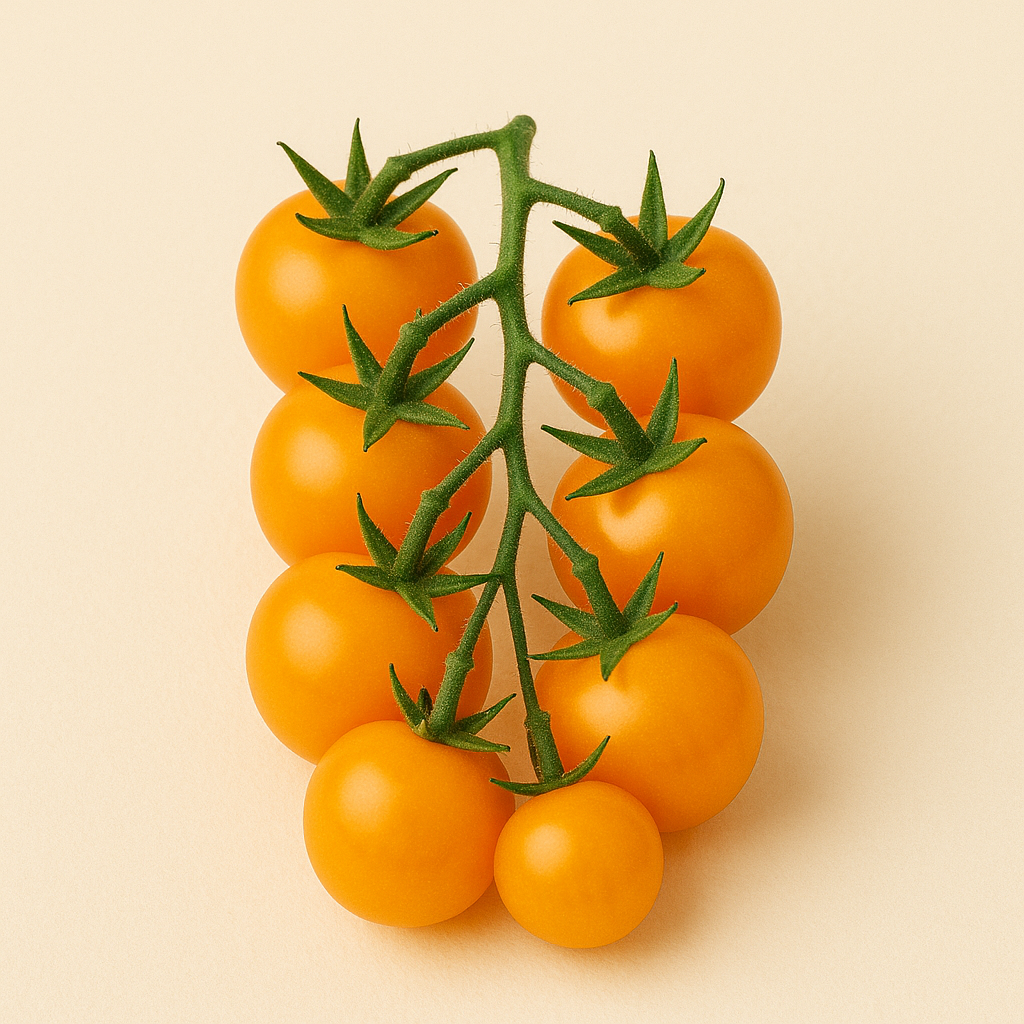
Sun Gold Tomato
Solanum lycopersicum var. cerasiforme
Family: Solanaceae
Sun Gold is widely considered the sweetest cherry tomato available. These golden-orange gems have an intensely sweet, almost tropical flavor that makes them irresistible for snacking.
Days to Harvest
60-70 days
Sun Needs
Full Sun (6-8+ hours)
moderate
Germination Temp
75°F optimal
Start Indoors
6 weeks before last frost
Germination
5-10 days
Seed Depth
1/4 inch
Light to Germinate
No
Soil Type
Well-draining soil
pH Range
6 - 6.8
Spacing
24 inches apart
⚠️ Avoid planting near:
History
Sun Gold was developed by Tokita Seed Company in Japan and introduced to American gardeners in 1992, immediately revolutionizing expectations for what a cherry tomato could taste like. Japanese plant breeders had been working on ultra-sweet cherry tomato varieties since the 1980s, focusing on sugar content and flavor complexity rather than the traditional breeding goals of disease resistance and shipping durability. Sun Gold was the breakthrough: a hybrid achieving Brix levels (sugar content) of 9-10%, compared to 4-5% for typical tomatoes, giving it candy-like sweetness with tropical fruit undertones of apricot and citrus. The variety won the All-America Selections award in 1992, one of the highest honors in the American seed industry, and has consistently topped taste tests ever since. Food writers have described Sun Gold as "tomato candy," and it converted countless children and tomato skeptics into enthusiasts. The variety's F1 hybrid status means seeds saved from Sun Gold fruits won't produce identical offspring, ensuring Tokita's continued role in the supply chain. This has frustrated some gardeners and led to attempts to "dehybridize" Sun Gold into stable open-pollinated versions, though none have quite matched the original's flavor. Despite being nearly 30 years old, Sun Gold remains the benchmark against which all sweet cherry tomatoes are measured, a rare example of a variety that achieved perfection upon introduction.
Nutritional Benefits
- ✓High in beta-carotene
- ✓Excellent Vitamin C
- ✓Contains lycopene
Optimal Growing Temp
70°F - 85°F
Sun Gold thrives at 70-85°F. Good heat tolerance for a cherry tomato. The exceptional sweetness develops best with warm, sunny conditions.
Survival Range
55°F - 95°F
Can survive these temperatures
Frost Note: Frost-sensitive. The Japanese breeding focused on flavor, not cold tolerance.
Best USDA Zones
Humidity
40-70%
Some disease resistance but can crack in high humidity. Good air circulation helps.
Height
6-8 feet
Spread
2-3 feet
Growth Habit
indeterminate
Germination
5-10 days
Good germination at 75-85°F. Hybrid vigor apparent early.
Seedling Stage
Duration: 4-5 weeks
True leaves: First true leaves 7-14 days after sprouting
Transplant ready: Ready when 4-6 inches tall with sturdy stem.
Vegetative Growth
Duration: 4-5 weeks after transplant
Vigorous indeterminate growth. Plants grow tall—install support early.
Flowering
Timing: 4-5 weeks after transplant
Duration: Continuous throughout season
Self-pollinating. Prolific flowering produces abundant fruit.
Fruit Development
Begins: 2 weeks after flowering
Duration: Continuous until frost
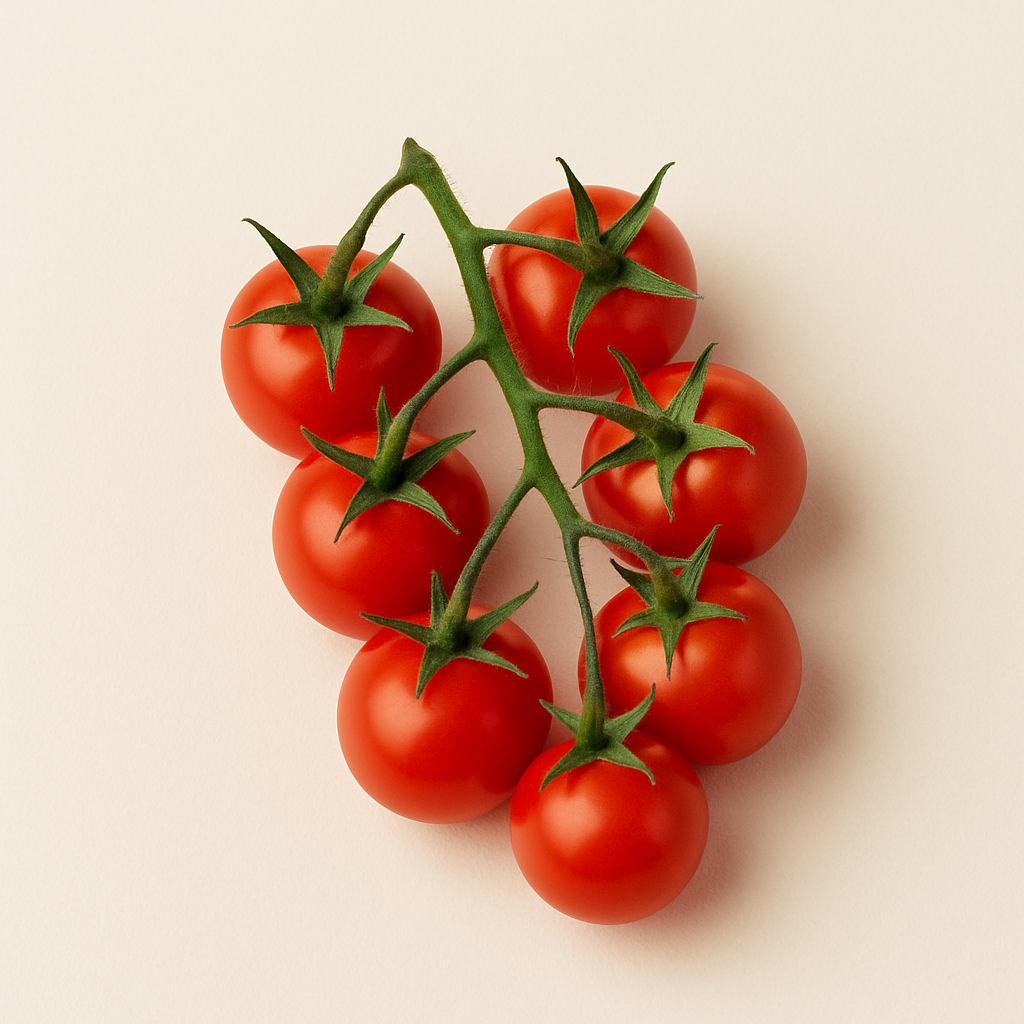
Small orange fruits develop in long clusters. Expect to harvest every 1-2 days at peak production.
Harvest Maturity
Timing: 55-65 days from transplant
- Bright golden-orange color
- Slight softness
- Easy release from stem
- Intensely sweet aroma
- Thin skin that may crack if overripe
Per Plant
10-20 lbs per plant (hundreds of individual tomatoes)
Per Square Foot
4-8 lbs per square foot
Harvest Frequency
Every 1-2 days at peak—they ripen fast and split quickly
Factors Affecting Yield
- •Extremely prolific producer
- •Regular harvesting encourages more production
- •Prone to splitting if left too long—harvest promptly
- •Hybrid vigor contributes to high yields
Seedling Stage
Keep moist
Established Plants
1-1.5 inches per week
During Fruiting
Consistent but not excessive
Preferred Method
Drip irrigation or soaker hoses. Water at base of plants.
⚠️ Critical Watering Periods
- • Fruit development—for maximum sweetness
Pro Tips
- PRO TIP: Slightly reduce watering as fruits ripen to concentrate sweetness
- Consistent moisture prevents splitting
- Sun Gold splits easily—don't let soil go from dry to wet
Feeding Schedule
At Planting
Compost + balanced fertilizer
Once
Fruit Production
Low-nitrogen tomato formula
Every 2-3 weeks
Organic Options
Light, regular applications. Too much nitrogen dilutes the remarkable sweetness.
Minimum Size
7 gallon
Recommended Size
10-15 gallon
Depth Required
At least 14 inches
Best Varieties for Containers
Container Tips
- Sun Gold grows well in containers
- Vigorous growth needs sturdy support
- Frequent harvesting keeps plants productive
- The golden color and sweet flavor are perfect for patio growing
Support Type
Tall cage or stake
Height Needed
6-7 feet
When to Install
At transplanting
Method
Standard cage or single-stem training. Plants grow tall, so plan height accordingly.
Tips
- Sun Gold grows taller than many cherry varieties—provide adequate support
- Long fruit clusters benefit from some support
Why Prune
When
As needed
How Often
Check occasionally
Technique
Remove suckers below first cluster. Let upper suckers grow for maximum production.
Remove
- ✗ Lower suckers (optional)
- ✗ Ground-touching leaves
Keep
- ✓ Multiple stems—more stems = more fruit