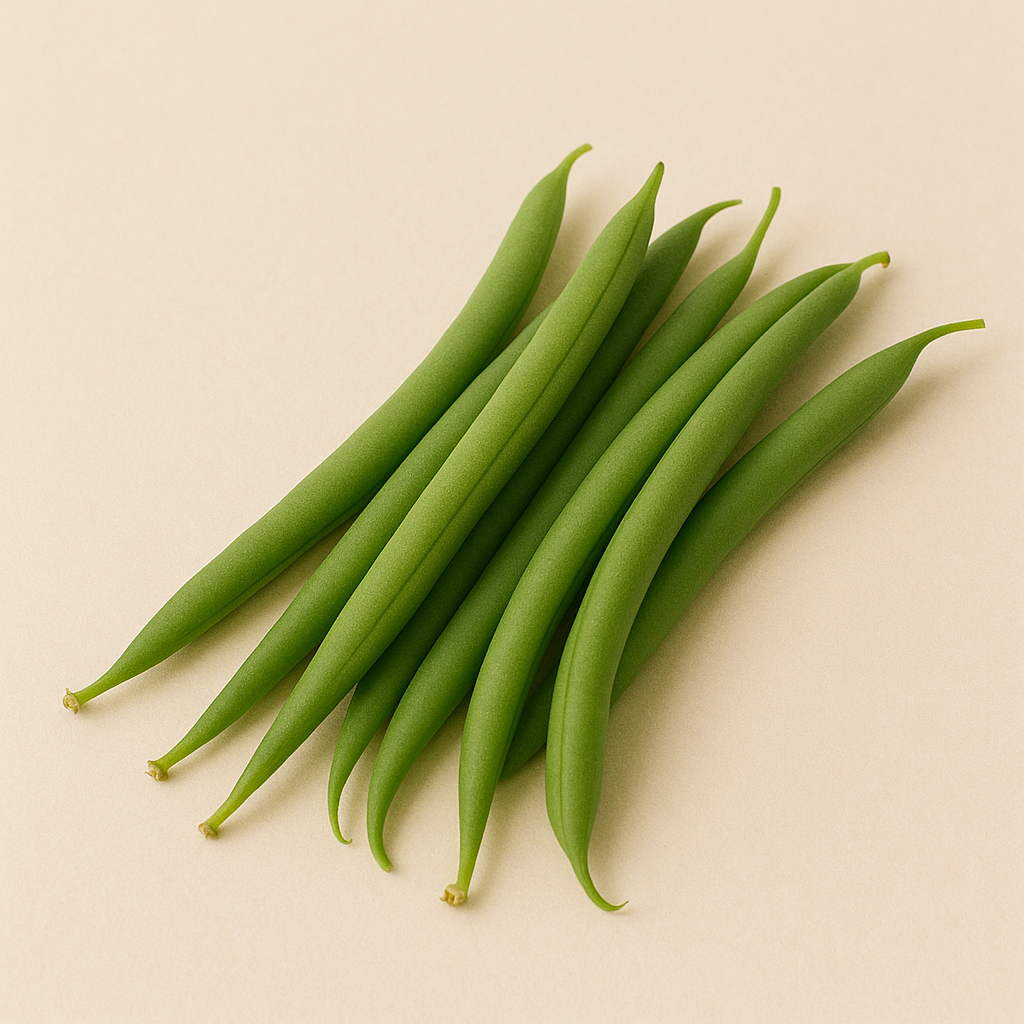
Bush Beans
Phaseolus vulgaris
Family: Fabaceae
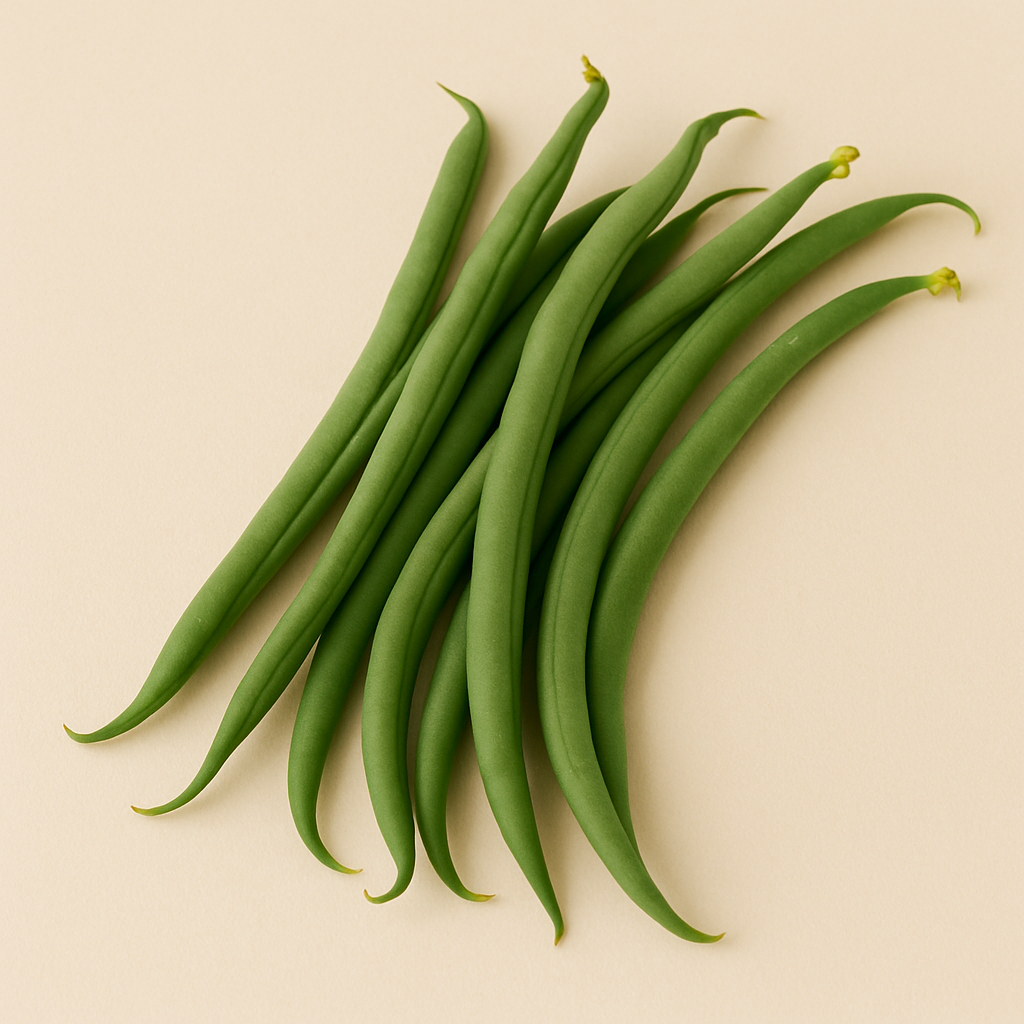
Bush beans are compact, self-supporting plants that produce an abundant crop of tender green beans. Perfect for beginners, they require no staking and produce their harvest in a concentrated period—ideal for canning and freezing. Plant every 2-3 weeks for continuous harvest.
Days to Harvest
50-65 days
Sun Needs
Full Sun (6-8 hours)
moderate
Germination Temp
75°F optimal
Start Indoors
0 weeks before last frost
Germination
6-14 days
Seed Depth
1 to 1.5 inches
Light to Germinate
No
💡 Tip: Direct sow only—beans don't transplant well. Can inoculate seeds with rhizobium bacteria for better nitrogen fixation. Do not soak seeds (may crack).
Soil Type
Well-draining soil with moderate fertility
pH Range
6 - 7
Spacing
4-6 inches between plants, 18-24 inches between rows
⚠️ Avoid planting near:
History
Common beans (Phaseolus vulgaris) rank among the most important gifts the Americas gave to world cuisine, domesticated independently in Mesoamerica and South America between 7,000 and 8,000 years ago. Indigenous peoples cultivated beans as part of the "Three Sisters" agricultural system alongside corn and squash—the beans fixing nitrogen that corn needed, the corn providing poles for beans to climb, and squash shading the soil. Spanish and Portuguese explorers brought beans to Europe in the 16th century, where they rapidly integrated into Mediterranean, African, and Asian cuisines. The distinction between bush and pole beans emerged through centuries of selective breeding: gardeners selected compact, non-vining mutations that suited small plots and didn't require staking. Modern bush bean development accelerated in the early 20th century, with varieties like Blue Lake (developed in the 1960s) becoming American standards for both fresh eating and processing. The term "string bean" became outdated after breeders eliminated the fibrous "string" along the pod seam in the mid-20th century. Today bush beans remain among the most productive and foolproof vegetables for home gardens, producing their entire crop in a concentrated 2-3 week window—perfect for preserving—while successive plantings every few weeks extend the fresh harvest through summer.
Nutritional Benefits
- ✓Good source of plant protein
- ✓High in fiber
- ✓Contains Vitamin K
Optimal Growing Temp
70°F - 85°F
Bush beans thrive in warm weather between 70-85°F. Growth slows significantly below 60°F and above 90°F. Germination requires soil temperature of at least 60°F, ideally 70-80°F.
Survival Range
50°F - 95°F
Can survive these temperatures
Frost Note: Bush beans are extremely frost-sensitive and killed by any frost. Plant only after all danger of frost has passed and soil has warmed. Even light frost will blacken and kill plants overnight.
Best USDA Zones
Humidity
50-70%
Moderate humidity is best. High humidity increases risk of fungal diseases like bean rust and white mold. Excellent air circulation is essential in humid climates.
Height
18-24 inches
Spread
12-18 inches
Growth Habit
bush
Germination
6-14 days
Seeds germinate best at 70-80°F soil temperature. First shoots emerge as arched stems pushing through soil, followed by cotyledons (seed leaves) unfurling.
Seedling Stage
Duration: 1-2 weeks
True leaves: First true leaves appear 7-10 days after sprouting. These are the characteristic trifoliate bean leaves.
Transplant ready: Bush beans should not be transplanted—direct sow only. Transplanting severely stunts growth and reduces yields.
Vegetative Growth
Duration: 3-4 weeks from germination
Rapid growth phase with plants developing their characteristic bushy form. Nitrogen-fixing nodules form on roots during this stage, reducing fertilizer needs.
Flowering
Timing: 4-5 weeks after germination
Duration: 2-3 weeks
Bush beans are self-pollinating. Small white or purple flowers appear in clusters. Pollination occurs before flowers open (cleistogamous), ensuring pod set even in poor weather.
Fruit Development
Begins: 1-2 weeks after flowering
Duration: Concentrated harvest over 2-3 weeks
Pods develop rapidly once flowering begins. Pick regularly to encourage continued production. Plants set most of their crop in a concentrated period.
Harvest Maturity
Timing: 50-65 days from sowing
- Pods are firm, crisp, and snap cleanly when bent
- Pods are pencil-thick (about 1/4 inch diameter)
- Seeds inside are small and not visibly bulging
- Pods are fully colored for variety (green, purple, or yellow)
- Harvest before seeds become visible lumps in the pod
Per Plant
1/2 to 3/4 lb per plant
Per Square Foot
1-2 lbs per square foot in intensive spacing
Harvest Frequency
Every 2-3 days at peak production
Factors Affecting Yield
- •Variety selection - some bush beans are more productive than others
- •Soil warmth at planting - warm soil means faster, more vigorous growth
- •Consistent moisture during flowering and pod set
- •Regular harvesting encourages continued pod production
- •Temperature during flowering - extreme heat causes blossom drop
- •Nitrogen-fixing ability - inoculated plants produce better yields
Seedling Stage
Keep soil consistently moist until germination, then water every 2-3 days
Established Plants
1 inch per week through deep watering
During Fruiting
Critical moisture period—maintain consistent 1-1.5 inches per week during flowering and pod development
Preferred Method
Drip irrigation or soaker hoses are ideal to keep foliage dry. Water at the base of plants in the morning. Avoid overhead watering which promotes fungal diseases.
⚠️ Critical Watering Periods
- • Germination
- • Flowering
- • Pod development
Pro Tips
- Water deeply but less frequently to encourage deep root growth
- Mulch to retain moisture and regulate soil temperature
- Avoid wetting foliage to prevent disease
- Never water when plants are wet from dew or rain
- Reduce watering slightly as pods near maturity for best flavor
Feeding Schedule
At Planting
Phosphorus-rich (bone meal or rock phosphate)
Once at sowing
Mid-Season
Light side-dress with compost if needed
Once during flowering (optional)
Organic Options
Mix compost into soil before planting. Add bone meal to planting furrow. Inoculate seeds with rhizobium bacteria for better nitrogen fixation, especially in new garden beds.
Minimum Size
5 gallon (12 inches deep)
Recommended Size
10-15 gallon for multiple plants
Depth Required
At least 10-12 inches deep
Best Varieties for Containers
Container Tips
- Bush beans are excellent for containers due to compact size
- Plant 3-4 beans per 5-gallon container, 6-8 per 10-gallon
- Use well-draining potting mix enriched with compost
- No support needed—plants are self-supporting
- Water more frequently than in-ground plants
- Choose dwarf varieties like Masai or Bush Blue Lake for best results
Plant Every
Every 2-3 weeks
Sowings/Season
3-5 plantings in most climates
Duration
From 1 week after last frost until 65 days before first fall frost
Tips
- Succession planting provides continuous harvest all summer
- Bush beans mature all at once—perfect for canning but requires succession
- Plant small amounts frequently rather than large single plantings
- Stop planting 65 days before expected first frost
- In hot climates, skip mid-summer plantings and resume in late summer for fall harvest
- Mark planting dates on calendar to maintain schedule
Why aren't my bush beans flowering or producing pods?
The most common cause is excessive heat. Bush beans won't set pods when temperatures exceed 85-90°F, especially at night. They may also fail to flower if over-fertilized with nitrogen, which promotes leaf growth at the expense of flowers. Finally, drought stress or inconsistent watering during flowering causes blossom drop. Wait for cooler weather, reduce nitrogen, and maintain consistent moisture.
Should I inoculate bean seeds before planting?
Inoculation with rhizobium bacteria is beneficial, especially in new garden beds or soil that hasn't grown beans before. The bacteria colonize roots and fix atmospheric nitrogen, reducing fertilizer needs and improving yields. Established gardens usually have sufficient bacteria, but inoculation is inexpensive insurance. Look for bean/pea inoculant at garden centers.
How often should I harvest bush beans?
Harvest every 2-3 days once pods begin forming. Regular picking encourages the plant to keep producing. Leaving mature pods on the plant signals it to stop flowering and begin seed production. Pick when pods are pencil-thick and before seeds visibly bulge—this is the tender, crisp stage.
Why are my bean pods tough and stringy?
Pods become tough and fibrous when left on the plant too long or when plants are stressed by lack of water. Harvest when pods are young and slender (pencil-thick). Modern varieties are "stringless" but will still develop strings if overmature. Consistent watering throughout pod development keeps them tender.
Can I save seeds from my bush beans?
Yes! Bush beans are excellent for seed saving. They're self-pollinating with minimal cross-pollination. Let pods dry completely on the plant until brown and papery. Shell out the dry beans and store in a cool, dry place. Saved seeds remain viable for 3-4 years. Avoid saving seeds from hybrid varieties—save open-pollinated or heirloom types.
Why are there rust-colored spots on my bean leaves?
This is bean rust, a common fungal disease. It appears as rusty-orange pustules on leaves, especially in humid weather. Prevent by spacing plants properly, avoiding overhead watering, and planting in areas with good air circulation. Remove affected leaves and apply sulfur-based organic fungicide if needed. Some varieties have rust resistance.