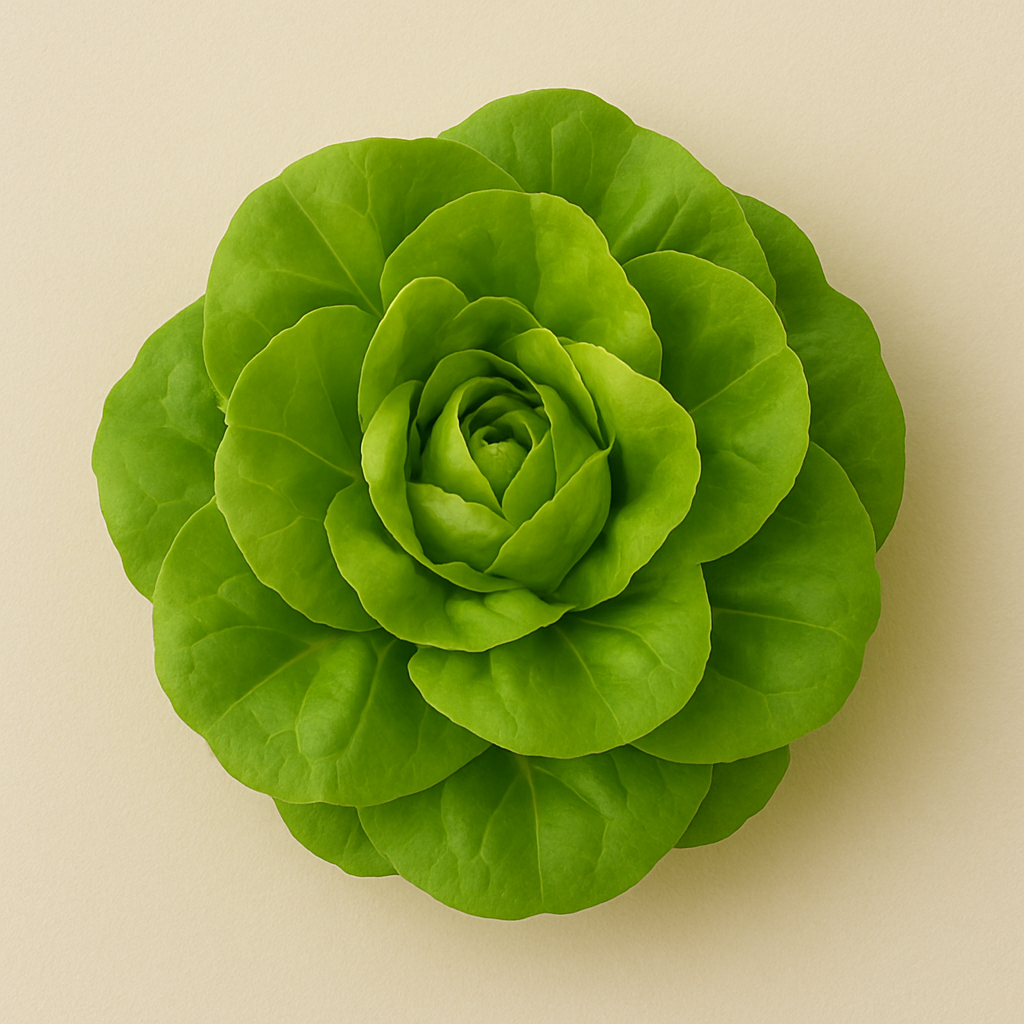
Butterhead Lettuce
Lactuca sativa var. capitata
Family: Asteraceae
Butterhead lettuce forms loose, rounded heads with soft, buttery-textured leaves. Known for its mild, sweet flavor and tender texture, it's perfect for salads and wraps. This cool-season crop grows quickly and is one of the easiest lettuces to grow.
Days to Harvest
45-65 days
Sun Needs
Full Sun to Partial Shade (4-6 hours)
moderate
Germination Temp
65°F optimal
Start Indoors
4 weeks before last frost
Germination
2-10 days
Seed Depth
1/8 inch
Light to Germinate
Yes
💡 Tip: Seeds need light to germinate. Press into soil surface and barely cover. Can be direct sown as soon as soil can be worked.
Soil Type
Rich, well-draining soil with plenty of organic matter
pH Range
6 - 7
Spacing
8-12 inches between plants, 12-18 inches between rows
⚠️ Avoid planting near:
History
Lettuce (Lactuca sativa) is one of humanity's oldest cultivated vegetables, with evidence of its domestication dating back to ancient Egypt around 2680 BCE, where tomb paintings depict lettuce plants being grown and harvested. However, early lettuce was cultivated primarily for its oil-rich seeds rather than its leaves—the wild ancestor of modern lettuce had tall, bitter stalks more suited to seed production. The ancient Greeks and Romans transformed lettuce into a leaf vegetable through selective breeding, with the Roman emperor Augustus reportedly erecting a statue to honor lettuce after it cured his illness. Butterhead lettuce, characterized by its loose, rounded head and remarkably tender, almost buttery leaves, developed in Europe during the 17th and 18th centuries as gardeners selected for softer textures and milder flavors. The variety "Bibb" lettuce, perhaps the most famous American butterhead, was developed by John J. Bibb in Frankfort, Kentucky, around 1865, and became synonymous with gourmet salads. Boston lettuce, another butterhead type, became a New England favorite and remains the preferred lettuce for classic lettuce cups in Chinese-American cuisine. Today, butterhead lettuces are prized by chefs for their silky texture and are often the lettuce of choice in fine dining establishments.
Nutritional Benefits
- ✓High in Vitamin K for bone health
- ✓Good source of Vitamin A
- ✓Contains folate for cell function
Optimal Growing Temp
60°F - 70°F
Butterhead lettuce thrives in cool conditions between 60-70°F. Growth slows above 75°F and plants bolt quickly above 80°F. Tolerates light frost down to 32°F.
Survival Range
40°F - 80°F
Can survive these temperatures
Frost Note: Butterhead lettuce tolerates light frost (28-32°F) and can survive brief dips to 25°F with row cover protection. Light frost can actually sweeten flavor.
Best USDA Zones
Humidity
40-60%
Moderate humidity is preferred. High humidity (>70%) can increase disease pressure, especially downy mildew. Good air circulation is important.
Height
6-8 inches
Spread
8-12 inches
Growth Habit
upright
Germination
2-10 days
Seeds germinate best at 60-70°F. Light aids germination—barely cover seeds. First sprouts emerge with seed leaves (cotyledons).
Seedling Stage
Duration: 2-3 weeks
True leaves: First true leaves appear 5-7 days after sprouting
Transplant ready: Ready when 3-4 inches tall with 3-4 true leaves. Harden off gently before transplanting.
Vegetative Growth
Duration: 4-6 weeks from transplant
Rapid leaf development forming a loose head. Center leaves remain tender and buttery. Cool temperatures produce the best texture and flavor.
Harvest Maturity
Timing: 45-65 days from seed
- Head feels loosely formed but has substance when gently squeezed
- Center is filled with tender, buttery leaves
- Outer leaves are full-sized (6-8 inches)
- No sign of elongation or bolting
Per Plant
4-8 oz per head
Per Square Foot
1-2 heads per square foot with proper spacing
Harvest Frequency
Single harvest per head, or continuous if harvesting outer leaves
Factors Affecting Yield
- •Cool temperatures extend harvest window
- •Consistent moisture produces tender leaves
- •Adequate spacing prevents disease
- •Bolting dramatically reduces yield - harvest promptly
- •Partial shade in warm weather extends season
Seedling Stage
Keep surface consistently moist for germination and early growth
Established Plants
1 inch per week, more in hot weather
Preferred Method
Water at base of plants to keep foliage dry. Drip irrigation or soaker hoses ideal. Avoid overhead watering which promotes disease.
⚠️ Critical Watering Periods
- • Germination
- • Head formation
Pro Tips
- Water early morning so foliage dries before evening
- Mulch to retain moisture and keep roots cool
- Consistent moisture is key—fluctuations cause bitterness
- Reduce watering slightly before harvest for better flavor concentration
Feeding Schedule
At Planting
Balanced fertilizer or compost
Once at transplanting
3 Weeks After Transplant
Nitrogen-rich fertilizer or fish emulsion
Once
If Growth Slows
Liquid fish emulsion
Every 2 weeks
Organic Options
Side-dress with compost or apply diluted fish emulsion every 2-3 weeks. Blood meal provides quick nitrogen boost.
Minimum Size
6 inch pot minimum
Recommended Size
8-10 inch pot or 6 inch deep container
Depth Required
At least 6 inches deep
Best Varieties for Containers
Container Tips
- Excellent for containers due to compact size and shallow roots
- Use high-quality potting mix with good moisture retention
- Containers warm faster than garden soil—place in partial shade
- Water more frequently than garden plants
- Try miniature varieties like Tom Thumb for small pots
- Succession plant in multiple containers for continuous harvest
Plant Every
Every 2-3 weeks
Sowings/Season
6-8 plantings in spring, 4-6 in fall
Duration
From 6 weeks before last frost until 6 weeks before hot weather; resume late summer for fall
Tips
- Succession planting ensures continuous harvest
- Adjust planting density as season warms—wider spacing in heat
- Use bolt-resistant varieties for late spring sowings
- Fall plantings often have superior flavor
- In mild climates, plant through winter with protection
Why is my butterhead lettuce turning bitter?
Bitterness in lettuce is caused by heat stress, water stress, or the beginning of bolting. Once temperatures consistently exceed 75°F or the plant experiences drought, it produces latex compounds that taste bitter. To prevent: plant in cool weather, provide consistent moisture, harvest promptly when heads are ready, and use afternoon shade in warm conditions.
How do I prevent my lettuce from bolting?
Bolting (sending up a flower stalk) is triggered by heat and long days. Prevention strategies: 1) Plant in cool seasons (spring/fall). 2) Choose bolt-resistant varieties like Buttercrunch. 3) Provide afternoon shade when temperatures rise. 4) Keep soil consistently moist. 5) Harvest promptly when heads are ready. 6) Use row covers to create cooler microclimate. Once bolting starts, flavor turns bitter and the plant is past its prime.
Can I grow butterhead lettuce in summer?
In most regions, butterhead lettuce struggles in summer heat and will bolt quickly. However, in cool summer climates (Pacific Northwest, northern regions), you can grow it with afternoon shade, consistent moisture, and heat-resistant varieties. Most gardeners have better success with spring and fall crops when temperatures stay below 75°F.
Should I harvest the whole head or pick outer leaves?
Both methods work! For whole heads: Cut at base when center is filled in and head feels substantial but still tender (45-65 days). For cut-and-come-again: Harvest outer leaves when 4-6 inches long, leaving center to produce more. The cut-and-come-again method extends harvest but produces smaller yields per plant. Whole head harvest is traditional and provides classic butterhead presentation.
Why are there holes in my lettuce leaves?
Holes in lettuce are typically caused by slugs, snails, or earwigs, all of which feed at night. Look for slime trails (slugs/snails) or check plants after dark with a flashlight. Solutions: 1) Remove garden debris where pests hide. 2) Set beer traps or hand-pick at night. 3) Apply diatomaceous earth around plants. 4) Use copper tape barriers. 5) Encourage ground beetles and birds. 6) Avoid overwatering which attracts slugs.
How do I know when butterhead lettuce is ready to harvest?
Butterhead is ready when the head feels loosely formed but has substance when gently squeezed (not dense like iceberg). The center should be filled with tender leaves. Outer leaves should be 6-8 inches long. Harvest before you see any elongation at the center (sign of bolting). Baby leaves can be harvested anytime after 21-30 days. The best test: if it looks beautiful and feels substantial but still tender, it's ready!