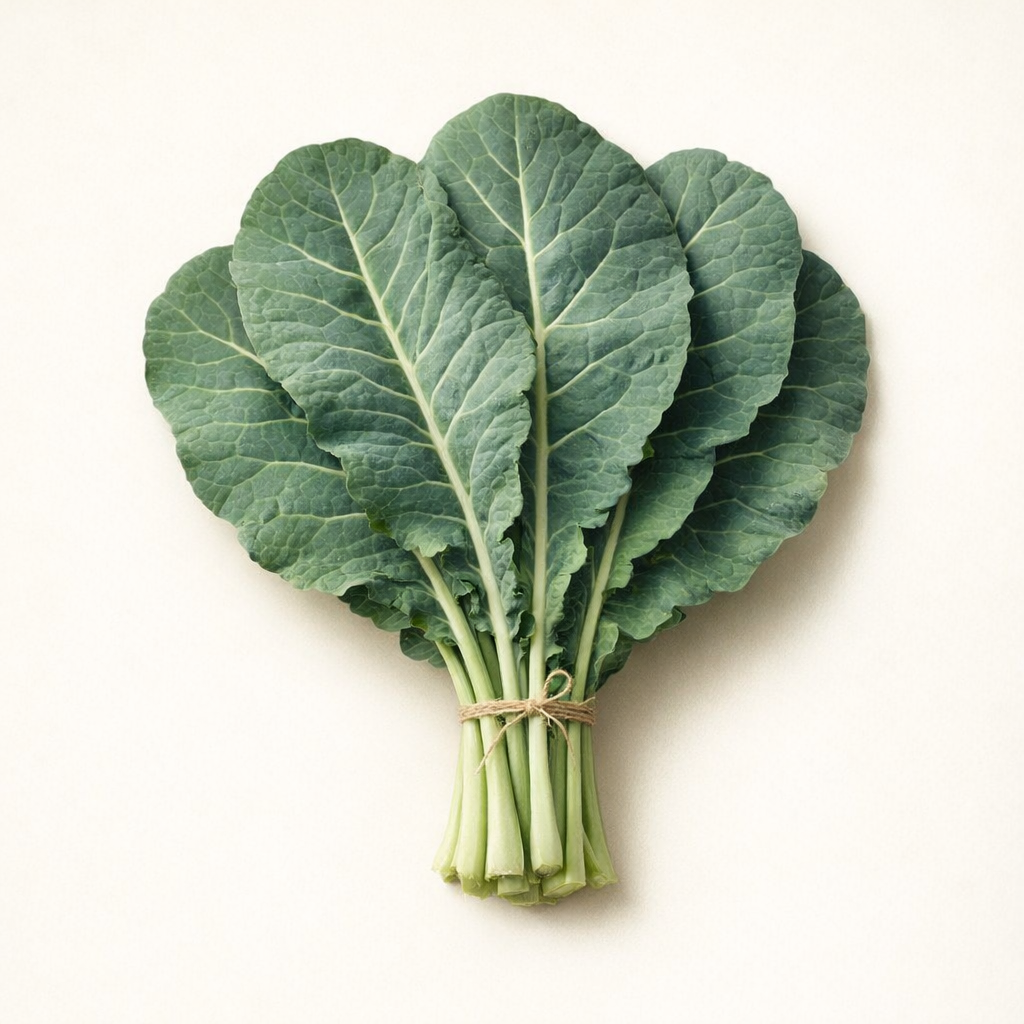
Collard Greens
Brassica oleracea var. viridis
Family: Brassicaceae
Collard greens are large, sturdy leafy greens with a mild, slightly bitter flavor that sweetens after frost. A staple of Southern American cuisine, collards are extremely nutritious and one of the most cold-hardy greens you can grow, surviving temperatures down to 5°F.
Days to Harvest
60-80 days
Sun Needs
Full Sun to Partial Shade (4-6 hours)
moderate
Germination Temp
75°F optimal
Start Indoors
6 weeks before last frost
Germination
4-10 days
Seed Depth
1/4 to 1/2 inch
Light to Germinate
No
💡 Tip: Can direct sow or transplant. Plant in late summer for fall/winter harvest when flavor is sweetest.
Soil Type
Rich, well-draining soil with high organic matter
pH Range
6 - 7.5
Spacing
18-24 inches between plants, 30-36 inches between rows
⚠️ Avoid planting near:
History
Collards have ancient origins in the Mediterranean and have been cultivated for over 2,000 years. They became a cornerstone of Southern American cooking through African American culinary traditions, where they're often slow-cooked with ham hocks or smoked turkey.
Nutritional Benefits
- ✓Extremely high in Vitamin K
- ✓Excellent source of Vitamins A and C
- ✓High in calcium (more than milk per calorie)
Optimal Growing Temp
60°F - 75°F
Collards thrive in cool to moderate temperatures (60-75°F) but are remarkably adaptable. They tolerate heat better than most brassicas and are among the most cold-hardy greens, surviving temps as low as 5°F.
Survival Range
5°F - 85°F
Can survive these temperatures
Frost Note: Extremely cold-hardy. Survives temperatures down to 5°F and even lower with snow cover. Frost actually improves flavor by converting starches to sugars. Can be harvested under snow.
Best USDA Zones
Humidity
50-70%
Tolerant of various humidity levels. Good air circulation helps prevent fungal issues on dense leaves.
Height
24-36 inches
Spread
18-24 inches
Growth Habit
upright
Germination
4-10 days
Seeds germinate in cool soil (65-75°F). Start indoors or direct sow.
Seedling Stage
Duration: 3-4 weeks
True leaves: Develop strong seedlings before transplanting.
Transplant ready: Harden off well for outdoor conditions when 3-4 true leaves.
Vegetative Growth
Duration: 8-12 weeks
Rapid leaf production. Begin harvesting outer leaves at 6-8 inches. Plants continue producing.
Harvest Maturity
Timing: 60-80 days from seed
- Full-sized plants with large, thick leaves
- Continue harvesting outer leaves for months
Per Plant
2-4 lbs of leaves over the season
Per Square Foot
1-2 lbs at 18-inch spacing
Harvest Frequency
Harvest outer leaves every 1-2 weeks
Factors Affecting Yield
- •Extended harvest window
- •Cold tolerance extends season
- •Regular harvesting promotes growth
- •Soil fertility
Seedling Stage
Keep consistently moist, daily light watering
Established Plants
Deep watering every 4-7 days, 1-1.5 inches per week
Preferred Method
Deep watering at soil level. Soaker hose or drip irrigation ideal. Avoid wetting leaves.
⚠️ Critical Watering Periods
- • Transplant establishment
- • Hot summer weather
- • Rapid growth phases
Pro Tips
- Deep roots make collards drought-tolerant once established
- Consistent water produces tender, sweet leaves
- Mulch to retain moisture and regulate soil temperature
- Water needs increase during hot weather
Feeding Schedule
Organic Options
Top-dress with compost monthly. Apply liquid feed every 2-3 weeks during active growth.
Minimum Size
12 inch pot minimum
Recommended Size
15-18 inch pot or half-barrel
Depth Required
12-14 inches minimum for taproot
Best Varieties for Containers
Container Tips
- Choose compact varieties like Vates for containers
- Deep containers accommodate taproot for best growth
- Water regularly—containers dry faster than ground
- Feed monthly with balanced fertilizer
- Can overwinter containers in sheltered locations
Why Prune
When
Begin harvesting when leaves reach 6-8 inches. Continue throughout growing season.
How Often
Every 1-2 weeks throughout growing season
Technique
Snap or cut outer leaves at the stem, working from bottom up. Leave inner leaves to continue growing.
Remove
- ✗ Mature outer leaves
- ✗ Yellowed or damaged leaves
- ✗ Any bolting flower stalks
Keep
- ✓ Growing center point
- ✓ Young inner leaves
- ✓ At least 6-8 inner leaves on plant
Plant Every
3-4 weeks for spring, single fall planting
Sowings/Season
2-3 spring sowings, 1 main fall planting
Duration
Spring through early summer, then fall
Tips
- Spring plantings provide early harvests
- Fall planting produces sweetest leaves after frost
- In zones 7-9, fall-planted collards can overwinter for spring harvest
- Skip planting during hottest summer months
Do collards really taste better after frost?
Yes! Cold temperatures trigger the plant to convert starches into sugars as a natural antifreeze. This makes frost-kissed collards noticeably sweeter and more tender than those harvested in warm weather. Many Southern gardeners wait until after the first hard frost for their main harvest.
How do I keep collards producing all season?
Harvest only the outer leaves, leaving the center growing point and inner leaves intact. Take no more than 1/3 of the plant at once. Feed regularly with nitrogen, water consistently, and remove any flower stalks immediately. A single plant can produce for 6+ months with proper care.
Can collards survive winter?
Collards are incredibly cold-hardy, surviving temperatures down to 5°F and sometimes lower with snow cover. In zones 7-9, they typically overwinter for spring harvest. In colder zones, mulch heavily and use row cover for protection. Plants may look ragged in extreme cold but often revive.
Why are my collard leaves tough and bitter?
Tough, bitter leaves usually result from water stress, heat stress, or leaves that are overmature. Keep soil consistently moist, harvest leaves at 6-10 inches before they get too large, and wait for cooler weather if possible. Young leaves are always more tender.