Curly Kale
Brassica oleracea var. sabellica
Family: Brassicaceae
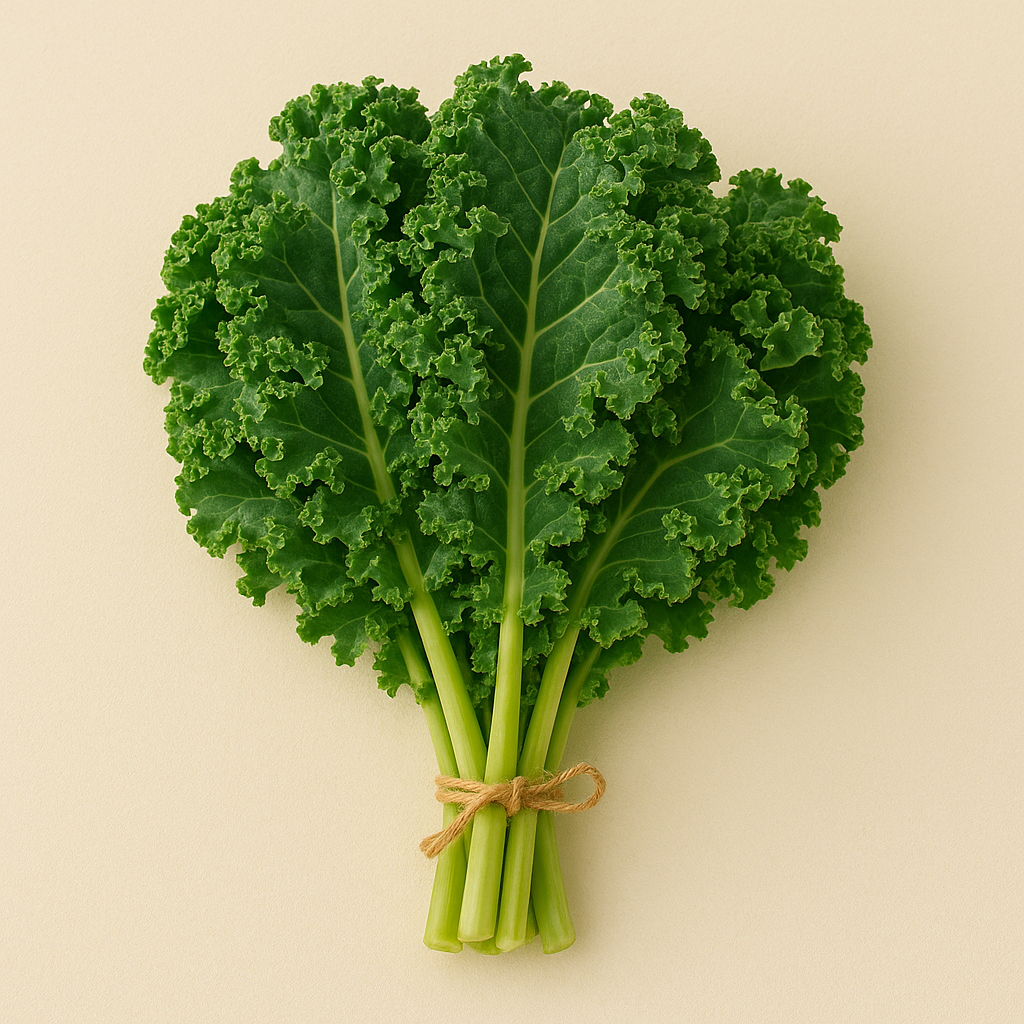
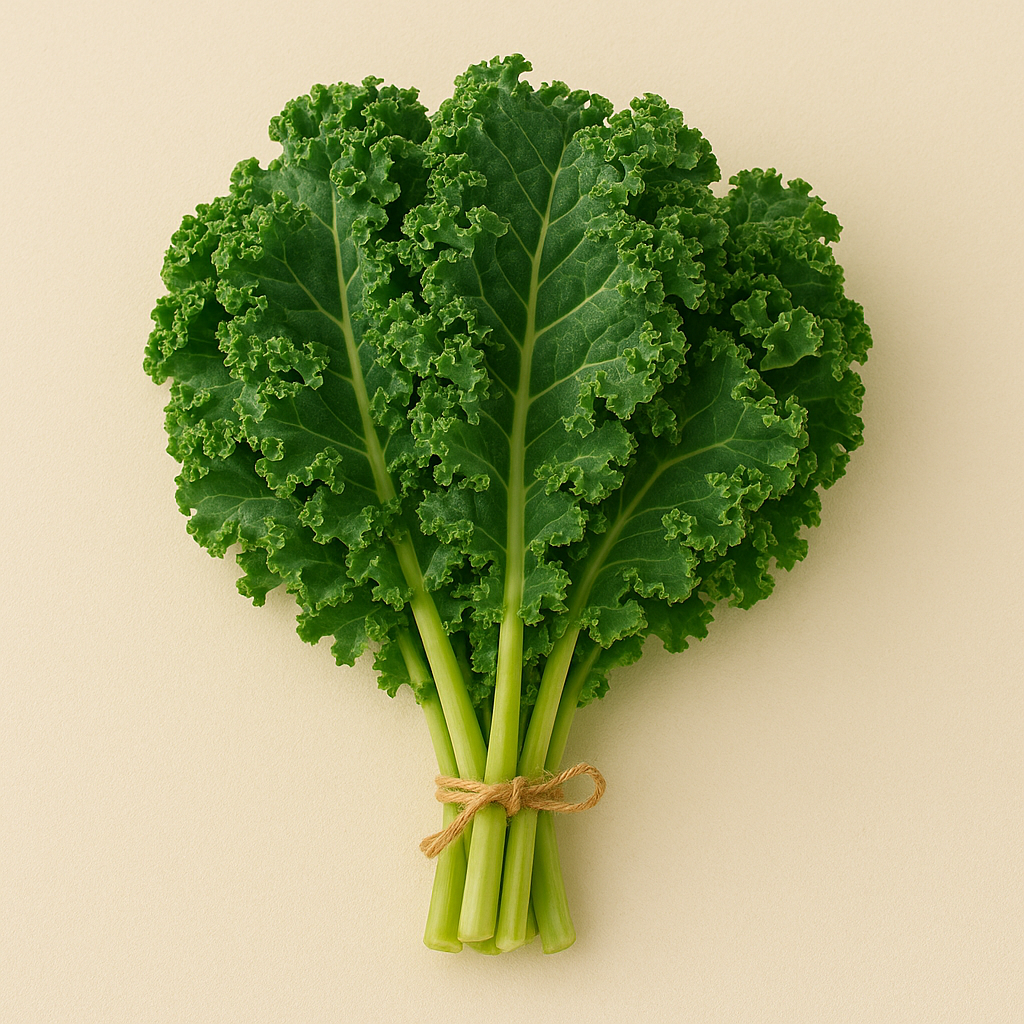
Curly kale is the most common kale variety, with tightly ruffled blue-green leaves and a bold, slightly bitter flavor. Extremely cold-hardy and productive, it becomes sweeter after frost. Perfect for kale chips, smoothies, and sautéing.
Days to Harvest
50-65 days
Sun Needs
Full Sun to Partial Shade (4-6 hours)
moderate
Germination Temp
70°F optimal
Start Indoors
6 weeks before last frost
Germination
4-10 days
Seed Depth
1/4 to 1/2 inch
Light to Germinate
No
💡 Tip: Direct sow in late summer for fall/winter harvest. Flavor dramatically improves after frost.
Soil Type
Rich, well-draining soil with organic matter
pH Range
6 - 7.5
Spacing
18-24 inches between plants, 24-30 inches between rows
⚠️ Avoid planting near:
History
Curly kale has been grown for centuries as a cold-hardy winter vegetable. It was a staple in European peasant gardens due to its ability to survive harsh winters and provide nutrition when other greens weren't available.
Nutritional Benefits
- ✓One of the most nutrient-dense foods
- ✓Extremely high in Vitamin K
- ✓Excellent source of Vitamins A and C
Optimal Growing Temp
55°F - 75°F
Curly kale thrives in cool weather (55-75°F) but is extremely cold-hardy. Flavor improves dramatically after frost. Can survive temperatures down to 10°F. Tolerates heat but leaves may become tough.
Survival Range
10°F - 85°F
Can survive these temperatures
Frost Note: One of the most cold-hardy vegetables. Survives hard frost (10-20°F) and even snow. Frost converts starches to sugars, making leaves sweeter. Can be harvested through winter in many climates.
Best USDA Zones
Humidity
40-60%
Moderate humidity preferred. Good air circulation prevents fungal diseases among curly leaves.
Height
18-24 inches
Spread
18-24 inches
Growth Habit
upright
Germination
4-10 days
Seeds germinate in cool soil (45-85°F). Direct sow or start indoors.
Seedling Stage
Duration: 3-4 weeks
True leaves: Develop strong seedlings before transplanting. True leaves show characteristic curl.
Transplant ready: Ready when 4-5 inches tall with 4-5 true curly leaves.
Vegetative Growth
Duration: 6-8 weeks
Rapid leaf production. Begin harvesting outer leaves at 8-10 inches.
Harvest Maturity
Timing: 55-65 days from seed
- Full-sized plant ready for continuous harvest
- Continues producing through frost
Per Plant
2-4 lbs of leaves over season
Per Square Foot
1-2 lbs at 18-inch spacing
Harvest Frequency
Harvest outer leaves every 1-2 weeks
Factors Affecting Yield
- •Cold tolerance extends harvest
- •Regular picking promotes growth
- •Frost sweetens flavor
- •Soil fertility
Seedling Stage
Keep consistently moist during establishment
Established Plants
Deep watering every 4-7 days, 1-1.5 inches per week
Preferred Method
Water deeply at soil level. Soaker hose ideal for keeping curly leaves dry.
⚠️ Critical Watering Periods
- • Transplant establishment
- • Hot summer weather
- • Active growth phases
Pro Tips
- Consistent moisture prevents tough, bitter leaves
- Mulch heavily to retain moisture and moderate temperature
- Water needs decrease as temperatures cool in fall
- Drought stress intensifies bitterness
Feeding Schedule
Organic Options
Top-dress with compost monthly. Apply liquid feed every 3-4 weeks.
Minimum Size
12 inch pot minimum
Recommended Size
14-16 inch pot
Depth Required
12 inches minimum
Best Varieties for Containers
Container Tips
- Choose compact varieties like Dwarf Blue Curled for containers
- Deep containers provide stability for tall plants
- Water regularly—kale is thirsty
- Feed monthly with balanced fertilizer
- Can overwinter containers in sheltered locations
Why Prune
When
Begin harvesting when outer leaves reach 8-10 inches
How Often
Every 1-2 weeks throughout growing season
Technique
Snap or cut outer leaves at base, leaving inner leaves to continue growing
Remove
- ✗ Outer mature leaves
- ✗ Yellowed or damaged leaves
- ✗ Flower stalks if bolting
Keep
- ✓ Growing center
- ✓ Young inner leaves
- ✓ At least 4-5 center leaves
Plant Every
Spring and late summer plantings
Sowings/Season
2 main plantings
Duration
Plant spring for early harvest, late summer for fall/winter
Tips
- Spring planting: 6-8 weeks before last frost for summer harvest
- Late summer planting: 10-12 weeks before first frost for fall/winter harvest
- Fall plantings are sweetest due to frost exposure
- Single plants produce continuously for months
Why is my curly kale bitter?
Bitterness usually results from heat stress, water stress, or harvest timing. Kale becomes sweeter after frost because cold converts starches to sugars. Harvest in cool weather, water consistently, and wait until after first frost for sweetest flavor.
What makes curly kale best for kale chips?
The ruffled, curly texture holds seasonings well and creates crispy, airy chips with great texture. The edges get extra crispy while centers stay slightly tender. Tear into chip-sized pieces, toss lightly with oil and salt, and dehydrate or bake until crispy.
How cold can curly kale survive?
Curly kale is extremely cold-hardy, surviving temperatures as low as 10°F and sometimes lower. It can be harvested through winter in many climates, even after snow. Heavy mulch and row cover extend the harvest further in very cold zones.
Should I massage curly kale for salads?
Yes! Curly kale benefits from massaging for raw use. Remove stems, tear leaves, add a pinch of salt and drizzle of oil, then massage for 2-3 minutes until leaves darken, soften, and reduce in volume. This breaks down tough fibers and removes bitterness.