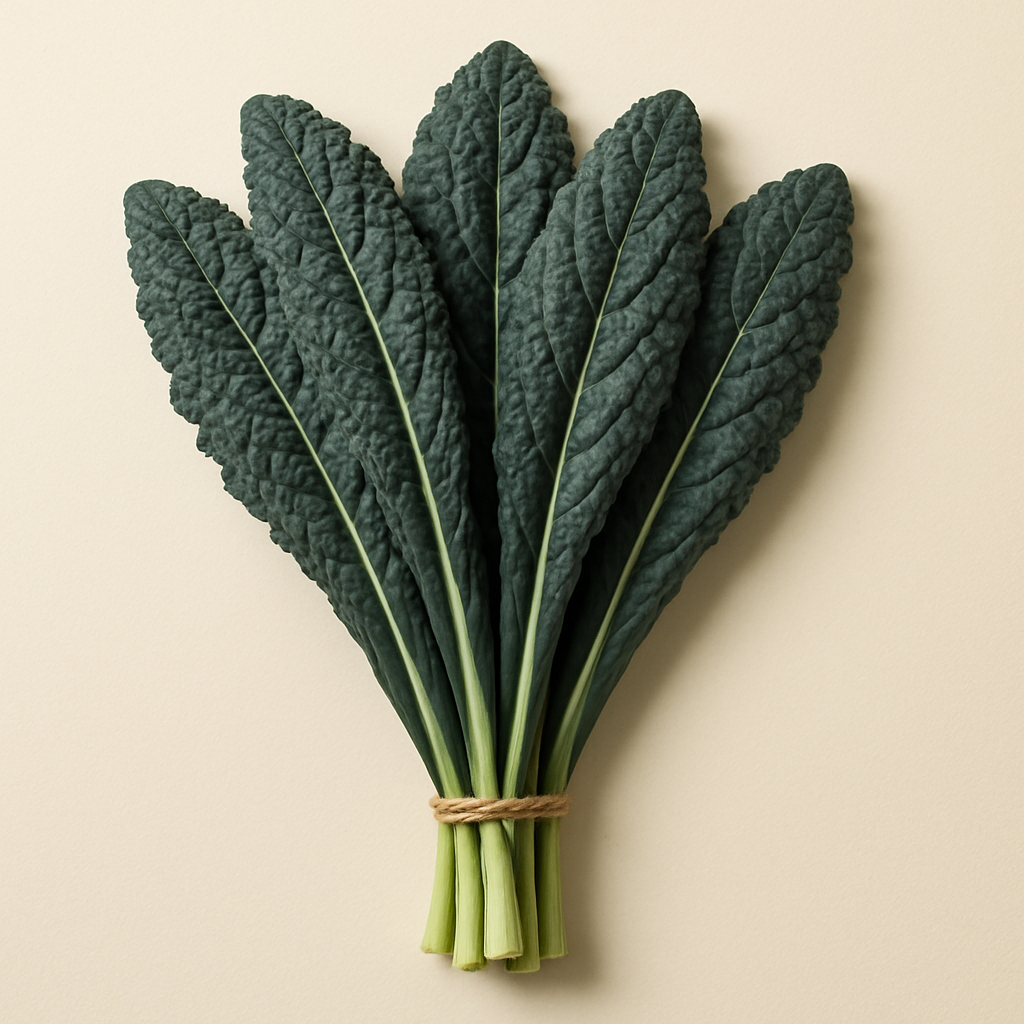
Lacinato Kale
Brassica oleracea var. palmifolia
Family: Brassicaceae
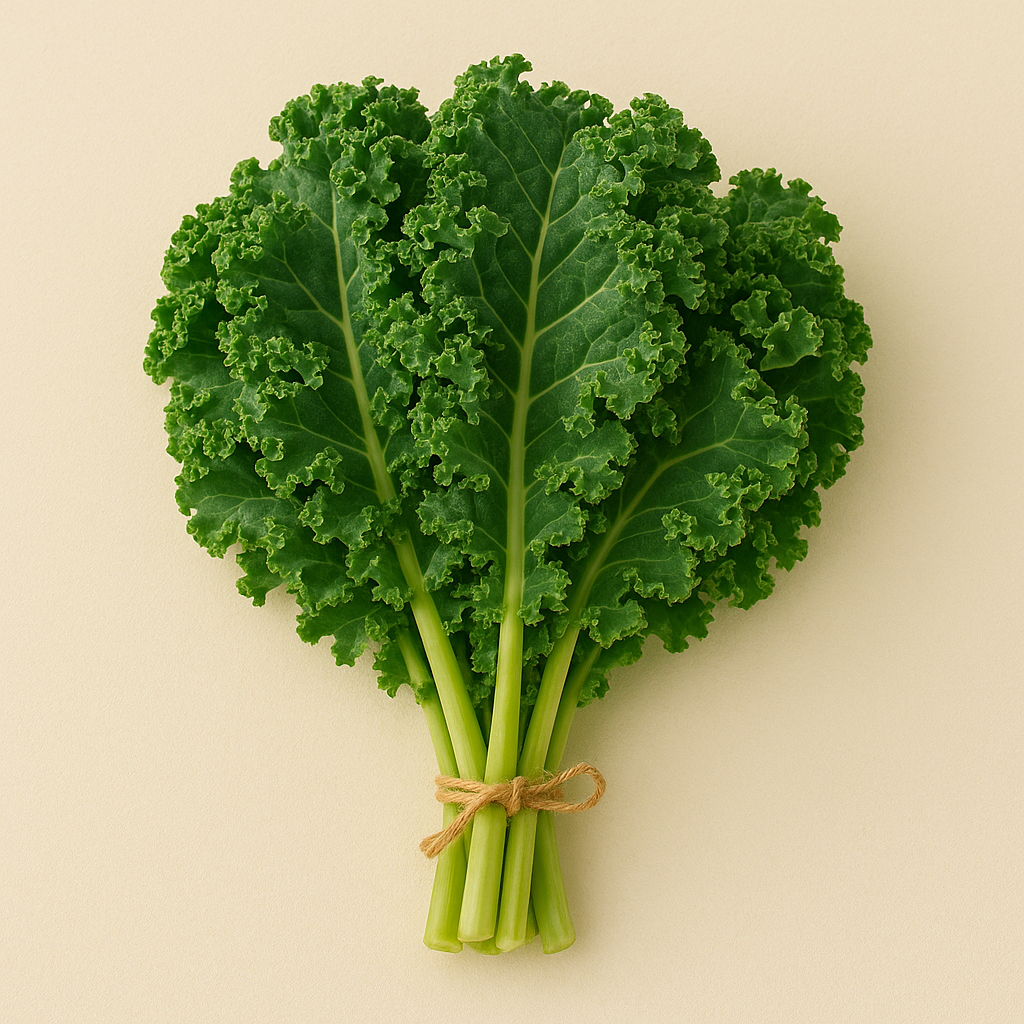
Lacinato kale, also called Tuscan kale, dinosaur kale, or cavolo nero, has long, dark blue-green leaves with a bumpy, prehistoric-looking texture. It's more tender than curly kale with a sweeter, more delicate flavor. A favorite of chefs and gardeners alike.
Days to Harvest
55-65 days
Sun Needs
Full Sun to Partial Shade (4-6 hours)
moderate
Germination Temp
70°F optimal
Start Indoors
6 weeks before last frost
Germination
4-10 days
Seed Depth
1/4 to 1/2 inch
Light to Germinate
No
💡 Tip: Plant in late summer for best fall/winter harvest. Frost sweetens the flavor considerably.
Soil Type
Rich, well-draining soil with organic matter
pH Range
6 - 7.5
Spacing
18-24 inches between plants, 24-30 inches between rows
⚠️ Avoid planting near:
History
Lacinato kale originated in Tuscany, Italy, where it has been grown since at least the 18th century. It's a traditional ingredient in Italian cuisine, particularly in ribollita, a Tuscan bread soup. "Cavolo nero" means "black cabbage" in Italian.
Nutritional Benefits
- ✓Extremely high in Vitamin K
- ✓Excellent source of Vitamins A and C
- ✓High in antioxidants
Optimal Growing Temp
55°F - 75°F
Lacinato kale prefers cool weather (55-75°F) but is very cold-hardy. More tender than curly kale, making it better for raw use. Flavor sweetens significantly after frost.
Survival Range
10°F - 85°F
Can survive these temperatures
Frost Note: Very cold-hardy, surviving temperatures to 10°F and lower. Frost dramatically improves sweetness. Can harvest through winter in many climates.
Best USDA Zones
Humidity
40-60%
Moderate humidity preferred. The bumpy leaf texture can trap moisture, so good air circulation helps.
Height
24-36 inches
Spread
18-24 inches
Growth Habit
upright
Germination
4-10 days
Seeds germinate in cool to moderate soil. Direct sow or start indoors.
Seedling Stage
Duration: 3-4 weeks
True leaves: True leaves show distinctive dark color and bumpy texture early.
Transplant ready: Ready when 4-5 inches tall with dark, textured leaves.
Vegetative Growth
Duration: 6-10 weeks
Strap-like leaves grow in palm-like formation. Begin harvesting at 8-10 inches.
Harvest Maturity
Timing: 60-65 days from seed
- Full-sized plant with dark, textured leaves
- Sweetest after frost
Per Plant
2-4 lbs over season
Per Square Foot
1-2 lbs at 18-inch spacing
Harvest Frequency
Harvest lower leaves every 1-2 weeks
Factors Affecting Yield
- •Cold tolerance extends harvest
- •Frost sweetens leaves
- •Regular picking
- •Soil fertility
Seedling Stage
Keep consistently moist
Established Plants
Deep watering every 4-7 days, 1-1.5 inches per week
Preferred Method
Water deeply at soil level. Bumpy leaves can trap water, so base watering prevents disease.
⚠️ Critical Watering Periods
- • Transplant establishment
- • Hot weather
- • Active growth
Pro Tips
- Consistent moisture keeps leaves tender for raw eating
- Mulch helps retain moisture and moderate temperature
- Water needs decrease in cool fall weather
- Drought stress toughens otherwise tender leaves
Feeding Schedule
Organic Options
Top-dress with compost monthly for continuous production.
Minimum Size
12 inch pot minimum
Recommended Size
14-16 inch pot
Depth Required
12 inches minimum
Best Varieties for Containers
Container Tips
- Dramatic architectural form makes beautiful container focal point
- Palm-like growth habit looks tropical despite cold tolerance
- Needs deep container for tall upright growth
- Water regularly and feed monthly
- Can overwinter in protected locations
Why Prune
When
Begin harvesting when lower leaves reach 8-10 inches
How Often
Every 1-2 weeks throughout growing season
Technique
Harvest from bottom up, taking outer lower leaves first. The plant resembles a palm tree as it grows.
Remove
- ✗ Lower mature leaves
- ✗ Yellowed leaves
- ✗ Damaged leaves
Keep
- ✓ Top growing rosette
- ✓ Upper developing leaves
Plant Every
Spring and late summer plantings
Sowings/Season
2 main plantings
Duration
Plant spring for early harvest, late summer for fall/winter
Tips
- Spring: 4-6 weeks before last frost for summer harvest
- Late summer: 10-12 weeks before first frost for winter harvest
- Fall plantings produce sweetest leaves
- Single plants produce for many months
Why is lacinato kale better for salads than curly?
Lacinato kale has naturally tender leaves that don't need massaging like curly kale. The texture is more delicate, the flavor is sweeter and less bitter, and the flat leaves are easier to chew raw. It's the gourmet choice for raw kale preparations.
What does "dinosaur kale" mean?
The name comes from the bumpy, reptilian-looking texture of the leaves, which some think resembles dinosaur skin. The dark blue-green color and prehistoric appearance earned it this nickname. It's also called Tuscan kale, cavolo nero, or black cabbage.
Can lacinato kale survive winter?
Yes! Lacinato kale is very cold-hardy, surviving temperatures well below freezing (to 10°F or lower). In zones 7+, it often overwinters for early spring harvest. Cold dramatically improves the flavor, making winter-harvested lacinato exceptionally sweet.
How do I use lacinato kale in Italian cooking?
Lacinato is essential for ribollita (Tuscan bread soup). Sauté with olive oil and garlic for a classic side dish. Add to pasta with white beans. Braise slowly with tomatoes and onions. It's a traditional ingredient in many Tuscan recipes.