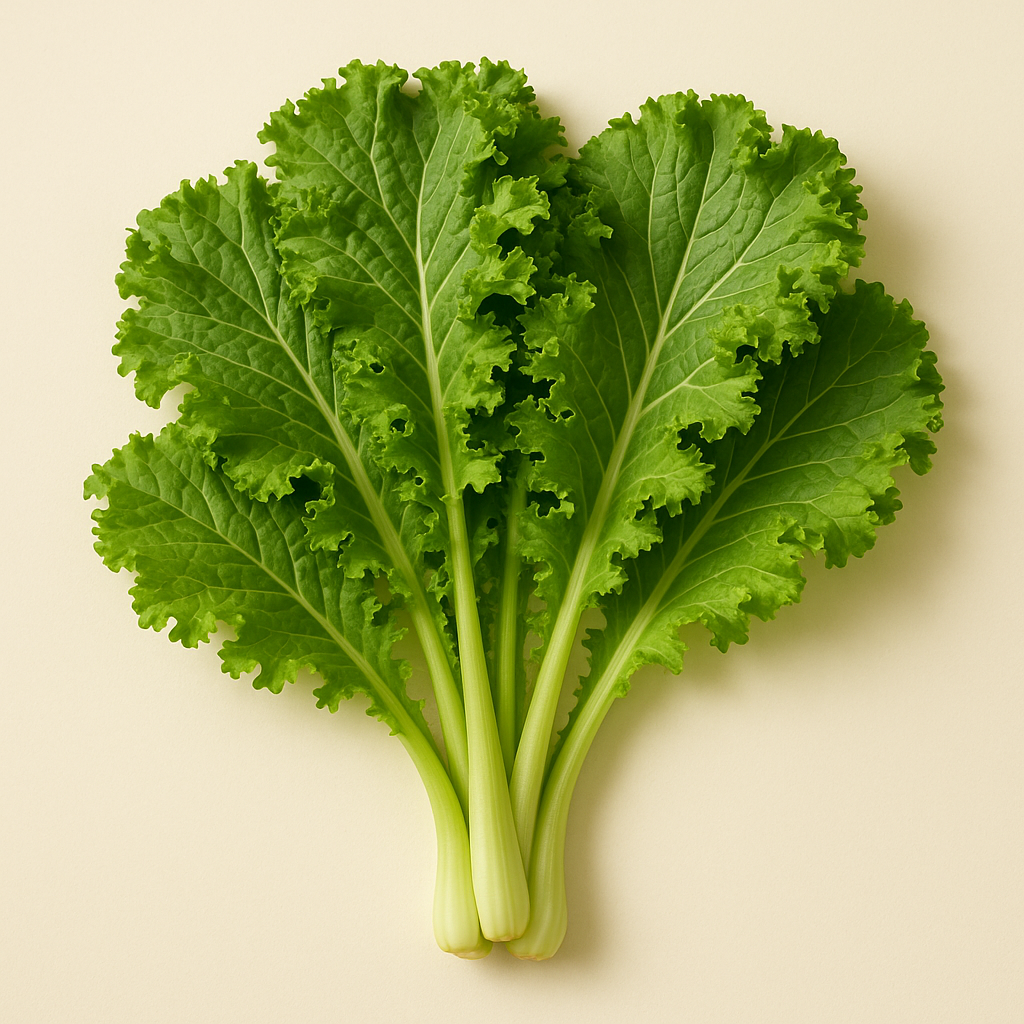
Mustard Greens
Brassica juncea
Family: Brassicaceae
Mustard greens are peppery, bold-flavored leafy greens that add spice and nutrition to any dish. Fast-growing and cold-tolerant, they come in various colors from bright green to deep purple-red. The distinctive pungent flavor mellows significantly when cooked.
Days to Harvest
40-50 days
Sun Needs
Full Sun to Partial Shade (4-6 hours)
moderate
Germination Temp
65°F optimal
Start Indoors
4 weeks before last frost
Germination
3-10 days
Seed Depth
1/4 inch
Light to Germinate
No
💡 Tip: Very easy from direct sowing. Germinates quickly in cool soil. Can be grown year-round in mild climates.
Soil Type
Average to rich, well-draining soil
pH Range
6 - 7.5
Spacing
6-8 inches between plants for full-sized leaves, 2 inches for baby greens
⚠️ Avoid planting near:
History
Mustard greens have been cultivated for over 5,000 years, originating in the Himalayan region. They're a staple in Asian, African, and Southern American cuisines. The plant is grown both for its spicy leaves and for mustard seeds.
Nutritional Benefits
- ✓Extremely high in Vitamin K
- ✓Excellent source of Vitamins A and C
- ✓High in antioxidants
Optimal Growing Temp
50°F - 70°F
Mustard greens thrive in cool temperatures (50-70°F) but tolerate a wide range. Heat intensifies peppery flavor and promotes bolting. Cold tolerance varies by variety—most handle light frost.
Survival Range
20°F - 85°F
Can survive these temperatures
Frost Note: Most varieties tolerate light frost (28-32°F). Some like Southern Giant Curled survive into the low 20s. Cold sweetens flavor. Red varieties may show enhanced color after frost.
Best USDA Zones
Humidity
40-60%
Moderate humidity preferred. High humidity increases disease risk; low humidity intensifies peppery flavor.
Height
12-24 inches
Spread
12-18 inches
Growth Habit
upright
Germination
3-7 days
Fast germination in cool soil (45-85°F). Seeds can be direct sown or started indoors.
Seedling Stage
Duration: 2-3 weeks
True leaves: Cotyledons emerge quickly.
Transplant ready: Thin to proper spacing or harvest as microgreens.
Vegetative Growth
Duration: 3-4 weeks
Rapid leaf production. Baby leaves ready in 21 days, mature leaves in 45 days.
Harvest Maturity
Timing: 40-50 days from seed
- Full-sized plants with abundant peppery leaves
- Harvest before bolting for best flavor
Per Plant
8-16 oz of leaves per plant
Per Square Foot
12-24 oz at 6-inch spacing
Harvest Frequency
Cut-and-come-again every 7-10 days
Factors Affecting Yield
- •Fast growth rate
- •Temperature management
- •Water consistency
- •Bolting prevention
Seedling Stage
Daily light watering to maintain moist surface
Established Plants
Every 2-3 days, keeping soil consistently moist
Preferred Method
Water at soil level with drip or soaker. Avoid wetting leaves to prevent disease.
⚠️ Critical Watering Periods
- • Germination
- • Hot weather
- • During rapid growth
Pro Tips
- Water stress dramatically increases peppery flavor
- Consistent moisture produces milder, tender leaves
- Morning watering preferred to allow foliage to dry
- Mulch to retain moisture in hot weather
Feeding Schedule
Organic Options
Work compost into soil at planting. Side-dress with compost if needed.
Minimum Size
6 inch pot minimum
Recommended Size
12-inch pot or window box
Depth Required
8 inches minimum
Best Varieties for Containers
Container Tips
- Excellent for containers due to shallow roots
- Use window boxes for continuous baby greens
- Can grow indoors near sunny window
- Group plants for microclimate benefits
- Move containers to shade in hot weather
Why Prune
When
Begin harvesting at 3-4 inches for baby greens, 6+ inches for mature leaves
How Often
Every 7-10 days for continuous harvest
Technique
Cut outer leaves at base, or cut entire plant 2 inches above soil for regrowth
Remove
- ✗ Outer mature leaves
- ✗ Any yellowed foliage
- ✗ Flower stalks immediately
Keep
- ✓ Growing center
- ✓ Young inner leaves
- ✓ At least 4-5 inner leaves for regrowth
Plant Every
2-3 weeks
Sowings/Season
4-6 sowings
Duration
Spring and fall; skip hot summer
Tips
- Fast growth (21-45 days) makes succession planting easy
- Start 4-6 weeks before last frost for earliest spring greens
- Skip hottest 6-8 weeks of summer—plants bolt too quickly
- Resume 8-10 weeks before first fall frost
Why are my mustard greens so spicy?
Spiciness increases with plant stress—heat, water shortage, or mature age. For milder greens: harvest young (3-4 inches), grow in cool weather, water consistently, and choose naturally mild varieties like Tatsoi or Mizuna. Cooking also mellows the heat significantly.
Can I eat mustard greens raw?
Yes! Young, baby mustard greens are excellent raw in salads—they add a peppery kick similar to arugula. Mature leaves are more pungent and are usually better cooked, which mellows their spiciness significantly.
How do I prevent mustard greens from bolting?
Grow in spring or fall when temperatures are cool (50-70°F). Keep soil consistently moist, harvest frequently, and provide afternoon shade in warm weather. Choose slow-bolt varieties like Tendergreen or Florida Broadleaf. Once they bolt, flavor becomes bitter.
What are the best mustard green varieties for beginners?
Try Tatsoi or Mizuna for mild, fast-growing Asian varieties. Southern Giant Curled is the classic American variety—peppery but not overwhelming. Red Giant adds beautiful color and milder flavor. Tendergreen is bolt-resistant and mild.