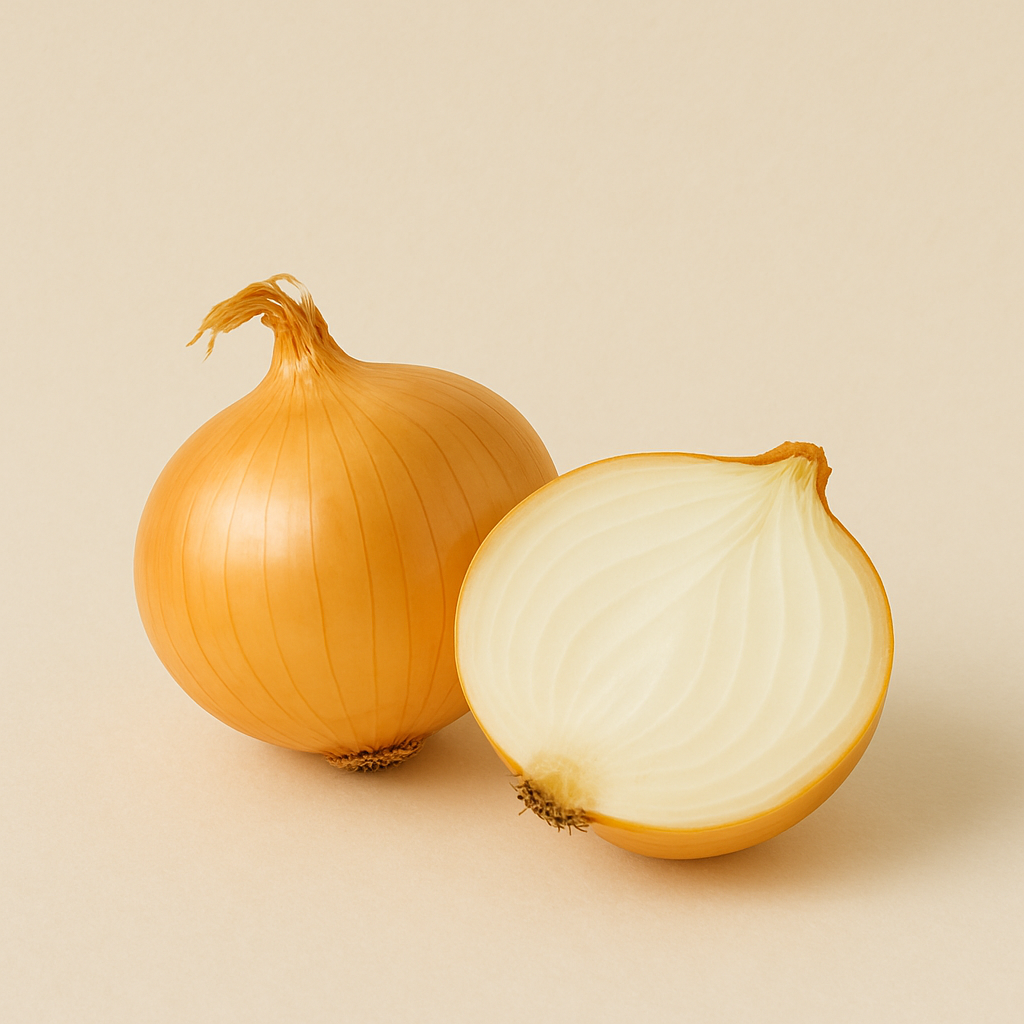
Onions
Allium cepa
Family: Amaryllidaceae
Onions are one of the most essential kitchen vegetables, used as the flavor base in cuisines worldwide. Growing your own onions is rewarding and provides varieties unavailable in stores. Choose short-day, intermediate, or long-day types based on your latitude.
Days to Harvest
80-180 days
Sun Needs
Full Sun (8+ hours)
moderate
Germination Temp
70°F optimal
Start Indoors
10 weeks before last frost
Germination
4-14 days
Seed Depth
1/4 inch
Light to Germinate
No
💡 Tip: Start seeds very early (10-12 weeks before last frost). Can also plant sets (small bulbs) for easier growing. Choose day-length variety appropriate for your latitude.
Soil Type
Loose, well-draining soil rich in organic matter
pH Range
6 - 7
Spacing
4-6 inches between plants, 12-18 inches between rows
⚠️ Avoid planting near:
History
The onion stands as one of humanity's oldest and most universally cultivated vegetables, with evidence of consumption dating back at least 5,000 years to Bronze Age settlements across Central Asia. Ancient Egyptians revered the onion as a symbol of eternity—its concentric layers representing eternal life—and placed onions in pharaohs' tombs as provisions for the afterlife. Workers building the pyramids were paid partly in onions, and the vegetable featured prominently in religious ceremonies. Greek athletes consumed large quantities believing onions lightened the blood, while Roman gladiators rubbed their muscles with onion juice to firm them. The allium spread throughout Europe during the Middle Ages, becoming the backbone of peasant cuisine when meat was scarce—so essential that onions were acceptable currency for rent and wedding gifts. Christopher Columbus introduced onions to the Americas, where they flourished and integrated into cuisines from Mexican salsas to American onion rings. The development of regional "sweet" onion varieties—Vidalia in Georgia, Walla Walla in Washington, Maui in Hawaii—became points of fierce local pride. Today, onions form the aromatic base of virtually every culinary tradition on Earth, from French mirepoix to Indian tadka to Chinese stir-fry bases.
Nutritional Benefits
- ✓High in antioxidants (quercetin)
- ✓Contains Vitamin C
- ✓Good source of fiber
Optimal Growing Temp
55°F - 75°F
Onions grow best in cool weather between 55-75°F. Bulbing is triggered by day length combined with temperature. Young plants tolerate frost down to 28°F.
Survival Range
28°F - 85°F
Can survive these temperatures
Frost Note: Onion seedlings and sets can tolerate light frosts down to 28°F. Young plants actually benefit from some cold exposure. However, hard freezes below 20°F can damage plants.
Best USDA Zones
Humidity
50-70%
Moderate humidity is best. High humidity can promote fungal diseases like downy mildew and botrytis. Low humidity during curing is essential for good storage.
Height
12-18 inches
Spread
4-6 inches
Growth Habit
upright
Germination
7-14 days
Onion seeds germinate at 50-85°F, with optimal germination at 70-75°F. First grass-like loop emerges from soil. Germination can be slow and irregular.
Seedling Stage
Duration: 4-8 weeks
True leaves: Onions produce hollow, tubular leaves. First true leaf appears 10-14 days after sprouting
Transplant ready: Ready when 4-6 inches tall, pencil-thick, with 2-3 true leaves. Trim tops to 4 inches when transplanting to reduce transplant shock.
Vegetative Growth
Duration: 8-16 weeks depending on variety
Plants focus on producing leaves (tops). Each leaf produces one ring of the bulb. More leaves = larger bulb. This stage requires consistent moisture and nitrogen.
Harvest Maturity
Timing: 90-120 days from transplant for storage onions, 60-80 days for fresh eating
- Tops begin to yellow and fall over naturally
- 50-75% of tops have fallen over
- Bulb necks soften and bend
- Outer skins become papery
Per Plant
1 bulb per plant, ranging from 4-16 oz depending on variety
Per Square Foot
9-16 onions per square foot with proper spacing
Harvest Frequency
Single harvest when bulbs mature
Factors Affecting Yield
- •Day-length matching - critical to choose correct type for your latitude
- •Planting time - early planting allows more leaf growth before bulbing
- •Consistent moisture during vegetative growth builds larger bulbs
- •Nitrogen availability during leaf growth
- •Weed control - onions compete poorly due to shallow roots
- •Plant spacing - crowding reduces bulb size
Seedling Stage
Keep consistently moist but not waterlogged
Established Plants
1 inch per week during active growth
During Fruiting
Reduce watering when tops begin to fall over to promote curing
Preferred Method
Drip irrigation or soaker hoses work well. Avoid overhead watering which can spread diseases. Water at base of plants early in the day.
⚠️ Critical Watering Periods
- • Vegetative growth (leaf production)
- • Early bulb formation
Pro Tips
- Consistent moisture during leaf growth is critical for bulb size
- Reduce watering when tops start to fall over
- Stop watering completely 1-2 weeks before harvest for better storage
- Mulch lightly to conserve moisture but don't bury necks
Feeding Schedule
At Planting
Balanced 10-10-10 or compost
Once
Every 2-3 Weeks
Nitrogen-rich fertilizer like blood meal or fish emulsion
Until bulbs begin to form
Bulbing Stage
Stop nitrogen, allow bulbs to mature
None
Organic Options
Side-dress with compost or aged manure at planting. Apply fish emulsion or blood meal every 2-3 weeks during active leaf growth. Stop all fertilization when bulbing begins.
Minimum Size
6 inches deep, 12-inch diameter for multiple plants
Recommended Size
12-18 inches deep container or window box
Depth Required
At least 8-10 inches deep
Best Varieties for Containers
Container Tips
- Use well-draining potting mix with added compost
- Space bulbing onions 3-4 inches apart in containers
- Scallions can be grown closer together (1-2 inches)
- Containers dry out quickly - check moisture daily
- Fertilize every 2-3 weeks with half-strength liquid fertilizer
- Smaller varieties like cipollini work well in containers
Why didn't my onions form bulbs?
The most common reason is planting the wrong day-length type for your latitude. Long-day onions won't bulb in the South; short-day onions won't bulb in the North. Other causes include planting too late (not enough time for leaf growth before day-length triggers bulbing), insufficient fertilizer (fewer leaves = smaller bulbs), or extreme stress from drought or disease.
What are onion sets vs. transplants vs. seeds?
Sets are small, immature bulbs grown the previous year - easiest but limited variety selection and prone to bolting. Transplants are seedlings started indoors 8-10 weeks before planting - more variety choices and less bolting than sets. Seeds direct-sown or started indoors - maximum variety selection, most economical, but longest growing time. Most gardeners prefer sets for ease or transplants for reliability.
How do I know when onions are ready to harvest?
Harvest when 50-75% of tops have naturally fallen over and begun to yellow. Don't wait for all tops to fall or bulbs may split. For storage onions, stop watering when tops begin falling and harvest 1-2 weeks later. For fresh eating, you can harvest whenever bulbs reach desired size. Don't bend tops over manually - this can introduce disease.
Why are my onions bolting (sending up flower stalks)?
Bolting is triggered by exposure to cold temperatures (below 45°F) followed by warm weather - the plant thinks it completed winter and time to flower. Using onion sets increases bolting risk since they're mature bulbs. Planting too early, especially in fluctuating spring weather, can cause bolting. If plants bolt, harvest immediately - bulbs won't store well but are fine for fresh use. Cut off flower stalk to redirect some energy back to bulb.
How long do onions store?
Storage life depends on variety and curing. Pungent storage onions (like Copra, Red Wing) store 6-8 months in ideal conditions (32-40°F, dry). Sweet onions (Vidalia, Walla Walla) only store 1-2 months due to high water and sugar content. Proper curing (2-3 weeks in warm, dry, ventilated area until necks are completely dry and papery) is essential for storage success.
Can I grow onions in containers?
Yes! Use containers at least 10 inches deep. Scallions and small varieties like cipollini work best. Space bulbing onions 3-4 inches apart. Use quality potting mix with compost, and fertilize regularly since nutrients wash out. Containers dry out quickly, so check moisture daily. Growing scallions in containers is especially easy and productive.