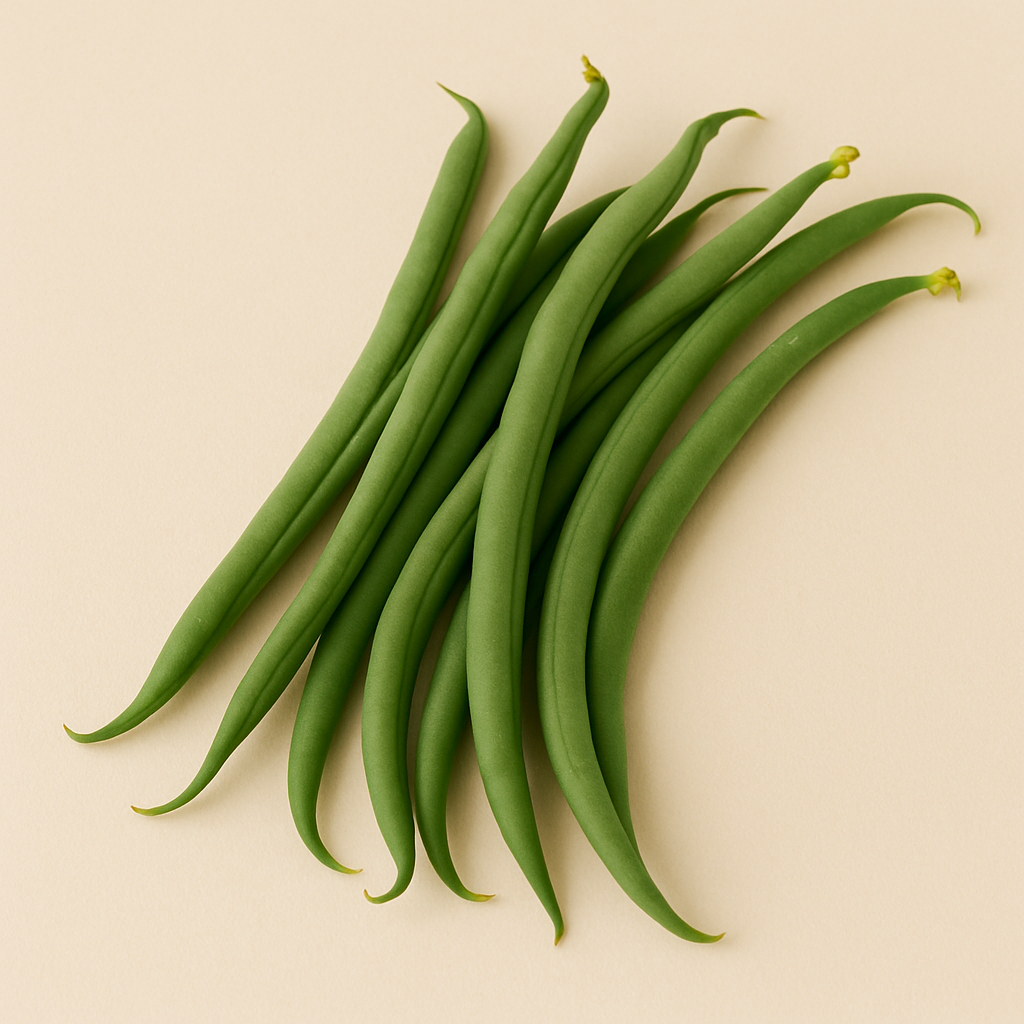
Pole Beans
Phaseolus vulgaris
Family: Fabaceae
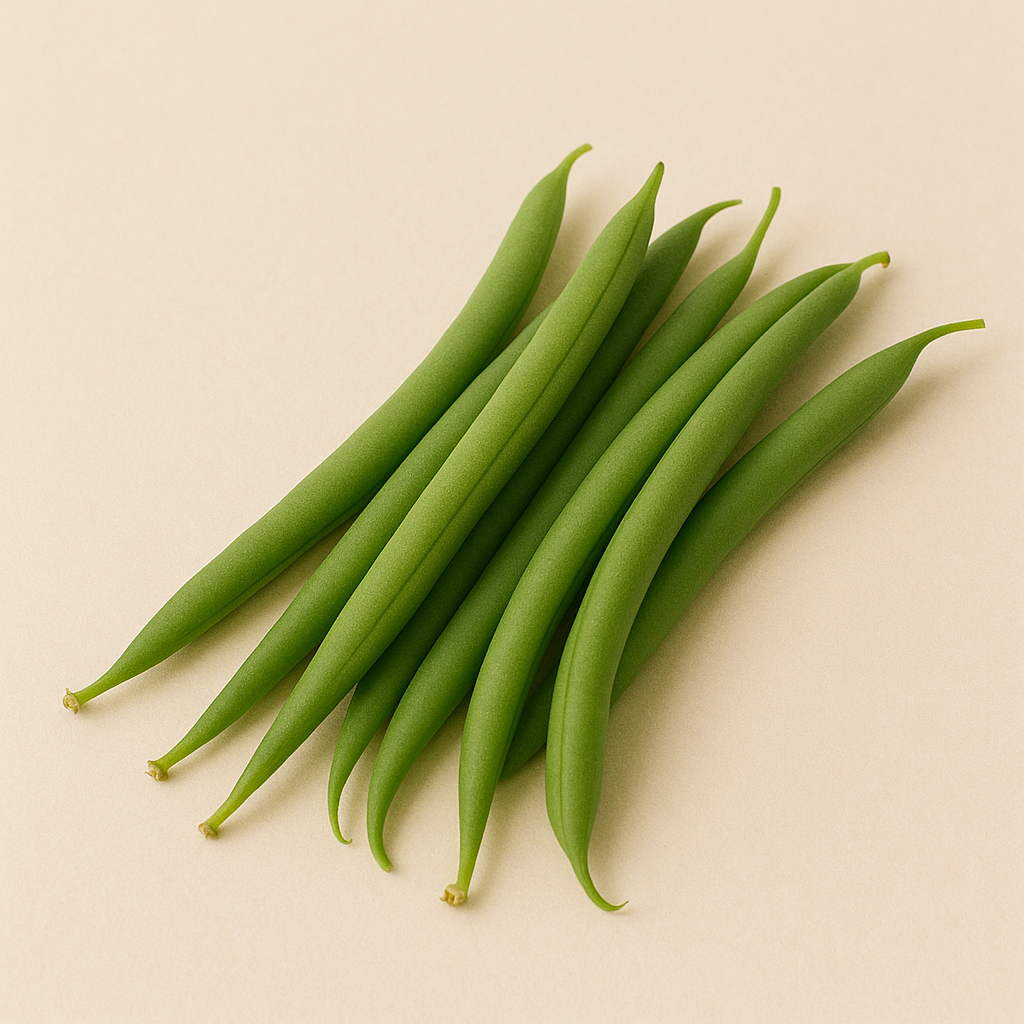
Pole beans are climbing beans that produce over a long season, providing continuous harvest for months. While they require support structures, they yield much more than bush beans in the same space. Perfect for vertical gardening and maximizing small spaces.
Days to Harvest
60-75 days
Sun Needs
Full Sun (6-8 hours)
moderate
Germination Temp
75°F optimal
Start Indoors
0 weeks before last frost
Germination
6-14 days
Seed Depth
1 to 1.5 inches
Light to Germinate
No
💡 Tip: Direct sow only. Install supports before planting. Plant 4-6 seeds around each pole or every 6 inches along a trellis.
Soil Type
Well-draining soil with moderate fertility
pH Range
6 - 7
Spacing
6 inches between plants, teepee or trellis method
⚠️ Avoid planting near:
History
Pole beans represent the original, ancestral form of common beans—the climbing habit that bush beans lost through selective breeding. In their native Central and South American homelands, wild bean ancestors climbed through forest undergrowth, a trait domesticated peoples harnessed in the famous "Three Sisters" agricultural system. Native Americans throughout Mesoamerica and North America planted beans around corn stalks, using the sturdy corn as natural poles while the beans fixed atmospheric nitrogen that enriched the soil for both crops. This ingenious polyculture sustained civilizations for millennia before European contact. When beans traveled to Europe, climbing varieties remained dominant until the 19th and 20th centuries when space-efficient bush types gained popularity. Yet pole beans never lost their devoted following: gardeners appreciate their extended harvest season (2-3 months compared to bush beans' 2-3 weeks), superior yields per square foot of garden space, and often richer flavor. Classic American varieties like Kentucky Wonder date to the 1850s and remain popular, while Italian Romano beans and British runner beans developed their own devoted followings. The infrastructure required—poles, tepees, trellises, or fences—makes pole beans slightly more work than bush types, but advocates insist the flavor and productivity rewards justify the effort.
Nutritional Benefits
- ✓High in fiber
- ✓Good source of protein
- ✓Contains Vitamin K
Optimal Growing Temp
70°F - 85°F
Pole beans prefer warm growing conditions between 70-85°F. Growth slows below 60°F and above 90°F. Germination requires minimum soil temperature of 60°F.
Survival Range
50°F - 95°F
Can survive these temperatures
Frost Note: Pole beans are killed by frost. Plant after all danger of frost has passed and soil has warmed to at least 60°F. Frost will blacken and kill plants overnight.
Best USDA Zones
Humidity
50-70%
Moderate humidity is ideal. High humidity increases disease risk, especially white mold. Good air circulation between vines is essential.
Height
6-10 feet
Spread
6-12 inches per vine
Growth Habit
climbing
Germination
6-14 days
Seeds germinate best at 70-80°F soil temperature. First shoots emerge as thick, arched stems pushing through soil surface.
Seedling Stage
Duration: 1-2 weeks
True leaves: First true trifoliate leaves appear 7-10 days after sprouting
Transplant ready: Pole beans should be direct sown only. Do not transplant—beans resent root disturbance.
Vegetative Growth
Duration: 4-5 weeks from germination
Vines grow rapidly, climbing support structures. Tendrils wrap around supports as vines climb. Nitrogen-fixing nodules form on roots during this stage.
Flowering
Timing: 5-6 weeks after germination
Duration: Continuous for 2-3 months
Self-pollinating. Small white, pink, or purple flowers appear in clusters along vines. Pollination occurs before flowers open.
Fruit Development
Begins: 10-14 days after flowering
Duration: Continuous production for 2-3 months
Pods develop continuously once flowering begins. Pick regularly every 2-3 days to encourage continued production. Vines produce until frost.
Harvest Maturity
Timing: 60-75 days from sowing to first harvest
- Pods are firm and snap cleanly when bent
- Pods are pencil-thick (about 1/4 inch diameter)
- Seeds are small and barely visible in pod
- Pods are fully colored with no pale areas
- Regular harvesting every 2-3 days maintains production
Per Plant
3-5 lbs per plant over entire season
Per Square Foot
8-12 lbs per square foot (vertical growing)
Harvest Frequency
Every 2-3 days throughout season
Factors Affecting Yield
- •Support structure quality - sturdy support allows maximum growth
- •Variety selection - some varieties are more productive
- •Regular harvesting - picking encourages continuous pod production
- •Consistent moisture during flowering and fruiting
- •Length of growing season - longer seasons mean more harvest
- •Proper spacing for air circulation and light penetration
Seedling Stage
Keep soil consistently moist until germination completes
Established Plants
1-1.5 inches per week through deep watering
During Fruiting
Critical period—maintain consistent 1.5-2 inches per week during flowering and pod production
Preferred Method
Drip irrigation or soaker hoses at base of plants. Avoid overhead watering to prevent foliar diseases. Water in morning so foliage dries quickly.
⚠️ Critical Watering Periods
- • Germination
- • Flowering
- • Continuous pod production
Pro Tips
- Deep watering encourages deep root development
- Mulch heavily to retain moisture and regulate soil temperature
- Never wet foliage—promotes fungal diseases
- Water at soil level only
- Reduce watering slightly near end of season
Feeding Schedule
At Planting
Phosphorus and potassium (bone meal and greensand)
Once at sowing
Mid-Season
Light compost side-dress
Optional, once during flowering
Organic Options
Work compost into planting area before sowing. Add bone meal to planting furrow. Inoculate seeds with rhizobium bacteria for best nitrogen fixation.
Minimum Size
10 gallon (14-16 inches deep)
Recommended Size
15-20 gallon for best production
Depth Required
At least 14-16 inches deep
Best Varieties for Containers
Container Tips
- Pole beans work well in containers with vertical support
- Plant 2-3 vines per 10-gallon container
- Install sturdy trellis or pole at planting time
- Use bamboo tepee, obelisk, or wall-mounted trellis
- Container must be heavy enough not to tip over with vine weight
- Water more frequently than in-ground plants
- Choose compact varieties like Blue Lake Pole or Fortex
Support Type
Sturdy trellis, tepee, fence, or pole system
Height Needed
6-8 feet tall minimum
When to Install
Install support at planting time before sowing seeds
Method
Plant seeds at base of support structure. Vines climb naturally using tendrils. Guide young vines to support. No tying needed—tendrils grip automatically. Options include: bamboo tepees (4-8 poles), cattle panel arches, string trellis, netting, or sturdy fence.
Tips
- Install support before planting to avoid disturbing roots
- Support must be very sturdy—mature vines become heavy
- Space plants 4-6 inches apart along trellis or fence
- For tepees, plant 4-6 seeds around base of each pole
- String trellis works well—run strings from top bar to ground stakes
- Harvest is easier with straight trellis vs. tepee
- Consider positioning for easy access from both sides
How long will pole beans produce?
Pole beans produce continuously for 2-3 months once flowering begins, unlike bush beans which produce for only 2-3 weeks. With regular harvesting every 2-3 days, plants keep flowering and setting pods until frost kills the vines. This extended production makes pole beans ideal for fresh eating all summer, while bush beans are better for one big harvest for canning.
What's the best trellis for pole beans?
The best trellis is sturdy, 6-8 feet tall, and easy to harvest from. Options include: bamboo tepees (attractive but harder to harvest inside), straight trellis made from cattle panels or wire mesh (easiest harvesting), string trellis between posts (economical), or growing on existing fence. Key is stability—mature vines become heavy and can pull down flimsy supports.
Can I grow pole beans without a trellis?
No. Pole beans are natural climbers with vigorous vines reaching 6-10 feet. Without support they become a tangled mess on the ground, producing poorly and developing diseases from ground contact. If you don't want to trellis, grow bush beans instead—they're self-supporting and require no staking.
Why are my pole beans flowering but not setting pods?
The most common cause is excessive heat. Pole beans won't set pods when temperatures exceed 90°F, especially at night. Other causes include over-fertilization with nitrogen (promotes leaves over flowers), inconsistent watering, or lack of pollination (rare since beans self-pollinate). Wait for temperatures to moderate and maintain consistent moisture.
Should I prune pole beans?
No pruning needed. Let vines grow naturally and climb. Some gardeners pinch off the growing tip when vines reach the top of supports to encourage side branching and pod production lower on the plant. Remove any diseased or damaged foliage, but otherwise let the plant grow freely.
Are pole beans worth the extra effort compared to bush beans?
Yes, for most gardeners. Pole beans produce 2-3 times more per square foot of garden space through vertical growing. They harvest for 2-3 months vs. bush beans' 2-3 week window. Many gardeners find pole bean flavor superior. The trade-off is installation of sturdy support structures. If you have limited space or want fresh beans all summer, pole beans are excellent. For one big harvest for canning, bush beans are more convenient.