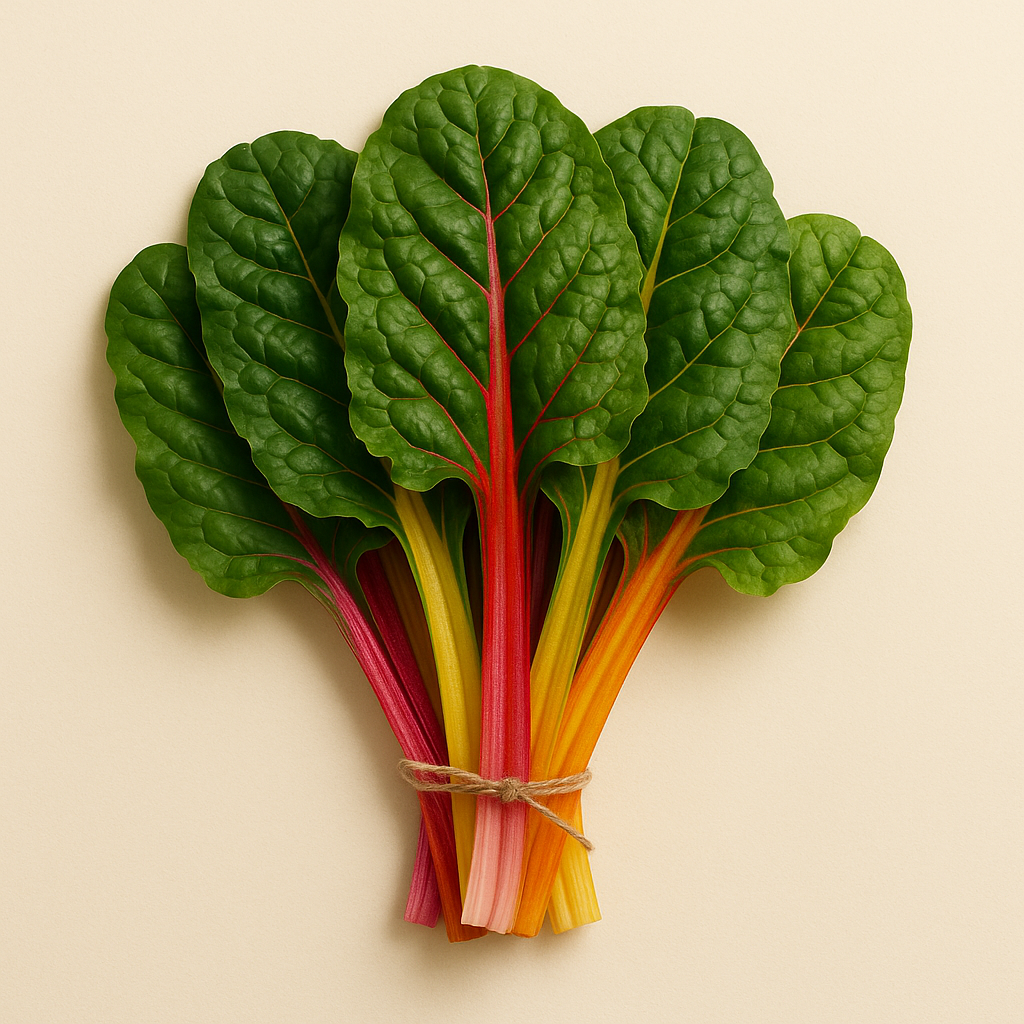
Rainbow Chard
Beta vulgaris subsp. vulgaris
Family: Amaranthaceae
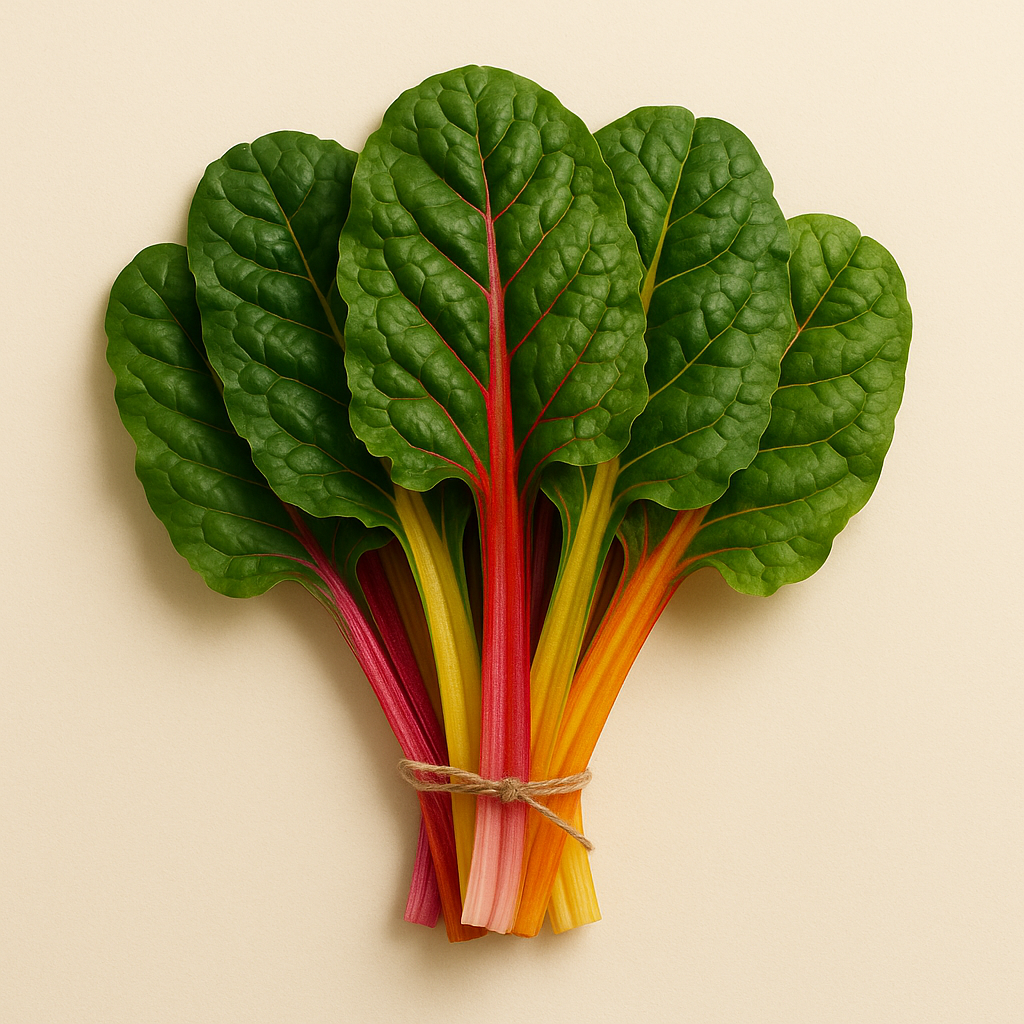
Rainbow chard is a stunning mix of chard varieties featuring stems in vibrant shades of red, orange, yellow, pink, and white. Both ornamental and edible, it provides a colorful harvest throughout the growing season with the same nutritious leaves as standard chard.
Days to Harvest
50-60 days
Sun Needs
Full Sun to Partial Shade (4-6 hours)
moderate
Germination Temp
75°F optimal
Start Indoors
4 weeks before last frost
Germination
5-14 days
Seed Depth
1/2 to 1 inch
Light to Germinate
No
💡 Tip: Each "seed" is actually a cluster—thin to strongest seedling. Soak seeds overnight to speed germination.
Soil Type
Rich, well-draining soil with good organic matter
pH Range
6 - 7
Spacing
12-18 inches between plants, 18-24 inches between rows
⚠️ Avoid planting near:
History
While individual colored chards have been grown for centuries, rainbow chard mixes became popular in the 1990s. Breeders selected the brightest-colored varieties to create mixes like "Bright Lights" that showcase the full spectrum of chard colors.
Nutritional Benefits
- ✓Extremely high in Vitamin K
- ✓Excellent source of Vitamins A and C
- ✓Different colors contain different antioxidants
Optimal Growing Temp
50°F - 75°F
Rainbow chard is remarkably temperature-tolerant, thriving in 50-75°F but handling both light frost and summer heat. One of the most adaptable greens for year-round growing.
Survival Range
25°F - 95°F
Can survive these temperatures
Frost Note: Tolerates light frost (25-32°F). Established plants can survive into the low 20s. Fall frost often intensifies stem colors. Protect young plants from hard freeze.
Best USDA Zones
Humidity
40-70%
Adaptable to various humidity levels. Good air circulation prevents fungal issues on dense leaf growth.
Height
18-24 inches
Spread
12-18 inches
Growth Habit
upright
Germination
5-14 days
Multi-germ seed clusters produce multiple seedlings. Soaking speeds germination.
Seedling Stage
Duration: 3-4 weeks
True leaves: Thin to single strongest plant.
Transplant ready: Stem colors begin developing early. Ready when 3-4 inches tall.
Vegetative Growth
Duration: 4-6 weeks
Rapid leaf and colorful stem production. Begin harvesting outer stalks at 8-10 inches.
Harvest Maturity
Timing: 50-60 days from seed
- Full-sized plant with multi-colored stems
- Continues producing for months with regular harvest
Per Plant
2-4 lbs of stems and leaves over season
Per Square Foot
1-2 lbs at 12-inch spacing
Harvest Frequency
Harvest outer stalks every 1-2 weeks
Factors Affecting Yield
- •Extended harvest window
- •Regular picking promotes growth
- •Temperature tolerance
- •Soil fertility
Seedling Stage
Keep consistently moist during establishment
Established Plants
Deep watering every 4-7 days, 1-1.5 inches per week
Preferred Method
Water deeply at soil level. Soaker hose or drip irrigation keeps colorful stems clean.
⚠️ Critical Watering Periods
- • Seedling establishment
- • Hot summer weather
- • Active growth periods
Pro Tips
- Deep roots provide good drought tolerance once established
- Consistent moisture produces tender stems with best color
- Mulch to retain moisture and maintain even temperatures
- Water needs increase during hot weather
Feeding Schedule
Organic Options
Top-dress with compost monthly. Apply liquid feed every 3-4 weeks during active growth.
Minimum Size
10 inch pot minimum
Recommended Size
14-16 inch pot for full-sized plant
Depth Required
12 inches minimum for taproot
Best Varieties for Containers
Container Tips
- Stunning ornamental container plant with multicolored stems
- Deep containers accommodate taproot for best production
- Use as centerpiece in mixed edible containers
- Water more frequently than ground-planted chard
- Fertilize monthly for continuous colorful production
Why Prune
When
Begin harvesting when outer stalks reach 8-10 inches with developed color
How Often
Every 1-2 weeks throughout growing season
Technique
Cut outer stalks at base, leaving inner stalks to continue growing. Take entire stalk with stem.
Remove
- ✗ Outer mature stalks
- ✗ Any damaged or yellowed leaves
- ✗ Flower stalks if bolting
Keep
- ✓ Growing center
- ✓ Young inner stalks
- ✓ At least 5-6 inner leaves
Will I get all the rainbow colors from one seed packet?
Yes! Rainbow chard mixes like "Bright Lights" or "Five Color Silverbeet" contain seeds for plants with different colored stems—red, orange, yellow, pink, and white. Each seed produces one color, so a packet gives you the full rainbow. Plant the whole packet for best color variety.
Do the colorful stems taste different?
All rainbow chard colors taste similar—mild, slightly earthy, and sweeter than standard white-stemmed chard. The red and pink varieties are slightly more earthy. The color differences are primarily visual and nutritional (different antioxidants), not flavor.
Will the colors fade when I cook rainbow chard?
The stems retain most of their color when cooked briefly (sautéed or stir-fried). Long cooking times may dull the colors. For brightest color, cook stems and leaves separately—stems need longer cooking. The red/pink colors hold up best; yellow may fade more.
Can I grow rainbow chard as an ornamental?
Absolutely! Rainbow chard is one of the most beautiful edible plants. Use it in flower borders, mixed containers, or ornamental vegetable gardens. The multicolored stems provide months of color, and you can harvest leaves while maintaining ornamental appeal.