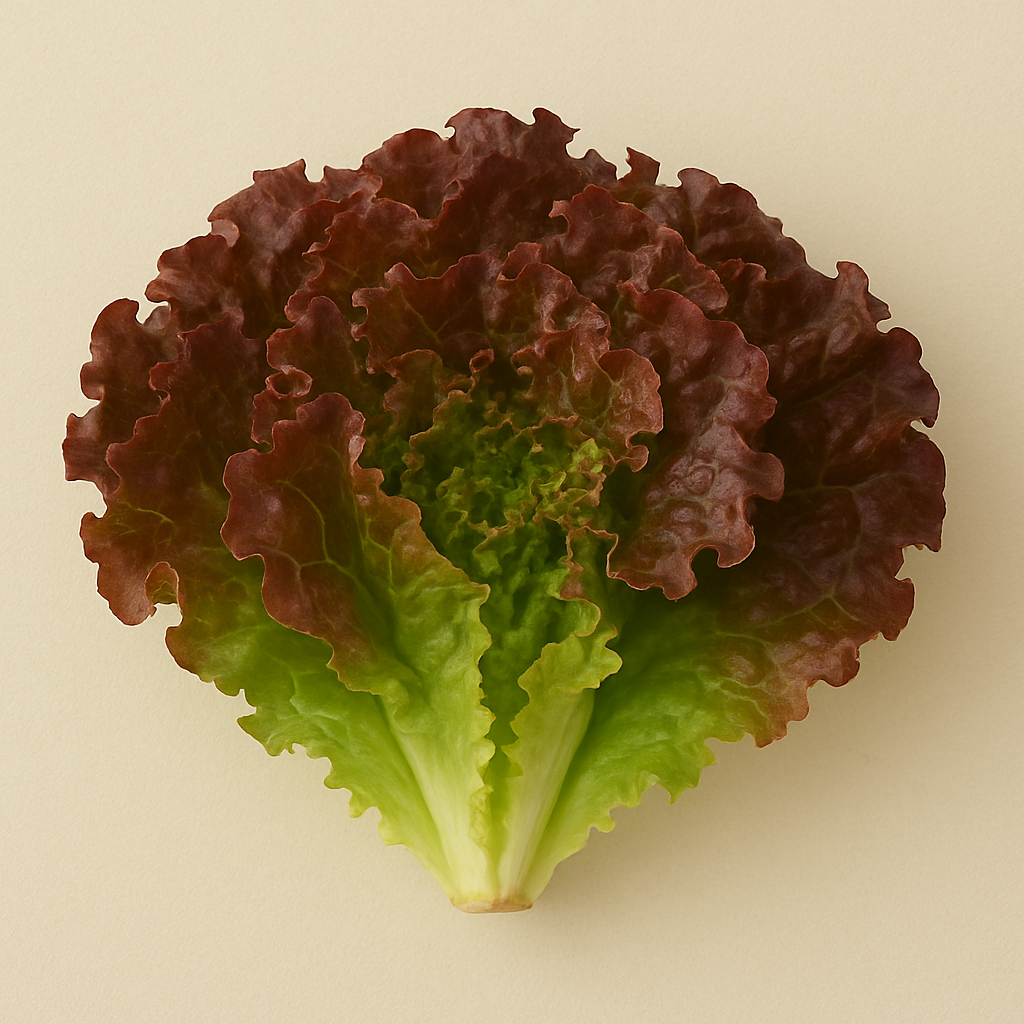
Red Leaf Lettuce
Lactuca sativa var. crispa
Family: Asteraceae
Red leaf lettuce features loose, frilly leaves with beautiful burgundy and bronze coloring. The tender leaves have a mild, slightly sweet flavor with just a hint of bitterness. Fast-growing and productive, it adds color and nutrition to any salad.
Days to Harvest
45-55 days
Sun Needs
Full Sun to Partial Shade (4-6 hours)
moderate
Germination Temp
65°F optimal
Start Indoors
4 weeks before last frost
Germination
2-10 days
Seed Depth
1/8 inch
Light to Germinate
Yes
💡 Tip: Seeds need light to germinate. Press into soil surface and barely cover. Develops best red color with some sun exposure.
Soil Type
Rich, well-draining soil with good organic matter
pH Range
6 - 7
Spacing
6-8 inches between plants, 12 inches between rows
⚠️ Avoid planting near:
History
Loose-leaf lettuces have been cultivated since ancient times, with colored varieties developed through selective breeding over centuries. Red-pigmented lettuces became popular in European gardens by the 1600s and are now standard in mesclun mixes worldwide.
Nutritional Benefits
- ✓High in Vitamin K
- ✓Good source of Vitamin A
- ✓Contains anthocyanins (red pigments with antioxidant properties)
Optimal Growing Temp
60°F - 70°F
Red leaf lettuce thrives in cool temperatures between 60-70°F. The red coloring develops best with moderate temperatures and adequate sunlight. Heat above 75°F can cause bolting and reduce pigment development.
Survival Range
35°F - 80°F
Can survive these temperatures
Frost Note: Red leaf lettuce tolerates light frost (28-32°F) and can handle brief exposure to temperatures in the mid-20s with protection. Cold temperatures actually intensify the red coloring.
Best USDA Zones
Humidity
40-60%
Moderate humidity is best. High humidity promotes fungal diseases like downy mildew which can spread quickly through red leaf varieties.
Height
8-12 inches
Spread
8-10 inches
Growth Habit
upright
Germination
2-10 days
Seeds germinate quickly, needing light. Green cotyledons emerge first, red color develops later.
Seedling Stage
Duration: 2-3 weeks
True leaves: First true leaves appear with slight red tinge. Color intensifies with growth and sun exposure.
Transplant ready: Ready when 2-3 inches tall with 3-4 true leaves showing red coloration.
Vegetative Growth
Duration: 3-4 weeks
Rapid leaf production with deepening red coloration. Harvest outer leaves as needed.
Harvest Maturity
Timing: 45-55 days from seed
- Full head development with characteristic red coloring
- Harvest before any sign of bolting
Per Plant
4-8 oz of leaves per plant
Per Square Foot
6-8 oz when planted at 6-inch spacing
Harvest Frequency
Cut-and-come-again every 5-7 days, or harvest whole head at maturity
Factors Affecting Yield
- •Sunlight exposure for red color
- •Temperature consistency
- •Harvest timing
- •Succession planting
Seedling Stage
Daily light watering to keep surface moist
Established Plants
Every 2-3 days, or when top inch of soil dries
Preferred Method
Water at soil level using drip irrigation or soaker hose. Avoid wetting leaves to prevent disease.
⚠️ Critical Watering Periods
- • During germination for establishment
- • Hot weather to prevent bolting
Pro Tips
- Consistent moisture is key for tender leaves and good color
- Morning watering is best to allow leaves to dry before evening
- Mulch to retain soil moisture and keep roots cool
- Water stress causes bitterness and poor color development
Feeding Schedule
Organic Options
Top-dress with thin layer of compost or apply diluted liquid feed every 3-4 weeks if needed
Minimum Size
6 inch pot minimum
Recommended Size
8-10 inch pot or window box
Depth Required
6-8 inches minimum
Best Varieties for Containers
Container Tips
- Red leaf lettuce is excellent for containers and window boxes
- Use light-colored containers to keep roots cool
- Position for morning sun, afternoon shade in warm weather
- Ensure adequate drainage to prevent root rot
- Group containers together to retain moisture
Why Prune
When
Harvest outer leaves when 4-6 inches long
How Often
Every 5-7 days for cut-and-come-again harvest
Technique
Cut or snap outer leaves at base, leaving center growing point intact for continued production
Remove
- ✗ Outer mature leaves
- ✗ Yellowing or damaged leaves
- ✗ Any leaves touching soil
Keep
- ✓ Center growing point
- ✓ Inner developing leaves
- ✓ At least 4-5 inner leaves
Plant Every
2-3 weeks
Sowings/Season
4-6 sowings per growing season
Duration
Spring through early summer, then resume late summer through fall
Tips
- Start succession planting 4-6 weeks before last frost
- Take a break during hottest summer months
- Resume planting 8-10 weeks before first fall frost
- Overlap plantings so new plants mature as older ones bolt
Why is my red leaf lettuce not turning red?
Red coloring requires adequate sunlight (at least 4 hours direct sun) and appropriate temperatures (cool to moderate). Excessive shade, high heat, or too much nitrogen can reduce red pigment development. Ensure plants get morning sun and afternoon shade in warm weather.
Can I grow red leaf lettuce in summer?
Yes, but it requires special care. Provide afternoon shade, maintain consistent moisture, and choose bolt-resistant varieties like New Red Fire or Revolution. Harvest frequently as cut-and-come-again to delay bolting.
Is red leaf lettuce more nutritious than green?
Red leaf lettuce contains anthocyanins (the red pigments) which are powerful antioxidants not found in green varieties. It typically has higher vitamin A and antioxidant levels. Both are nutritious, but red varieties offer additional phytonutrients.
How do I keep red leaf lettuce from bolting?
Prevent bolting by maintaining cool root temperatures with mulch, providing afternoon shade, keeping soil consistently moist, harvesting regularly, and planting bolt-resistant varieties. If bolting begins, harvest immediately as flavor deteriorates quickly.