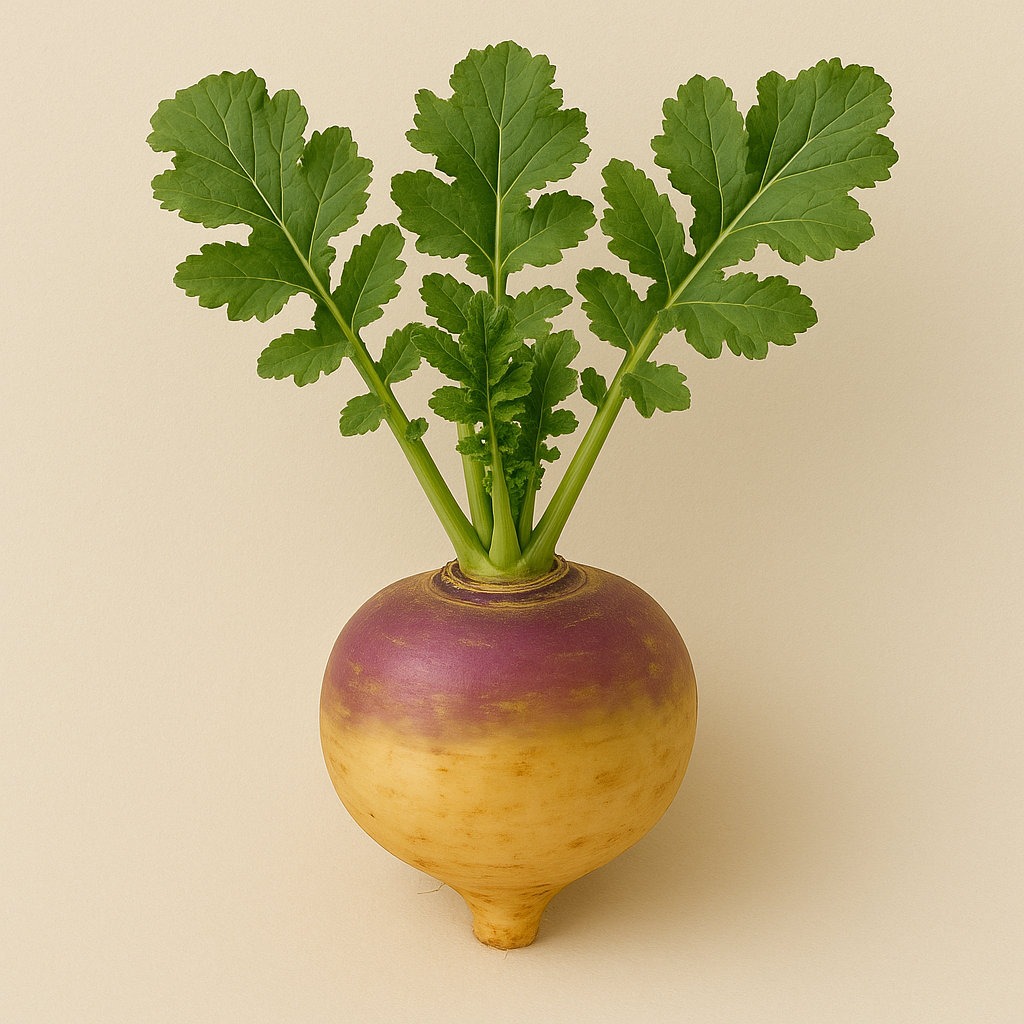
Rutabaga
Brassica napus var. napobrassica
Family: Brassicaceae
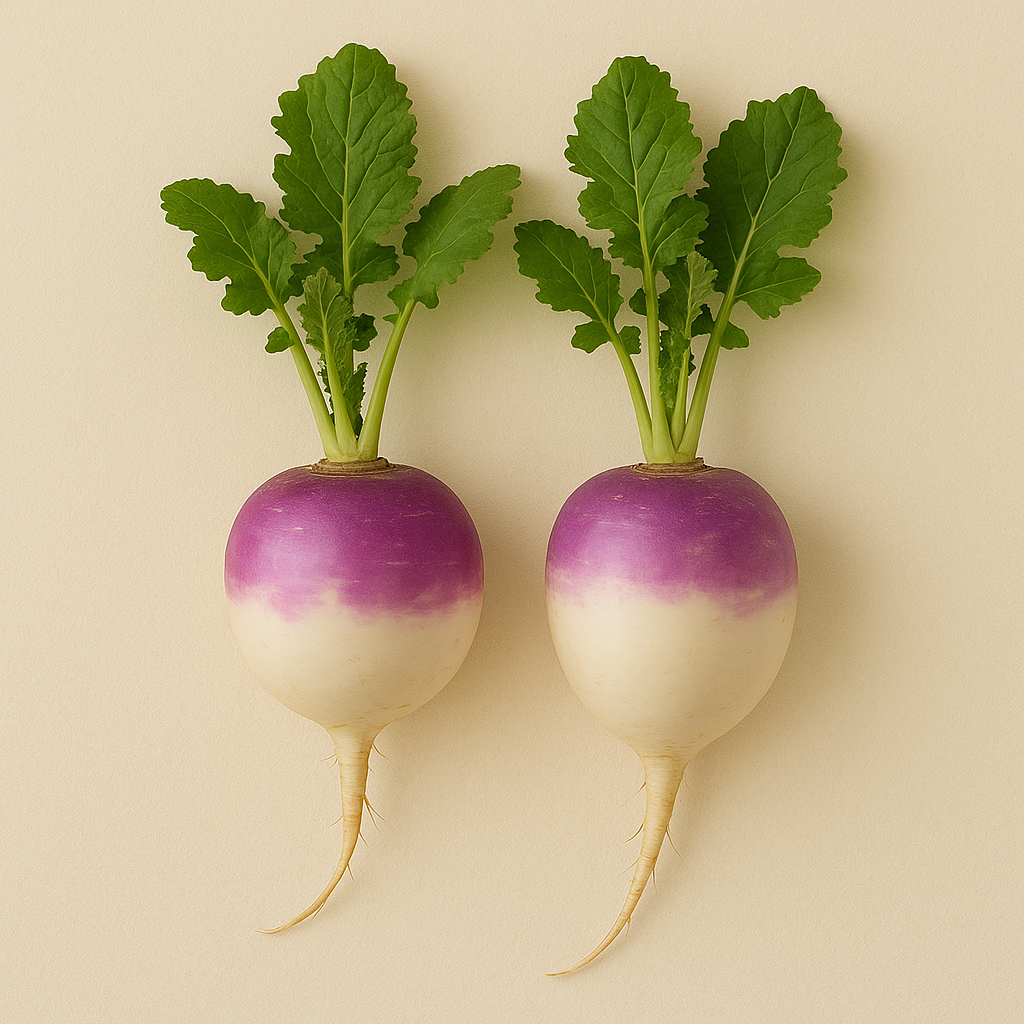
Rutabagas are large, sweet root vegetables that are a cross between cabbage and turnip. With purple-topped yellow flesh, they're sweeter than turnips and excellent for storage. Also called "swedes" or "Swedish turnips."
Days to Harvest
85-100 days
Sun Needs
Full Sun (6+ hours)
moderate
Germination Temp
65°F optimal
Start Indoors
0 weeks before last frost
Germination
4-10 days
Seed Depth
1/2 inch
Light to Germinate
No
💡 Tip: Direct sow in early to mid-summer for fall harvest. Rutabagas need 90+ days and develop best flavor after frost.
Soil Type
Loose, well-draining soil rich in organic matter
pH Range
6 - 7.5
Spacing
6-8 inches between plants, 18-24 inches between rows
⚠️ Avoid planting near:
History
Rutabagas likely originated in Bohemia (Czech Republic) in the 17th century as a natural cross between cabbage and turnip. They became a staple in Scandinavian countries and were brought to North America by European immigrants.
Nutritional Benefits
- ✓High in Vitamin C
- ✓Good source of fiber
- ✓Contains potassium
Optimal Growing Temp
50°F - 65°F
Rutabagas need a long, cool growing season. Frost improves flavor dramatically.
Survival Range
20°F - 80°F
Can survive these temperatures
Frost Note: Very frost tolerant—survives hard frosts to 20°F. Frost is essential for sweetness.
Best USDA Zones
Humidity
50-70%
Moderate humidity.
Height
15-20 inches
Spread
8-10 inches
Growth Habit
rosette
Germination
4-10 days
Seeds germinate readily in cool soil.
Seedling Stage
Duration: 3-4 weeks
True leaves: Leaves similar to cabbage
Transplant ready: Can transplant or direct sow.
Vegetative Growth
Duration: 12-16 weeks
Long growing season. Roots size up in fall.
Harvest Maturity
Timing: 90-120 days
- Shoulders 3-5 inches diameter
- Firm, heavy roots
- Best after frost
Per Plant
1 large root (1-3 lbs)
Per Square Foot
4 rutabagas (6-inch spacing)
Harvest Frequency
Single harvest
Factors Affecting Yield
- •Long season
- •Frost exposure
- •Consistent moisture
Seedling Stage
Keep moist
Established Plants
1-1.5 inches per week
During Fruiting
Consistent moisture for tender roots
Preferred Method
Drip irrigation or soaker hoses.
⚠️ Critical Watering Periods
- • Root sizing phase
Pro Tips
- Consistent moisture prevents woodiness
Feeding Schedule
Soil prep
Compost
Once
Mid-season
Side-dress
Once at 6-8 weeks
Organic Options
Work compost into soil; side-dress mid-season.
Minimum Size
Not recommended—roots too large
Recommended Size
Raised beds
Depth Required
12+ inches
Container Tips
- Better in ground or raised beds
What's the difference between rutabaga and turnip?
Rutabagas are larger, sweeter, and denser with yellow flesh. They take longer to mature (90-120 days vs 30-60) and store better. Rutabagas are a cross between cabbage and turnip.